Deity
राम
Rama
The Ideal King, Supreme Upholder of Dharma, The Perfect Man
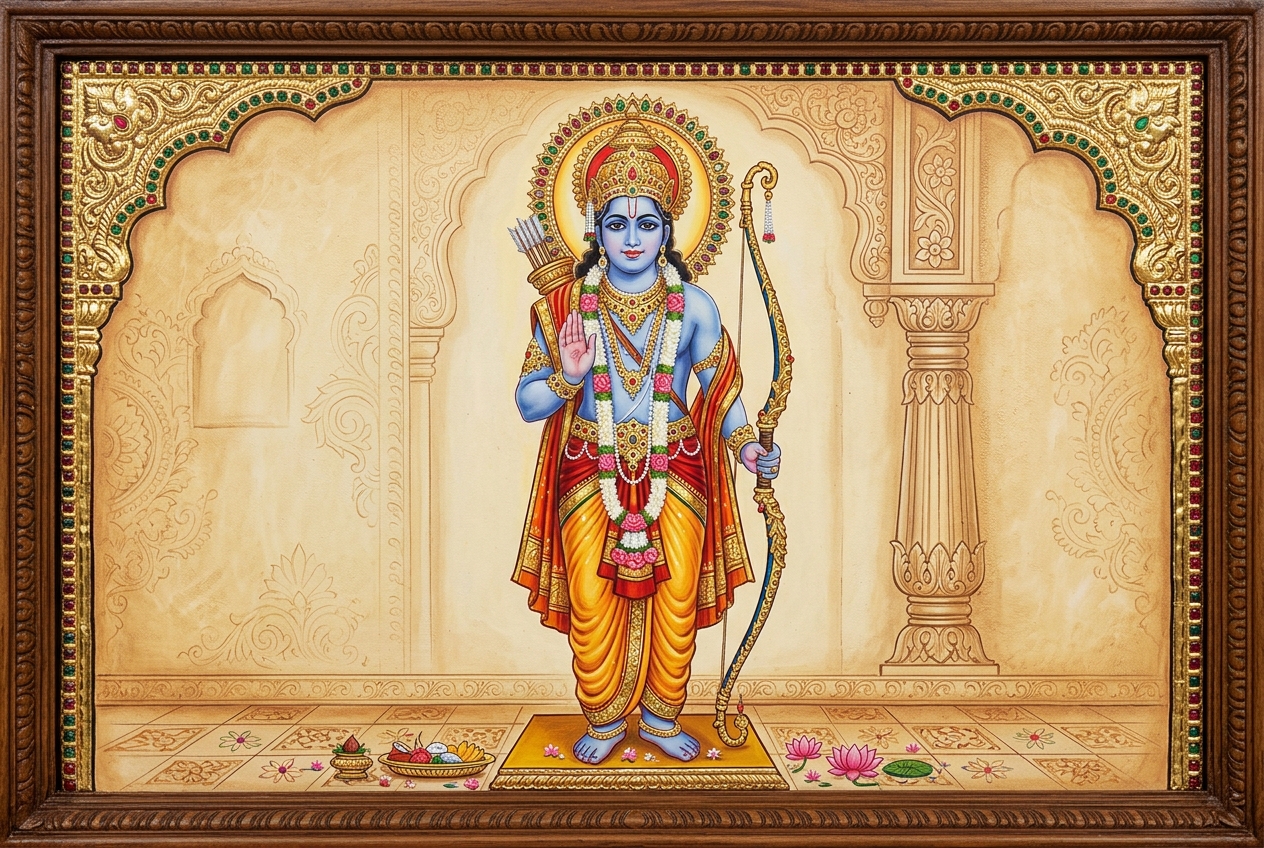
राम
परिचय
AboutLord Rama is the seventh avatar of Lord Vishnu and one of the most widely worshipped deities in Sanātana Dharma. Born in Ayodhya to King Dasharatha and Queen Kausalya, His life is detailed in the ancient Indian epic, the Ramayana. He is celebrated as Maryada Purushottam, the perfect man and the supreme lord of self-control and virtue. His iconography depicts Him with a blue complexion, standing with a serene expression, holding a powerful bow named Kodanda and a quiver of arrows. He is typically accompanied by His devoted wife Sita, His loyal brother Lakshmana, and His greatest devotee, Hanuman. His 14-year exile into the forest, the abduction of Sita by Ravanasura, and the subsequent epic war in Lanka form the core of His legendary narrative.
Significance
The significance of Rama lies in His unwavering commitment to truth and righteous duty above all personal desires or comforts. He embodies the ideal son, the ideal husband, and the ideal king, establishing a benchmark for ethical and moral living. His reign, known as Rama Rajya, is heralded as the golden age of peace, prosperity, and perfect justice. The epic triumph of Rama over Ravanasura is celebrated globally during the festivals of Dussehra (Vijayadaśamī) and Diwali, symbolising the eternal victory of light over darkness and good over evil. Worshipping Him is believed to grant devotees immense moral strength, inner peace, and liberation from the cycle of birth and death (Saṃsāra).
Associated content is being added.
Your notes
Private reflections you can revisit anytime.
Questions & Discussions
Ask a question or start a discussion about this page.
- No questions or discussions yet — be the first.