ॐ
धर्मार्थDHARMARTHA

Create a free account to save & track your favourite knowledge.

Sign up

A note on Dharmartha's ongoing development:Dharmartha is currently in an active phase of content development. Our articles, references, descriptions, and other materials are being reviewed, expanded, and updated r…

Deities

Deities

देवी-देवता

Each deity — their mantras, suktas, stotras, puja vidhis and temples, gathered in one place.

Shakti (Parvati)

शक्ति

Shakti (Parvati)

Supreme Energy, Divine Mother, Daughter of the Mountain

LoveDevotionMarriage

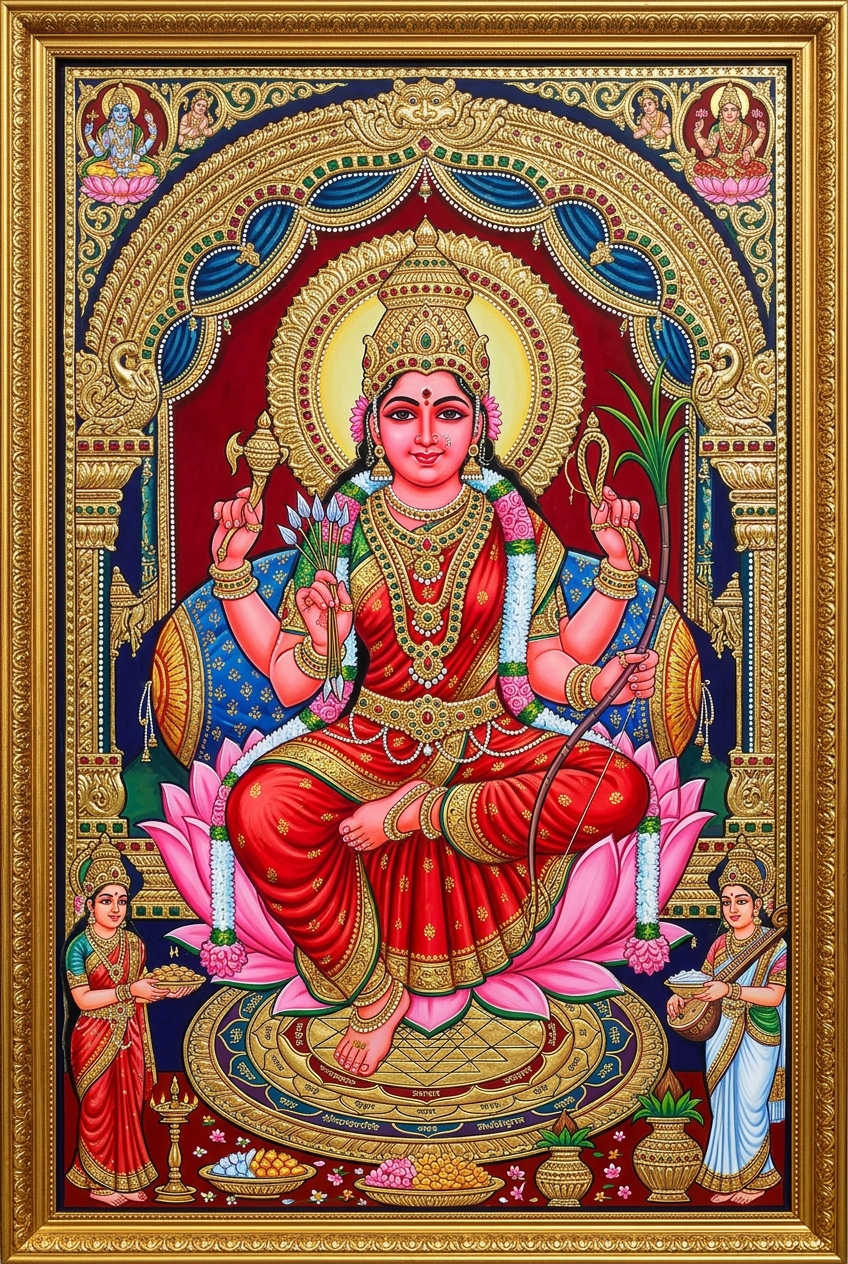
Goddess Parvati, also known as Shakti, is the gentle and nurturing manifestation of the supreme feminine energy (Shakti) in Sanātana Dharma. Born as the daughter of the mountain king Himavan and queen Menā, She is the reincarnated form of Sati. Through immense penance and unwavering devotion (Tapas), She won the heart of the great ascetic Lord Shiva and became His divine consort. She is the loving mother of Ganesha and Kartikeya. Her iconography is serene and beautiful, typically depicting Her with two arms, holding a lotus, and seated alongside Shiva on Mount Kailash. She embodies the ideal householder (Gṛhastha) stage of life, bringing balance to Shiva's detached, ascetic nature.

Explore
Lakshmi

लक्ष्मी

Lakshmi

Shri — Goddess of Wealth, Mother of Prosperity, Bestower of Fortune

WealthProsperityFortune

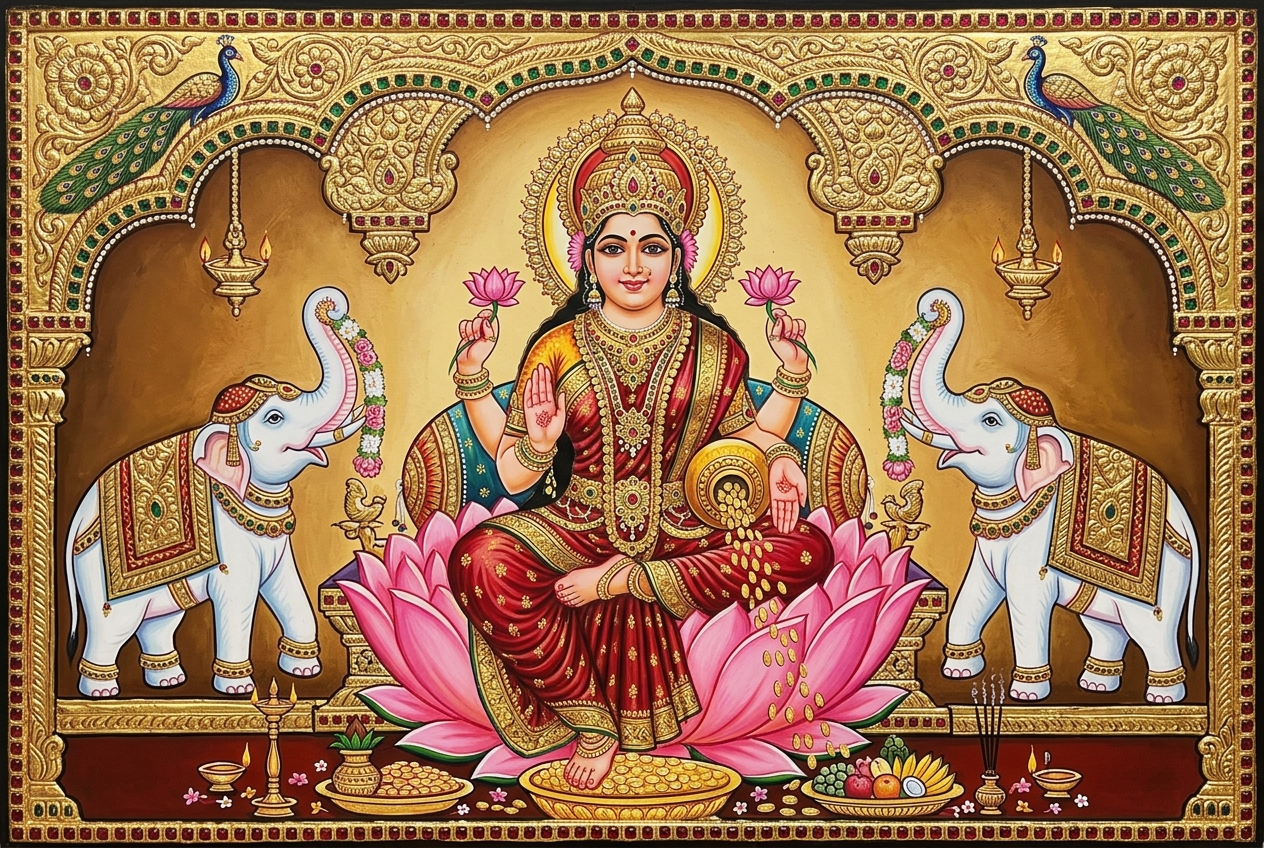
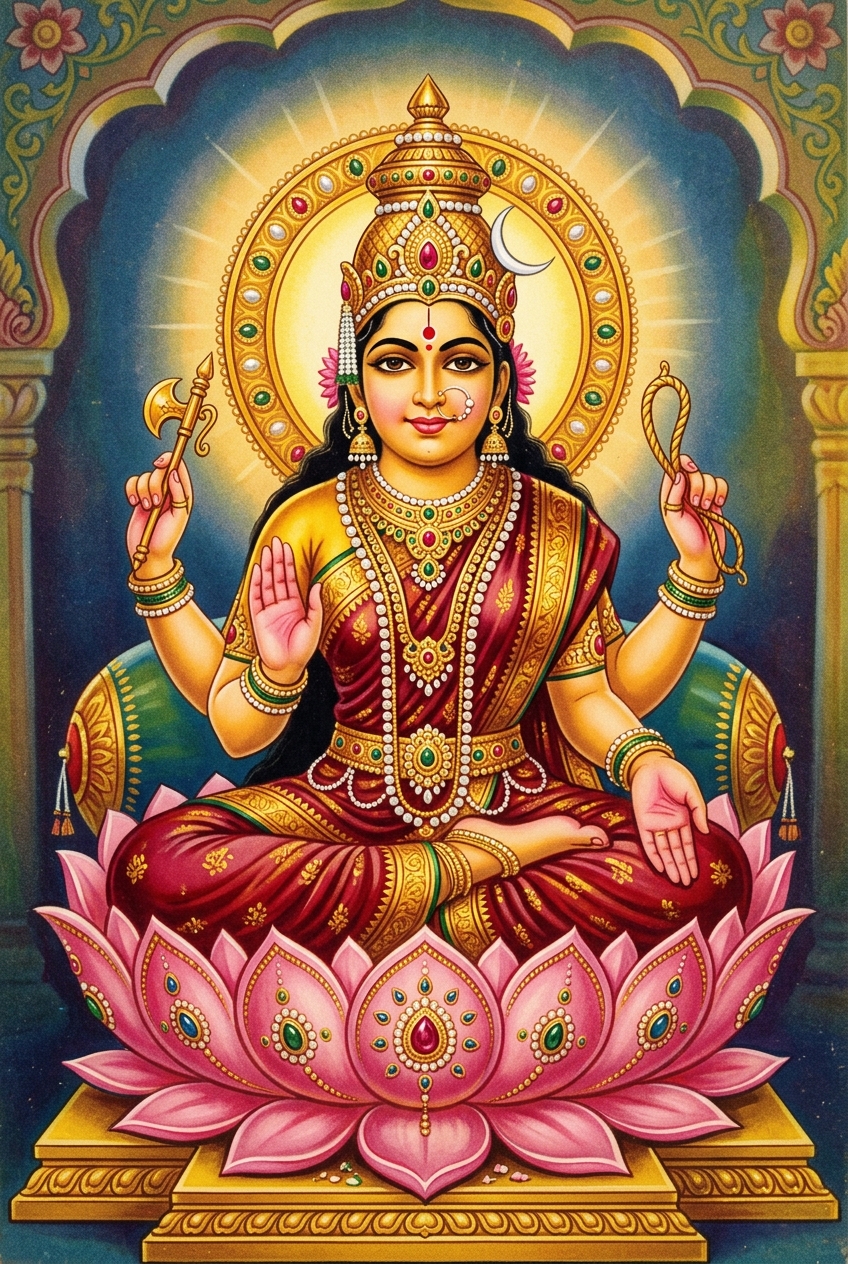
Goddess Lakshmi is the principal deity of wealth, prosperity, fortune, and beauty. As the divine consort and active energy of Lord Vishnu, the sustainer, She assists Him in maintaining the cosmic order (Ṛta). According to the Puranas, She emerged from the churning of the cosmic ocean (Samudra Manthana) seated on a full-bloomed pink lotus, a symbol of purity and spiritual awakening. Her traditional iconography depicts Her as a radiantly beautiful woman with four hands, which represent the four goals of human life (Puruṣārtha): righteousness, wealth, desire, and liberation. She is frequently shown being bathed by two celestial elephants, holding lotus flowers, and cascading gold coins from Her lower hand, signifying boundless material and spiritual abundance.

Explore
Sarasvati

सरस्वती

Sarasvati

The Goddess of Knowledge, Mother of the Vedas, Patron of Arts and Music

KnowledgeMusicArts

Goddess Sarasvati is the deity of knowledge, music, art, speech, and learning. As the divine consort of Lord Brahma, the creator, She provides the intellect and wisdom necessary to design the cosmos. Her iconography is highly symbolic of purity and transcendence; She is typically depicted dressed in flawless white garments, seated on a white lotus or a serene swan. Unlike other deities, She is rarely adorned with heavy jewellery or weapons. Instead, Her four arms hold items representing profound spiritual learning: a manuscript signifying the Holy Vedas, a crystal mala for meditation, a water pot (Kamaṇḍalu) symbolising purifying power, and a classical Indian lute (Vīṇā) representing the perfection of arts and music.

Explore
Vishnu

विष्णु

Vishnu

The Sustainer, Supreme Lord, Protector of the Universe

SustenanceProtectionCosmic Order

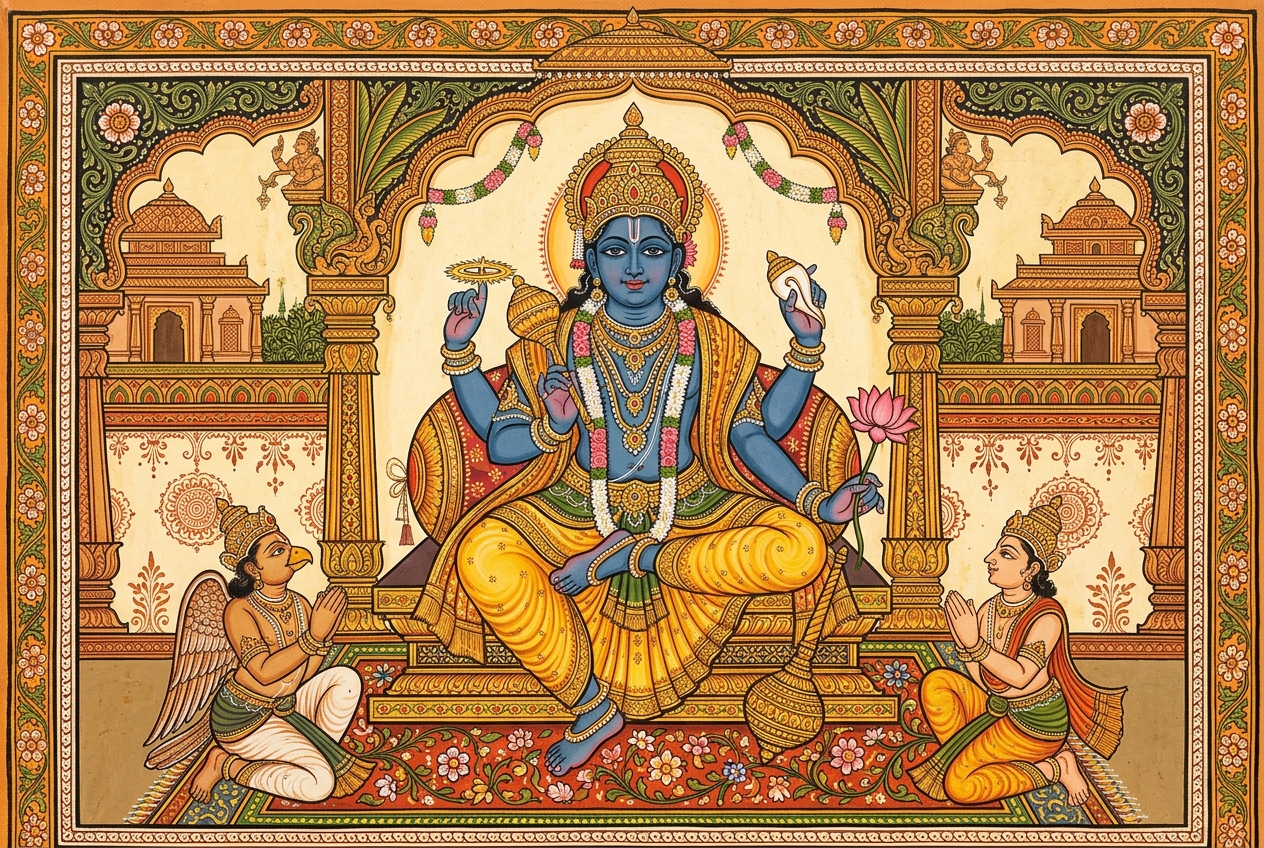
Lord Narayana, also known as Vishnu, is the principal deity of sustenance and protection within the Trimūrti, alongside Brahma and Shiva. As the Supreme Being in Vaishnavism, He is the all-pervading essence of all beings and the master of the past, present, and future. He is classically depicted resting on the coiled serpent Adishesha in the cosmic ocean of milk (Kṣīrasāgara), accompanied by His consort Lakshmi. He possesses a blue complexion reminiscent of the infinite sky and has four arms. In His hands, He holds a conch shell (Śaṅkha) named Panchajanya, a spinning discus weapon (Chakra) named Sudarshana, a mace (Gadā) named Kaumodaki, and a lotus flower. His chosen vehicle is the great eagle Garuda.

Explore
Kali

काली

Kali

The Primordial Dynamic Absolute, Devourer of Time, Slayer of Chanda and Munda

Time (Kāla)Cosmic Dissolution (Mahāpralaya)Ultimate Reality

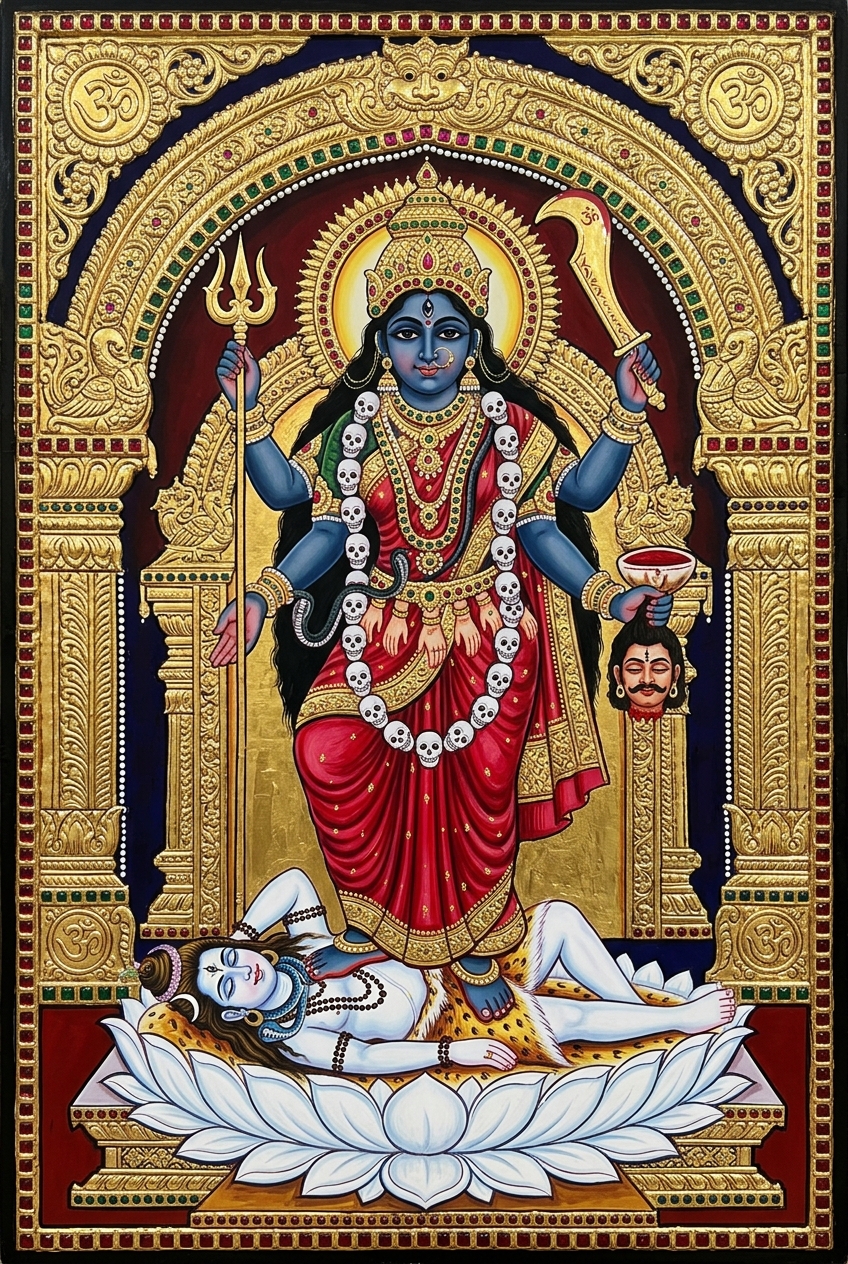
Goddess Kali (Kālī) first emerges into the canonical record within the Mundaka Upanishad 1.2.4 , where She is invoked as the darkest, most penetrating of the seven flickering tongues of Agni that consume sacrificial oblations. Her full metaphysical and martial manifestation crystallises in the Devi Mahatmya of the Markandeya Purana , Chapter 7 . There, She erupts from the contracted, wrath-blackened forehead of the Great Goddess Ambika to confront the cosmic forces of degeneration led by Chanda and Munda, an act of decapitation that earns Her the epithet Chamunda. In authentic Shakta and Kaula treatises, Her iconography is an exact cartography of non-dual metaphysics: She is visualised as pitch-black or deep azure (Nīla-varṇa), embodying unconditioned, boundless space. She is Digambari—unclothed, clad only in the quarters of the sky—because no conceptual garment of Maya can encompass Her. Her hair is completely unbraided and dishevelled (Muktakeśī), representing absolute liberation from conventional restraints. Around Her neck hangs a garland of fifty severed human heads (Muṇḍamālā), corresponding to the fifty seed-letters of the Sanskrit alphabet (Varṇamālā) that govern cosmic manifestation, while Her skirt is composed of severed human arms, denoting the surrender of all accumulated karmas. In Her left hands She wields the raised cleaver (Khaḍga) of discerning intellect and holds a severed head; Her right hands bestow the gestures of fearlessness (Abhaya) and boon-granting (Varada). She stands upon the supine, motionless body of Lord Shiva.

Explore
Krishna

कृष्ण

Krishna

The Supreme Lord, The Divine Lover, The Dark-Complexioned One

LoveCompassionWisdom

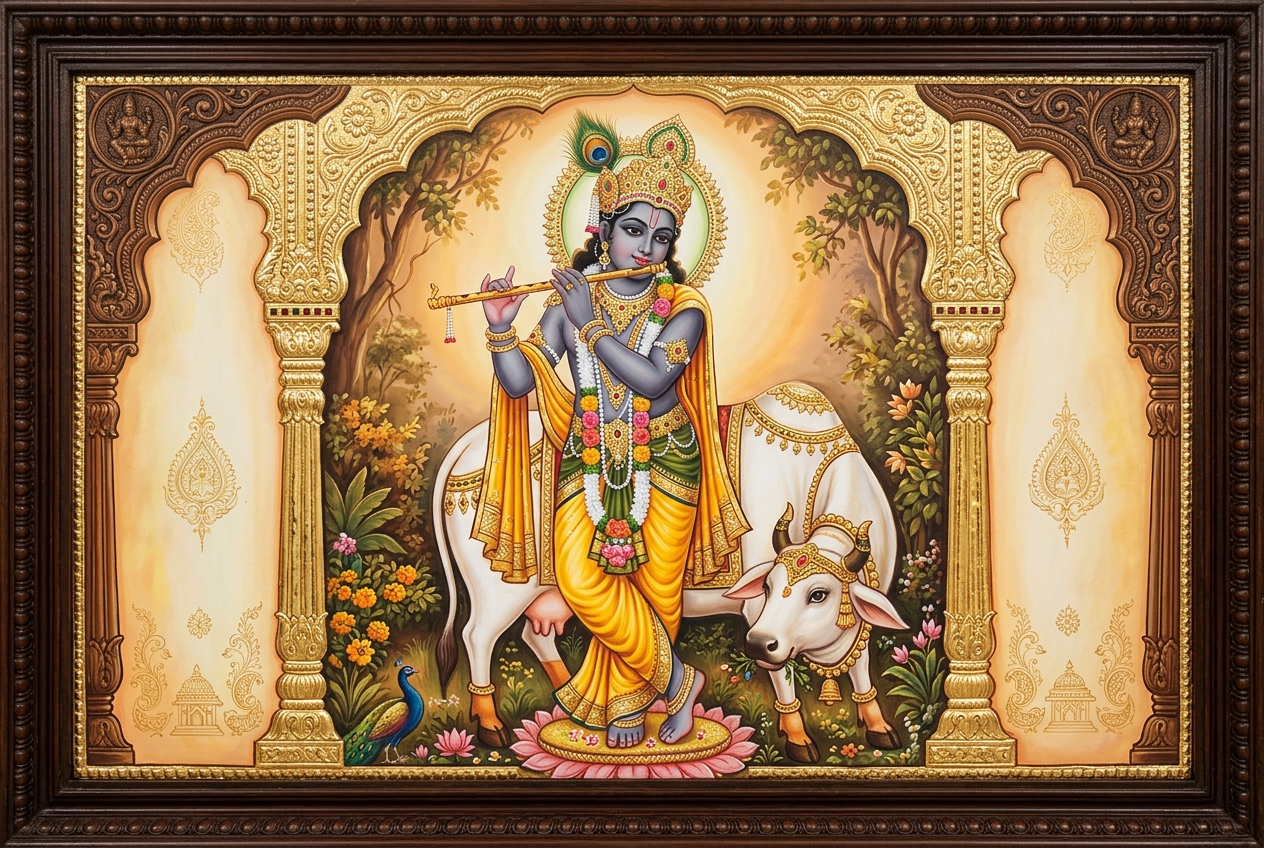
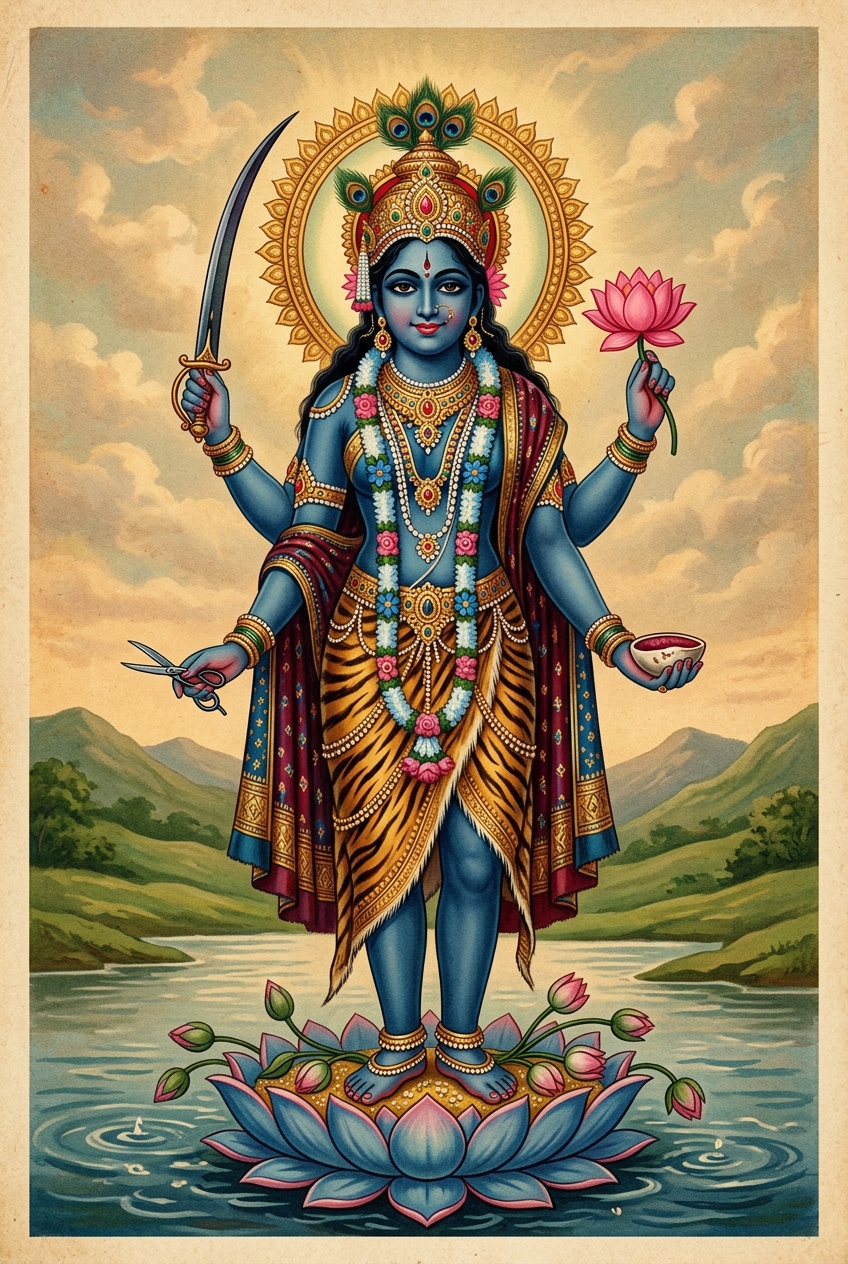
Lord Krishna is one of the most widely revered and popular deities, worshipped as the eighth avatar of Lord Vishnu and also as the Supreme God in his own right within traditions like Gaudiya Vaishnavism. Born in Mathura to Devaki and Vasudeva, He was raised in Vrindavan by his foster parents Yashoda and Nanda to protect him from his tyrannical uncle Kamsa. His iconography typically depicts Him with blue or dark skin, holding a divine flute, wearing a peacock feather in his crown, and adorned with the Kaustubha gem. He is often shown as a playful infant stealing butter, a divine cowherd captivating the milkmaids (Gopīs) with His music, or alongside His eternal consort Radha. In His later years, He served as the master strategist and divine charioteer (Pārthasārathi) for the warrior Arjuna during the epic Kurukshetra war.

Explore
Rama

राम

Rama

The Ideal King, Supreme Upholder of Dharma, The Perfect Man

RighteousnessTruthKingship

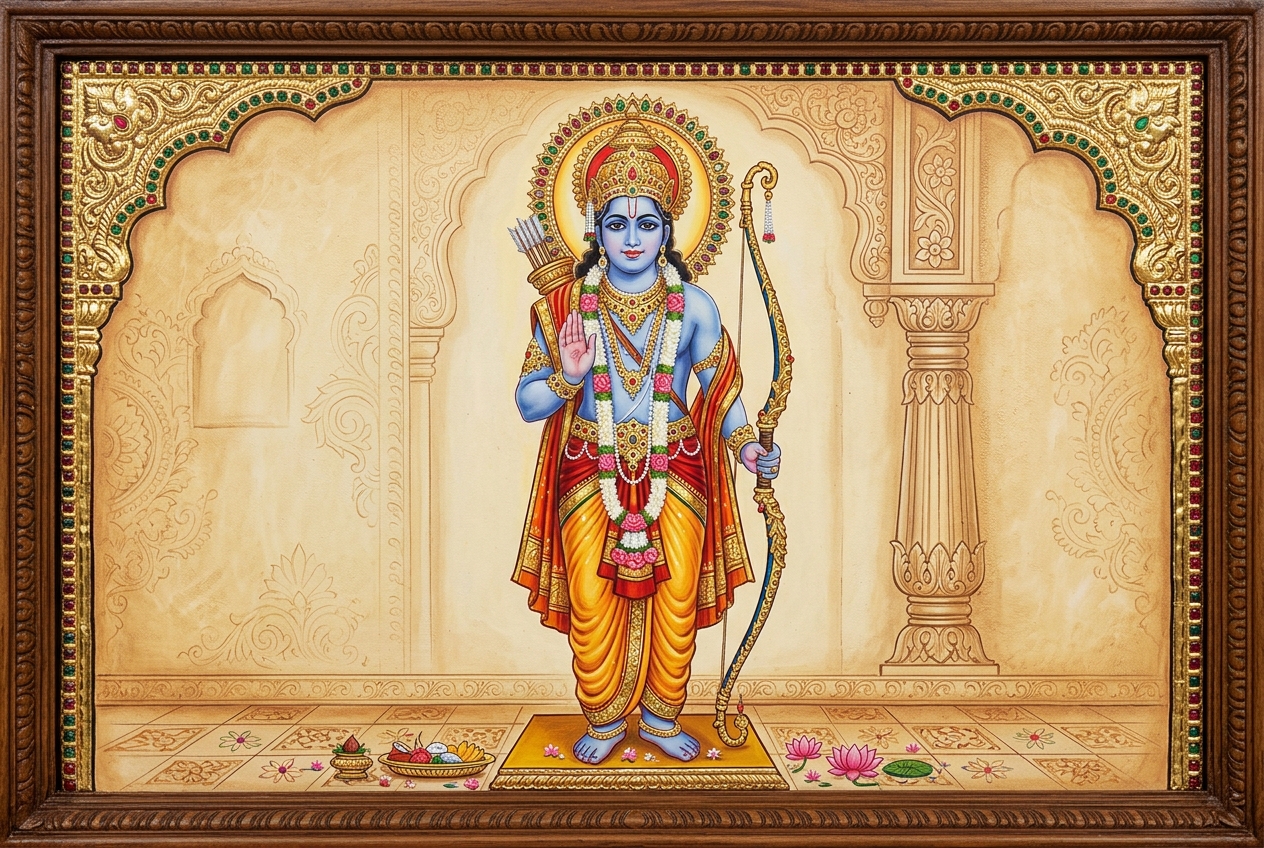
Lord Rama is the seventh avatar of Lord Vishnu and one of the most widely worshipped deities in Sanātana Dharma. Born in Ayodhya to King Dasharatha and Queen Kausalya, His life is detailed in the ancient Indian epic, the Ramayana. He is celebrated as Maryada Purushottam, the perfect man and the supreme lord of self-control and virtue. His iconography depicts Him with a blue complexion, standing with a serene expression, holding a powerful bow named Kodanda and a quiver of arrows. He is typically accompanied by His devoted wife Sita, His loyal brother Lakshmana, and His greatest devotee, Hanuman. His 14-year exile into the forest, the abduction of Sita by Ravanasura, and the subsequent epic war in Lanka form the core of His legendary narrative.

Explore
Hanuman

हनुमान

Hanuman

The Divine Vānara, Supreme Devotee of Rama, Son of the Wind

DevotionStrengthCourage

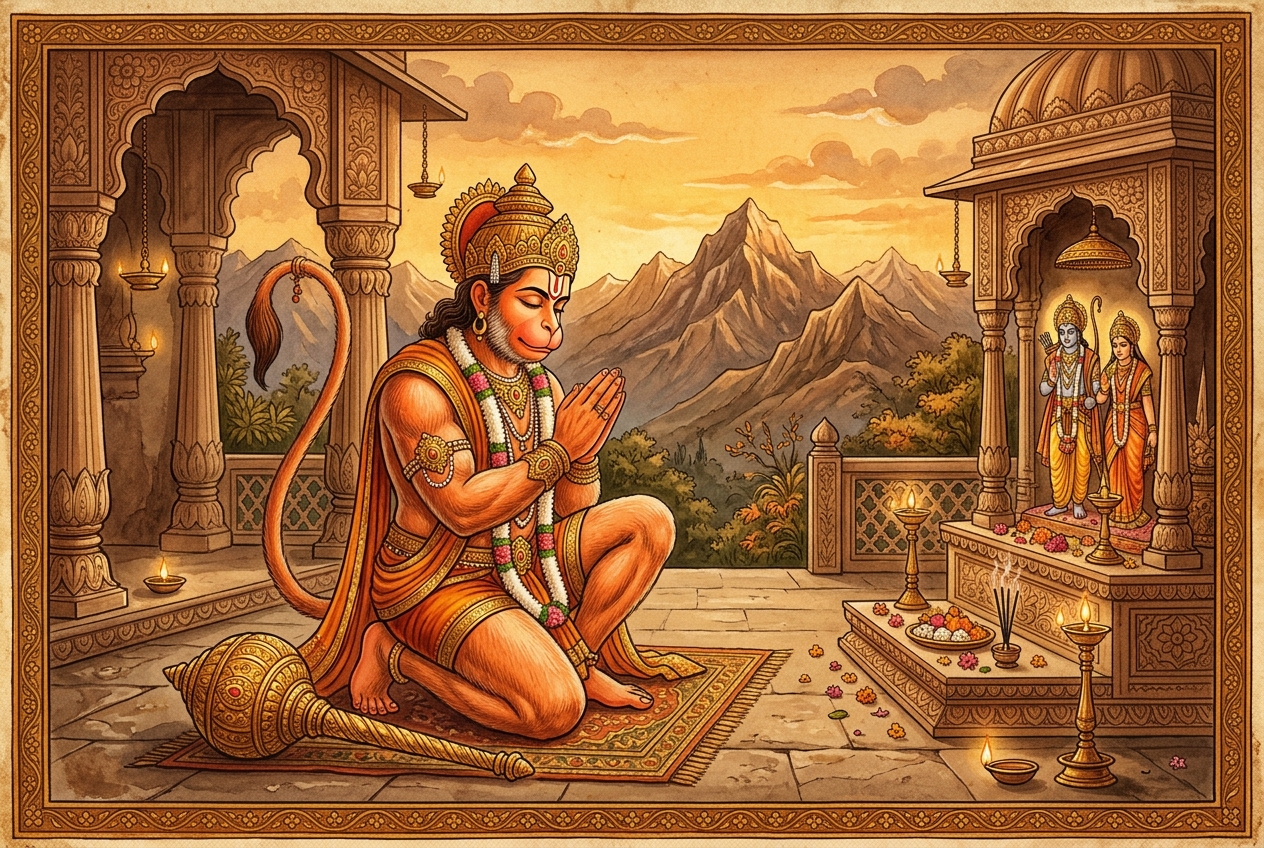
Lord Hanuman is a central deity in Sanātana Dharma, revered as the ultimate embodiment of strength, devotion, and selfless service. According to the ancient epic Ramayana, He was born to Anjana and the Vanara king Kesari. The wind god Vayu played a cosmic role in His conception by blessing Anjana with His own divine essence, making Hanuman His ethereal son. While the Valmiki Ramayana refers to Him by patronymic names like Anjaneya, Kesarinandan, or Maruti, "Hanuman"—meaning "one with a remarkable jaw"—is universally established as His primary scriptural name, stemming from a childhood encounter where Lord Indra struck His jaw with a thunderbolt (Vajra). His traditional iconography depicts Him as a muscular warrior with a reddish-orange hue (Sindūra), kneeling in reverence to Lord Rama or tearing open His chest to reveal Rama and Sita residing in His heart. He wields a massive mace (Gadā) and is celebrated for leaping across the ocean to Lanka and lifting the Dronagiri mountain to retrieve the life-saving Sanjeevani herb.

Explore
Indra

इन्द्र

Indra

The Supreme King of the Gods, Wielder of the Thunderbolt, Slayer of Vritra

ThunderRainWar

Lord Indra is the supreme king of the gods (Devas) and the most celebrated deity in the Rigveda, with over a quarter of its hymns dedicated to His glory. In the strictly Vedic pantheon, He is the foremost warrior and the formidable god of thunder, storms and rain. He rides a golden chariot drawn by tawny horses (Hari) and wields the invincible thunderbolt (Vajra), crafted by the divine artisan Tvashtr. He is famously invigorated by the sacred elixir Soma, which grants Him immense cosmic strength for battle. His most defining mythological and cosmic act is the slaying of the primordial drought-demon Vritrasura, a massive serpent holding back the world's rivers and light. By shattering Vritra, Indra released the life-giving waters and restored the cosmic order (Ṛta).

Explore
Soma

सोम

Soma

The Divine Elixir, Lord of Plants, The Purifying Drop

ImmortalityEcstasyPlants

Lord Soma is a highly venerated deity in the Vedic pantheon, embodying both the sacred plant and the divine elixir of immortality (Amṛta) pressed from it. The entire 9th Mandala of the Rigveda is dedicated exclusively to Him in His purifying form as Soma Pavamana. In the strictly Vedic rituals, His stalks are pressed between stones and the golden juice is filtered through sheep's fleece before being offered to the gods, most notably invigorating Lord Indra for His cosmic battles. He is the divine drop that brings inspiration to seers and ecstasy to mortals. Over time within the later Vedic texts, He became conceptually merged with the Moon (Chandra), envisioned as the celestial cup that holds the immortal draught for the gods to consume.

Explore
Varuna

वरुण

Varuna

The Cosmic Sovereign, Guardian of Rta, Lord of the Waters

Cosmic Order (Ṛta)JusticeTruth

Lord Varuna is one of the most prominent and majestic deities in the Rigveda. He is the supreme sovereign of the universe and the omniscient enforcer of the cosmic and moral order (Ṛta). In His most ancient Vedic conception, He is revered as a great Asura—a title originally denoting a powerful, divine lord of life—who sustains the heavens and the earth. He is described as all-seeing, with the Sun serving as His eye, and He employs thousands of celestial spies to observe the truth and falsehood in the actions of men. He wields a divine noose (Pāśa) to bind sinners and transgressors of the law. Over time, as the Vedic period progressed into the later texts, His domain became more specifically associated with the celestial and terrestrial waters, eventually establishing Him as the supreme Lord of the Oceans.

Explore
Yama

यम

Yama

The Pathfinder, Gatherer of Men, King of the Ancestors, The First Mortal

MortalityAncestors (Pitṛs)Realm of the Departed

Lord Yama is a foundational deity in the Rigveda, celebrated predominantly in the funeral and ancestral hymns of the 10th Mandala. Uttered by Rishi Sankushuka Yamayana in Rigveda 10.14.1, He is invoked as Vaivasvata, the son of the Sun God Vivasvat and Goddess Saranyu, and titled Samgamana Jananam, the divine gatherer of departed souls. In Vedic perspective, He is not a tormentor in hell, but the noble pioneer who first discovered the celestial pathway across death to immortality for mortal beings (Rigveda 10.14.2). He rules the highest heaven alongside Lord Varuna, drinking the sacred Soma under a verdant celestial tree. He is guarded by His two four-eyed, spotted hounds (Shabala and Shyama) guiding departed souls across the cosmic threshold.

Explore

Continue your journey

ॐ

We're just getting started

Dharmartha is a bootstrapped community initiative — we're building it one page, one tradition and one resource at a time. New content, temples, practices and sources are added every day.

If you find it useful — support, contribute and share. 🙏