Deity
शिव
Shiva
The Destroyer, The Auspicious One, Supreme Lord
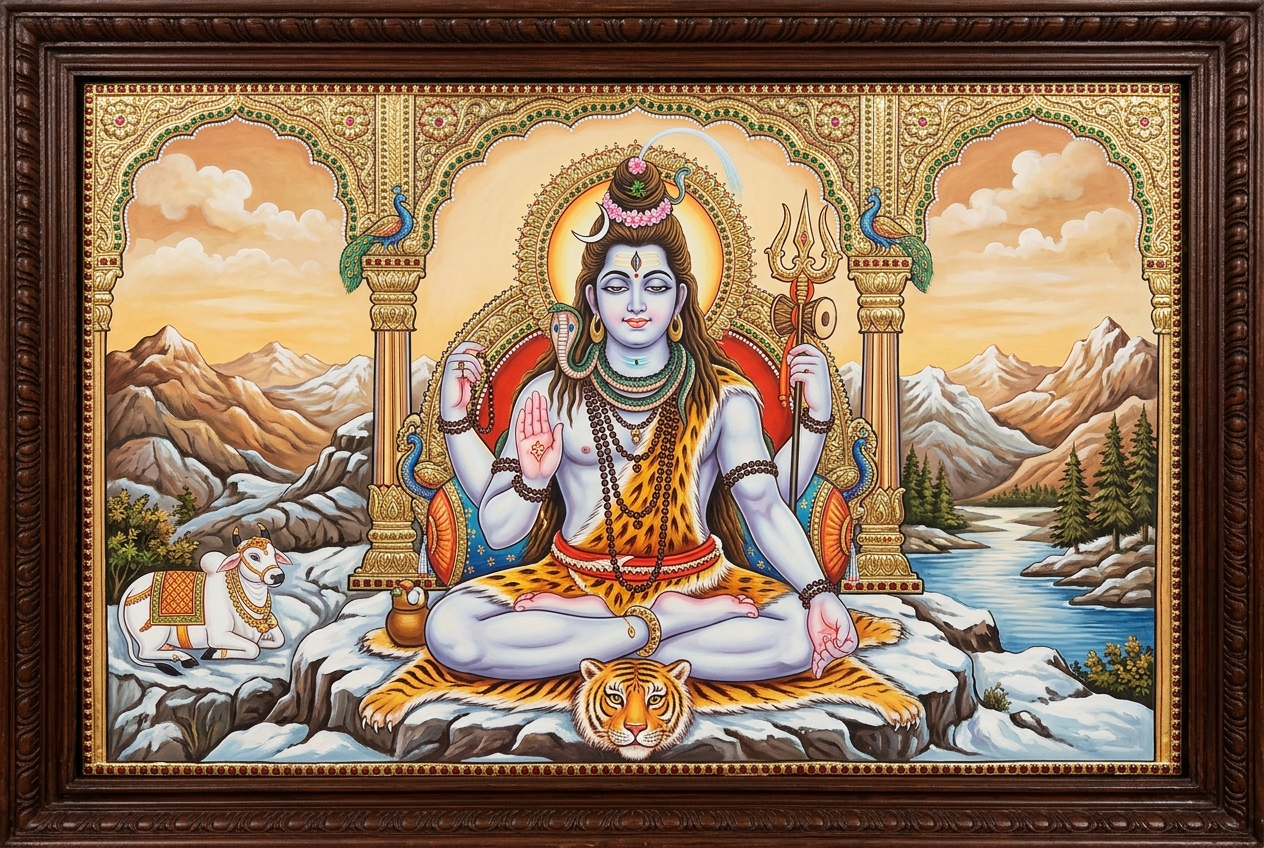
शिव
परिचय
AboutLord Shiva is a principal deity in Sanātana Dharma and the Supreme Being within Shaivism. As part of the Trimūrti, He is known as "The Destroyer," complementing Brahma, the creator, and Vishnu, the sustainer. His iconography typically features a third eye (Trinetra) on His forehead, the crescent moon adorning His matted hair (Jaṭā), the holy river Ganga flowing from His head, and the serpent king Vasuki coiled around His neck. He carries a trident (Triśūla) and a small drum (Ḍamaru). Shiva embodies a complex duality; He is worshipped both as a fierce ascetic meditating on Mount Kailash and as a benevolent householder with His consort Parvati and children Ganesha and Kartikeya.
Significance
The significance of Shiva lies in His role as the catalyst for universal transformation. In Hindu philosophy, destruction is not perceived as purely negative, but as a necessary precursor to rebirth and creation, representing the cyclical nature of time. As Nataraja, His cosmic dance (Tāṇḍava) symbolises the rhythmic cycle of creation and destruction of the universe. In Shaiva theology, He is the formless, limitless and transcendent ultimate reality (Brahman). Furthermore, as the supreme patron of yoga (Yogeśvara) and meditation, He represents the path to spiritual liberation, overcoming ego and ignorance to realise the true self.
मंत्र
Mantras
Om Namah Shivaya
ॐ नमः शिवाय
The great redeeming five-syllable (Panchakshari) mantra of Lord Shiva, offering purification, inner peace and spiritual awakening.
Mahamrityunjaya Mantra
महा मृत्युंजय मंत्र
The great death-conquering Vedic mantra of Lord Shiva, chanted to overcome fear, promote profound healing, and grant liberation.
Shiva Gayatri Mantra
शिव गायत्री मंत्र
The supreme Vedic Gayatri mantra dedicated to Lord Shiva, chanted to dissolve ignorance, illuminate the intellect, and invoke His transformative grace, inner stillness, and liberation.
सूक्त
Suktas
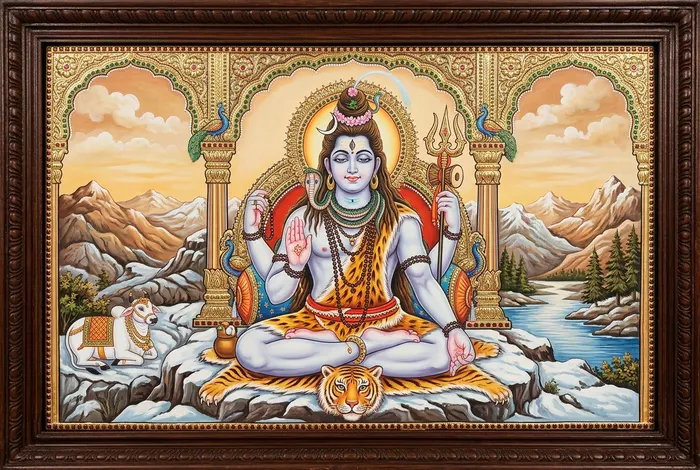
Śrī Rudram
श्री रुद्रम् नमकम्
The Sri Rudram Namakam is the core Vedic litany from the Krishna Yajurveda, comprising eleven anuvakas of salutations (namas) that revere Lord Rudra-Shiva in his terrifying, benign, and omnipresent cosmic manifestations.
Sri Rudram Chamakam
श्री रुद्रम् चमकम्
The Sri Rudram Chamakam is the companion Vedic litany to the Namakam from the Krishna Yajurveda, comprising eleven anuvakas of invocations (ca me — "and to me") requesting 347 distinct physical, mental, societal, and spiritual blessings.
स्तोत्र
Stotras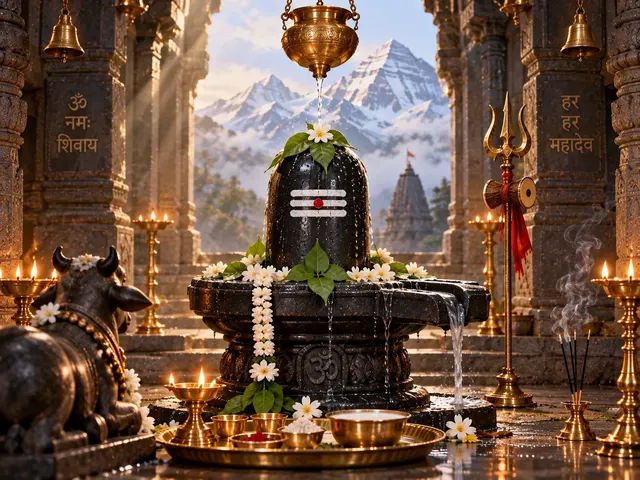
Lingashtakam
लिंगाष्टकम्
A traditional eight-verse hymn in praise of the Shivalinga, with meaning.
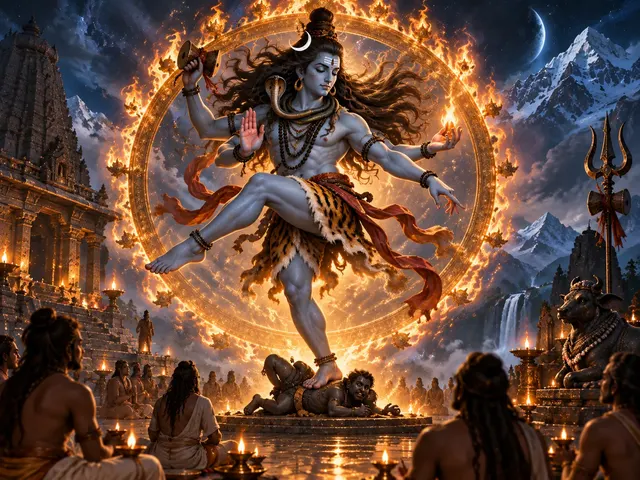
Shiva Tandava Stotram
शिव ताण्डव स्तोत्रम्
The powerful hymn to Shiva attributed to Ravana, praising his cosmic dance.
Shiva Ashtakam
शिवाष्टकम्
An eight-verse hymn honoring Lord Shiva as the supreme primeval cause and grantor of boons to Brahma, Indra, and Vishnu, celebrating his auspicious, compassionate, and transcendental forms.

Sri Kala Bhairavashtakam
श्री कालभैरवाष्टकम्
A powerful eight-verse hymn composed by Adi Shankaracharya honoring Kala Bhairava, the fierce guardian manifestation of Lord Shiva who rules over time, dissolves karmic debts, and protects the sacred city of Kashi.
पूजा विधि
Pooja Vidhiकथा
Kathas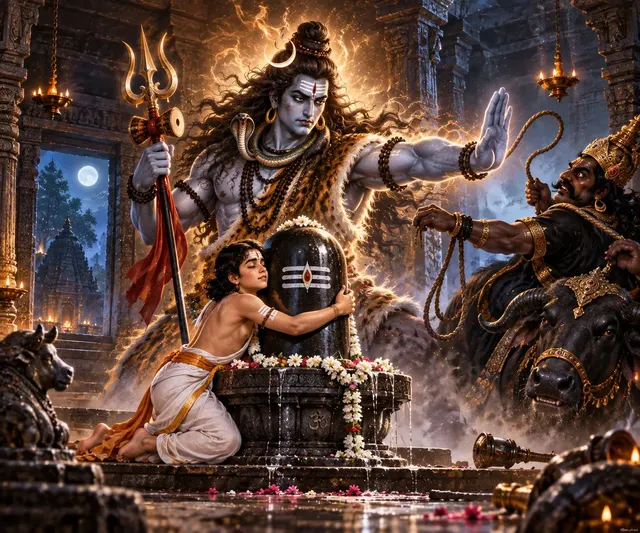
Markandeya and Mahakala
The story of Sage Mārkaṇḍeya, his devotion to Lord Shiva, and his triumph over death.

Descent of Ganga
An epic chronicle of King Bhagiratha's penance that brought Ganga to the earth. The endurance of an ascetic effort so unyielding that it birthed the Hindi idiom Bhagiratha Prayas (भगीरथ प्रयास), signifying an impossible feat achieved against insurmountable odds.
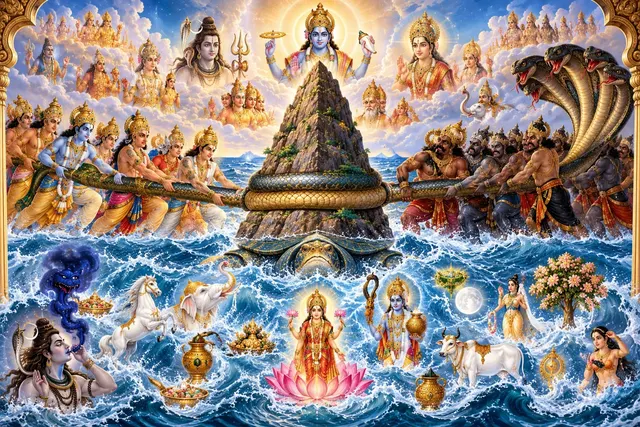
Churning of the Ocean
The epic of the Churning of the Cosmic Ocean by Devas and Asuras.
Your notes
Private reflections you can revisit anytime.
Questions & Discussions
Ask a question or start a discussion about this page.
- No questions or discussions yet — be the first.