ॐ
धर्मार्थDHARMARTHA

Create a free account to save & track your favourite knowledge.

Sign up

A note on Dharmartha's ongoing development:Dharmartha is currently in an active phase of content development. Our articles, references, descriptions, and other materials are being reviewed, expanded, and updated r…

Read this in
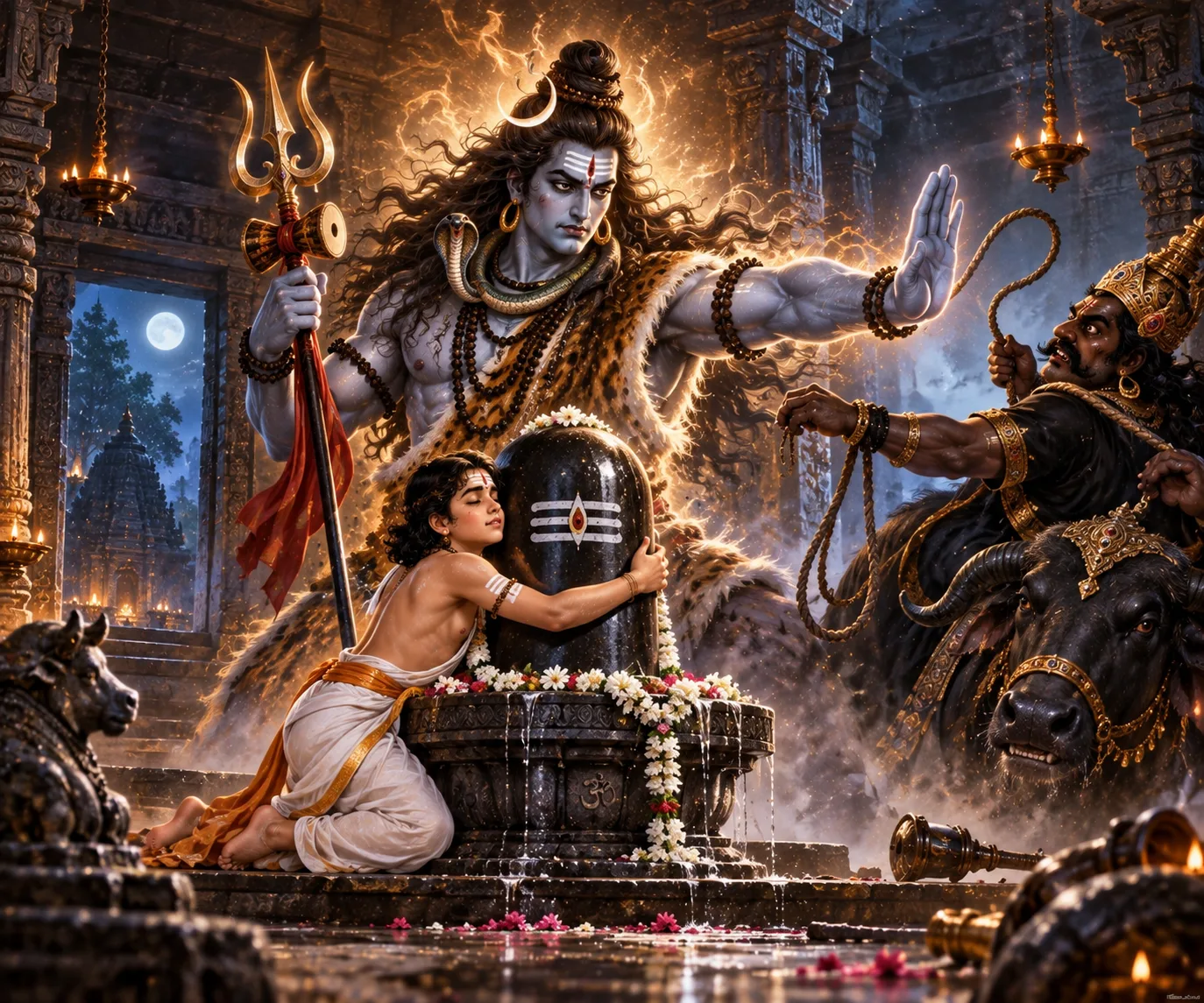
Markandeya and Mahakala

Kathas · Puranic

Markandeya and Mahakala

The story of Sage Mārkaṇḍeya, his devotion to Lord Shiva, and his triumph over death.

5 min

Chapter 1

The Choice

विकल्प

In the ancient Bhārgava lineage there lived a great sage named Mṛkaṇḍu (Mrikandu), a devout worshipper of Lord Shiva. Though accomplished in austerity and spiritual knowledge, Mṛkaṇḍu and his wife, Marudmatī, remained without a child. They therefore undertook severe tapas and worshipped Lord Shiva with unwavering devotion, praying for the blessing of a worthy son. Pleased with their austerities, Shiva appeared before them and offered them a difficult choice. They could have a son who would live for many years but would be dull-witted and lacking in distinction, or a son who would be exceptionally brilliant, virtuous and spiritually inclined, but whose life would end upon completing sixteen years. Mṛkaṇḍu and his wife chose the latter. They desired the one whose very life would be radiant with wisdom and virtue. Thus was born Mārkaṇḍeya.
1 / 9

Sources & References

Source / TraditionPurāṇic and Tamil Śaiva tradition
Scriptural ReferencesŚiva Purāṇa — Mārkaṇḍeya, his destined death at sixteen, Śiva's intervention and protection of the devotee; Brahma Purāṇa — Purāṇic tradition concerning Mārkaṇḍeya and Yama; Tirugnāna Sambandar, Tirunāvukkaracar (Appar), Tēvāram — Tirukkaḍavūr hymns celebrating Śiva's defeat of Kāla; Tirukkaḍavūr temple tradition — Kālasaṃhāra Mūrti and the preservation of the Mārkaṇḍeya–Yama episode; Ṛgveda 7.59.12 — source of the Tryambaka/Mahāmṛtyuñjaya Mantra
Editorial NoteThis account follows the traditional Mārkaṇḍeya legend as preserved in Purāṇic and Śaiva traditions. It incorporates the Tamil Śaiva understanding of the episode, particularly the celebrated tradition of Śiva kicking Kāla (Yama) with His sacred foot to protect Mārkaṇḍeya. Shiva’s defining act is kicking him with His sacred foot—celebrated in Tamil devotional literature as “காலனை காலால் உதைத்தல்” (“kicking Kāla with the foot”). The symbolism is deeply profound. Shiva's tiruvaḍi (His sacred feet) are ordinarily the source of grace, protection and liberation. Yet in this extraordinary moment, that very foot becomes the instrument by which Death is subdued. The Tamil Tēvāram hymns of the Śaiva saints and the sacred-site tradition of Tirukkaḍavūr preserve and celebrate this aspect of the legend. The "Mahāmṛtyuñjaya Mantra" itself is Vedic, occurring in Ṛgveda 7.59.12, while its association with Mārkaṇḍeya belongs to the later Śaiva tradition.

Dharmartha presents traditional knowledge with respect for its sources. Practices vary by lineage and region; this material does not assert exclusive or universal authority.

Related Services

Bring this into practice

Have a Shiva-related pooja, homam or yagya performed for you in the traditional way.

Your notes

Private reflections you can revisit anytime.

Sign in to take and save personal notes on this page. Sign in

Questions & Discussions

Ask a question or start a discussion about this page.

  • No questions or discussions yet — be the first.