ॐ
धर्मार्थDHARMARTHA

Create a free account to save & track your favourite knowledge.

Sign up

A note on Dharmartha's ongoing development:Dharmartha is currently in an active phase of content development. Our articles, references, descriptions, and other materials are being reviewed, expanded, and updated r…

Read this in
Savitri and Satyavan

Kathas · Itihasic

Savitri and Satyavan

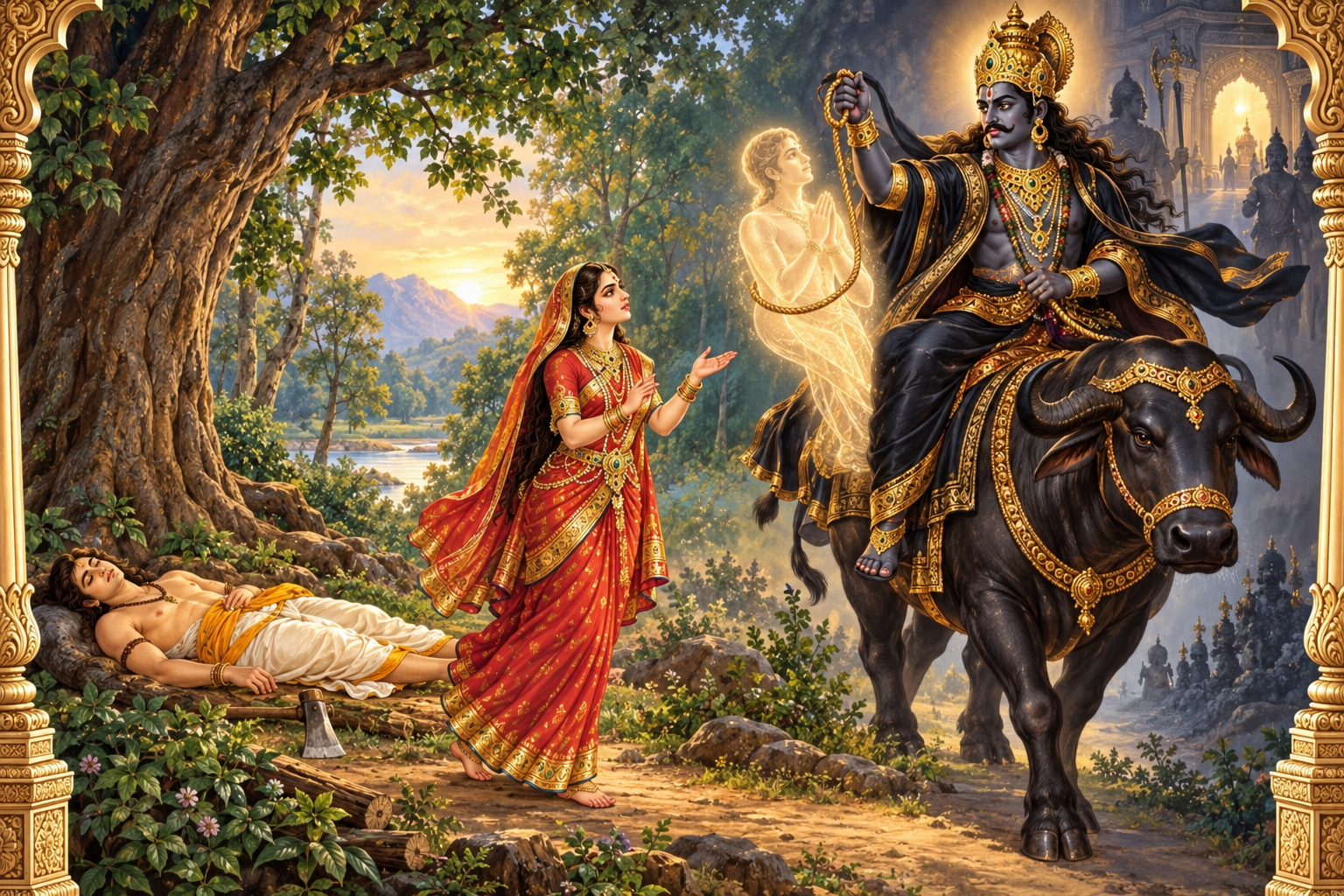
The story of Savitri's unwavering devotion, and the boons that ultimately restored her husband, Satyavan’s life.

5 min

Chapter 1

Solar Princess

सूर्यकन्या

For eighteen years, King Aśvapati of Madra lived under strict vows and offered a hundred thousand oblations in the Sāvitrī sacrifice. He had no child, and he longed for sons to carry on his line. At last the Goddess Sāvitrī appeared after pleased with his devotion. She told him that, by the favour of Brahmā, a daughter of great radiance would be born to him instead. In time his queen, Mālavī, gave birth to a lotus-eyed girl. Aśvapati named her Sāvitrī in honour of the goddess. She grew into a woman of such brilliance that she seemed a goddess in human form, and no king dared ask for her hand. Recognising her nature, and seeing that the time for her marriage had come, her father sent her out with his counsellors to travel across the land to choose a suitor worthy of her spirit.
1 / 13

Sources & References

Source / TraditionSāvitrī-Upākhyāna, traditionally known as the Pativratā-Māhātmya, in the Mahābhārata.
Scriptural ReferencesMahabharata, Vana Parva · The principal source for this retelling is the Sāvitrī-Upākhyāna of the Vana Parva, in which Ṛṣi Mārkaṇḍeya narrates the story of Sāvitrī and Satyavān to Yudhiṣṭhira. The episode covers Chapters 293–299 in the commonly used Gītā Press numbering.
Editorial NoteThe story comes from the Mahābhārata, recording her journey to choose Satyavān, Nārada’s prophecy, the events of the fateful day, her dialogue with Yama, and the five boons through which the fortunes of her family and Satyavān are restored. One correction is especially important: “five distinct boons” is worth retaining. The Sanskrit narrative explicitly has Sāvitrī tell the assembled sages that Yama granted her five boons.

Dharmartha presents traditional knowledge with respect for its sources. Practices vary by lineage and region; this material does not assert exclusive or universal authority.

Related Services

Bring this into practice

Have a Yama-related pooja, homam or yagya performed for you in the traditional way.

Your notes

Private reflections you can revisit anytime.

Sign in to take and save personal notes on this page. Sign in

Questions & Discussions

Ask a question or start a discussion about this page.

  • No questions or discussions yet — be the first.