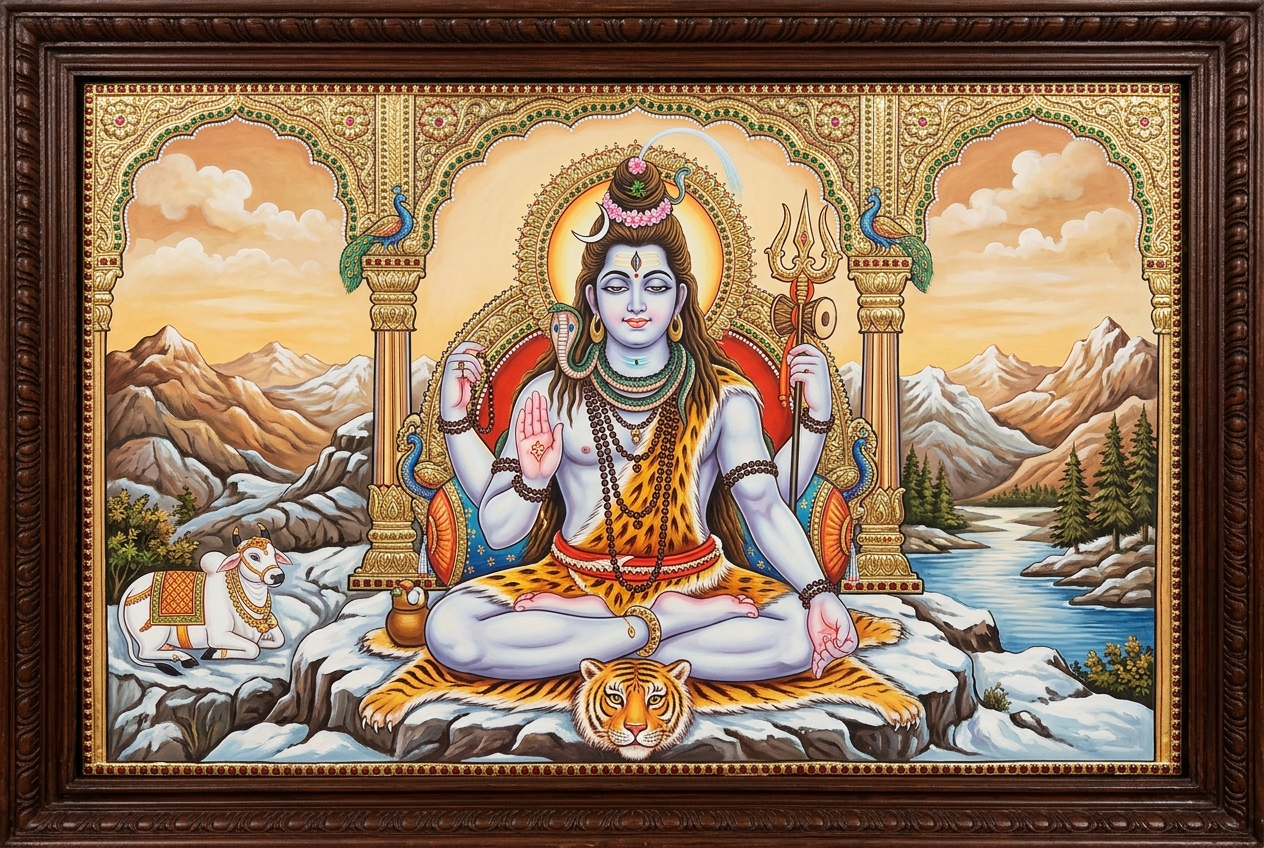
Shiva Gayatri Mantra
शिव गायत्री मंत्र
About the Shiva Gayatri Mantra
The Shiva Gayatri is the foundational Vedic illumination prayer dedicated to Lord Shiva.
- Deity
- Shiva
- Tradition
- Vedic, Shaiva, Smarta, Universal
- Purpose
- Spiritual wisdom, purification of consciousness, freedom from fear of mortality, liberation.
- Source
- Vedic tradition (Kṛṣṇa Yajurveda / Taittirīya Āraṇyaka), Śaiva, Smārta, Universal.
मूल पाठ
Sanskrit textॐ तत्पुरुषाय विद्महे महादेवाय धीमहि तन्नो रुद्रः प्रचोदयात्
Oṃ tatpuruṣāya vidmahe mahādevāya dhīmahi tanno rudraḥ pracodayāt
Shiva Gayatri Mantra — recitation
अर्थ
MeaningIt addresses the Supreme Lord through three profound epithets: Tatpurusha (the primordial Cosmic Person), Mahadeva (the Great God of supreme consciousness), and Rudra (the compassionate destroyer of ignorance and suffering).
"Om. Let us realise that Supreme Being (Tatpurusha). May we meditate upon the Great God (Mahadeva). May that Rudra inspire and guide our intellect toward the highest truth."
संदर्भ
ContextOriginating in the Sruti corpus of the Krishna Yajurveda, this mantra is universally recited during Sandhyavandanam, daily Shiva puja, and deep meditative practices. It functions as an illuminative prayer to expand human consciousness, harmonising intellect with cosmic awareness rather than pursuing specific worldly results.
प्रयोग
How it is traditionally usedChant 21 (minimum daily count), 54 (half mala), 108, or 1008 times daily using an authentic Rudraksha mala. Rudraksha beads are scripturally mandatory for Lord Shiva's worship, as they resonate with His transformative consciousness and shield the practitioner's bio-energetic aura. Sit ideally facing east during the morning twilight (Brahma Muhurta or sunrise) for pure spiritual intellect and enlightenment, or facing north toward Mount Kailasha for siddhi, mental poise, and liberation. Mondays (Somavara), Pradosha vrats (Trayodashi tithi), Masa Shivaratri, and days when the Moon traverses the Ardra nakshatra (Rudra's ruling asterism) are exceptionally auspicious for this practice. Strict shiksha requires maintaining the clean octosyllabic cadence of the three padas (8+8+8), pausing gently between each line and articulating the final visarga in "Rudraḥ" before concluding.
Sources & References
Dharmartha presents traditional knowledge with respect for its sources. Practices vary by lineage and region; this material does not assert exclusive or universal authority.
Spot an error or have a suggestion?
Help us keep this accurate — report a mistake or suggest content for this page.
Your notes
Private reflections you can revisit anytime.
Questions & Discussions
Ask a question or start a discussion about this page.
- No questions or discussions yet — be the first.
Related Knowledge
Descent of Ganga
An epic chronicle of King Bhagiratha's penance that brought Ganga to the earth. The endurance of an ascetic effort so unyielding that it birthed the Hindi idiom Bhagiratha Prayas (भगीरथ प्रयास), signifying an impossible feat achieved against insurmountable odds.
Markandeya and Mahakala
The story of Sage Mārkaṇḍeya, his devotion to Lord Shiva, and his triumph over death.
Churning of the Ocean
The epic of the Churning of the Cosmic Ocean by Devas and Asuras.
Lingashtakam
लिंगाष्टकम्
A traditional eight-verse hymn in praise of the Shivalinga, with meaning.
Mahashivratri
The great night of Shiva, observed with vigil, recitation and abhishekam.
Mahamrityunjaya Mantra
महा मृत्युंजय मंत्र
The great death-conquering Vedic mantra of Lord Shiva, chanted to overcome fear, promote profound healing, and grant liberation.
Om Namah Shivaya
ॐ नमः शिवाय
The great redeeming five-syllable (Panchakshari) mantra of Lord Shiva, offering purification, inner peace and spiritual awakening.
Shiva Tandava Stotram
शिव ताण्डव स्तोत्रम्
The powerful hymn to Shiva attributed to Ravana, praising his cosmic dance.
Shivalinga Abhishekam Vidhi
Understanding the traditional process and offerings used in Shiva Abhishekam.
Sri Rudram Chamakam
श्री रुद्रम् चमकम्
The Sri Rudram Chamakam is the companion Vedic litany to the Namakam from the Krishna Yajurveda, comprising eleven anuvakas of invocations (ca me — "and to me") requesting 347 distinct physical, mental, societal, and spiritual blessings.
Śrī Rudram
श्री रुद्रम् नमकम्
The Sri Rudram Namakam is the core Vedic litany from the Krishna Yajurveda, comprising eleven anuvakas of salutations (namas) that revere Lord Rudra-Shiva in his terrifying, benign, and omnipresent cosmic manifestations.
Continue your journey