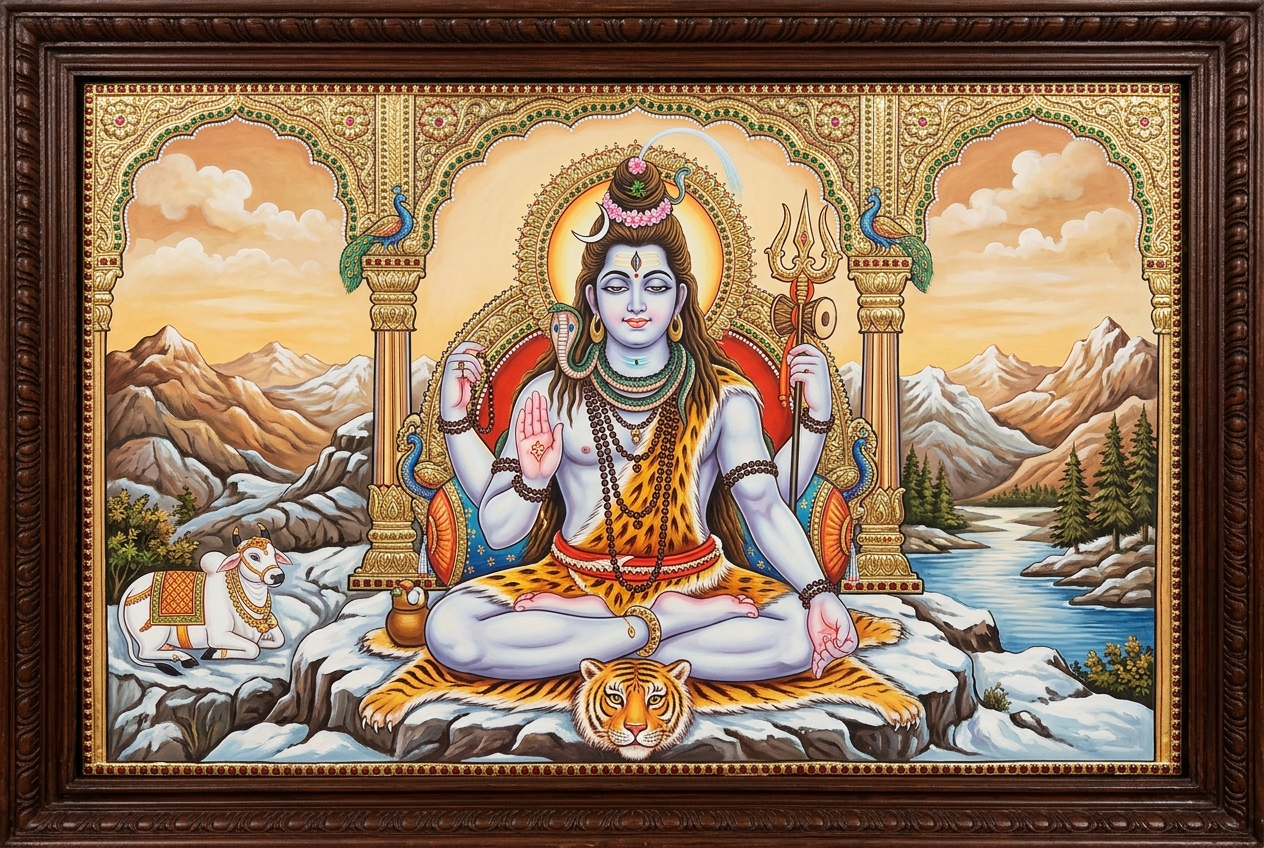
Om Namah Shivaya
ॐ नमः शिवाय
Shiva Panchakshari Mantra
Known as the Panchakshari mantra, this is the most fundamental and potent chant dedicated to Lord Shiva. It is traditionally chanted to purify the mind, dissolve ego, and realise one's true inner Self.
- Deity
- Shiva
- Tradition
- Shaiva, Universal
- Purpose
- Nitya japa (daily chanting), Atma-shuddhi (self-purification), Moksha (liberation).
- Source
- Kṛṣṇa Yajurveda (Śrī Rudram); Śaiva, now universal.
मूल पाठ
Sanskrit textॐ नमः शिवाय
Oṃ Namaḥ Śivāya
Om Namah Shivaya — recitation
अर्थ
Meaning"Om" is the primordial cosmic sound. "Namah" means "I bow or offer salutations". "Shivaya" translates to "to Lord Shiva" (the auspicious one). Together: "I bow to Lord Shiva" or "I bow to the inner Self".
संदर्भ
ContextOriginating from the very heart of the Krishna Yajurveda, this mantra is the core of Shaiva worship. It is a universal chant embraced by ascetics, householders, and seekers for deep meditation and daily devotion.
प्रयोग
How it is traditionally usedChant 11, 108, or 1008 times daily using a Rudraksha mala. While 108 aligns with a full mala, 11 specifically honours the 11 forms of Shiva (Ekadasha Rudras). Sit ideally facing east or north. To fully awaken the mantra's potential, a sustained ritual practice (purascharana) of chanting it 5,00,000 times is traditionally prescribed. Ensure proper pronunciation based on shiksha (the classical Vedic science of phonetics), specifically sounding a soft, breathy echo for the visarga in "Namah" and articulating a clear palatal "Shi".
Sources & References
Dharmartha presents traditional knowledge with respect for its sources. Practices vary by lineage and region; this material does not assert exclusive or universal authority.
Spot an error or have a suggestion?
Help us keep this accurate — report a mistake or suggest content for this page.
Your notes
Private reflections you can revisit anytime.
Questions & Discussions
Ask a question or start a discussion about this page.
- No questions or discussions yet — be the first.
Related Knowledge
Gayatri Mantra
गायत्री मंत्र
The most revered Vedic prayer addressed to the Sun God (Savitr), chanted to illuminate the intellect and dispel ignorance.
Mahamrityunjaya Mantra
महा मृत्युंजय मंत्र
The great death-conquering Vedic mantra of Lord Shiva, chanted to overcome fear, promote profound healing, and grant liberation.
Durga Mantra
दुर्गा मंत्र
The highly protective seed-salutation (Bija-Nama) mantra of Goddess Durga, chanted to build an impenetrable spiritual shield and overcome fear, anxiety, and danger.
Continue your journey