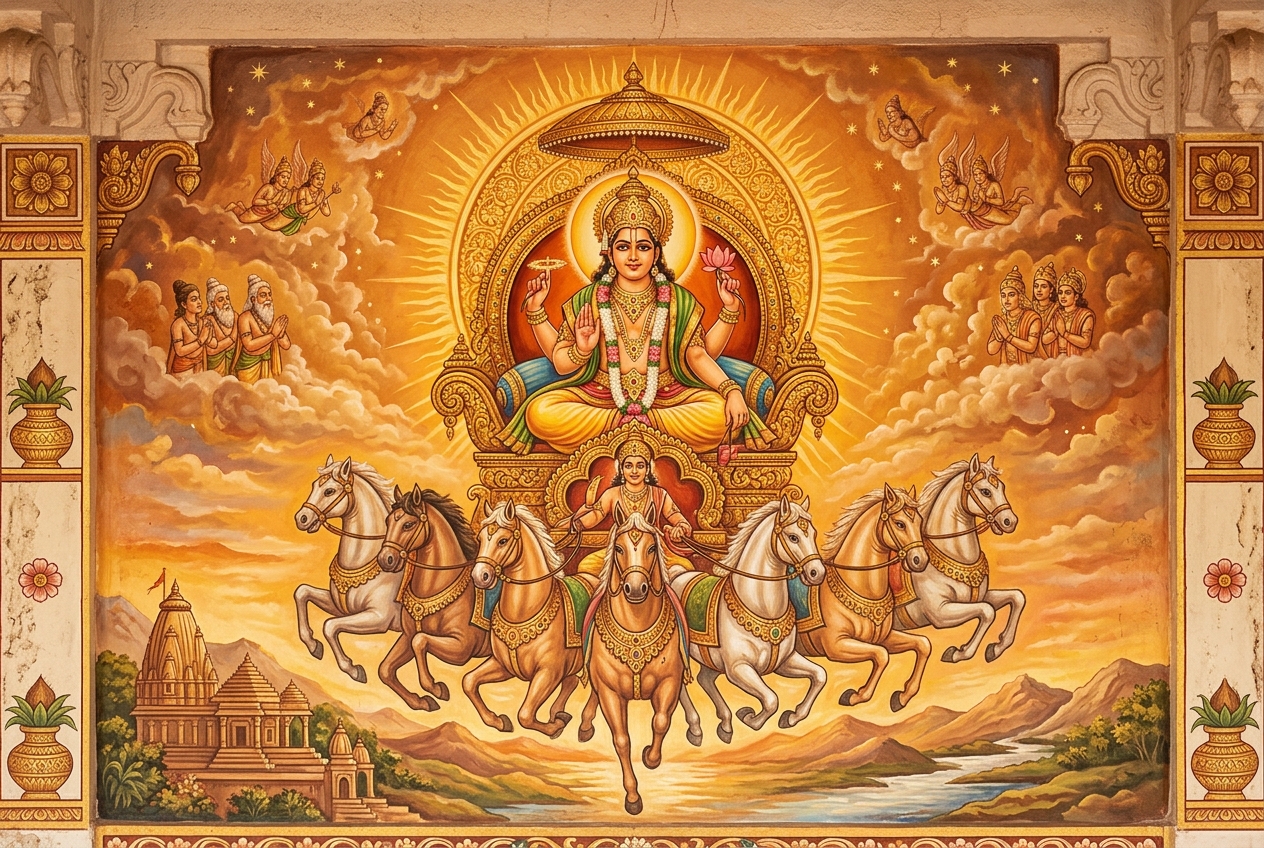
Gayatri Mantra
गायत्री मंत्र
Gayatri Mantra
Revered as the mother of the Vedas, the Gayatri Mantra is a universal prayer for enlightenment. It asks for a clear, illumined intellect to guide one's actions. It is traditionally initiated during the Upanayana ceremony and forms the absolute core of daily Hindu worship.
- Deity
- Surya
- Tradition
- Vedic, Universal
- Purpose
- Sandhyavandana, increasing intellect, self-realisation.
- Source
- Ṛgveda; Vedic tradition, now universal.
मूल पाठ
Sanskrit textॐ भूर्भुवः स्वः। तत्सवितुर्वरेण्यं भर्गो देवस्य धीमहि। धियो यो नः प्रचोदयात्
Oṃ bhūr bhuvaḥ svaḥ | tat savitur vareṇyaṃ bhargo devasya dhīmahi | dhiyo yo naḥ pracodayāt
Gayatri Mantra — recitation
अर्थ
Meaning"Om, the primordial sound; Bhur Bhuvah Svah, the physical, astral and celestial planes. We meditate on the adorable, radiant glory of the Divine Sun (Savitr). May He inspire and illuminate our intellect."
संदर्भ
ContextOriginally revealed to the sage Vishvamitra, this mantra is found in the Rig Veda. It is the central chant of the daily Sandhyavandana rituals performed at dawn, solar noon, and dusk.
प्रयोग
How it is traditionally usedChant 10, 28, 108, or 1008 times daily using a Tulsi or Rudraksha mala. According to classical Sandhyavandana rules, 10 is the minimum during travel or emergencies, 28 for midday, and 108 is the ideal standard for dawn and dusk. Sit facing east in the morning, north at midday, and west in the evening.
Sources & References
Dharmartha presents traditional knowledge with respect for its sources. Practices vary by lineage and region; this material does not assert exclusive or universal authority.
Spot an error or have a suggestion?
Help us keep this accurate — report a mistake or suggest content for this page.
Your notes
Private reflections you can revisit anytime.
Questions & Discussions
Ask a question or start a discussion about this page.
- No questions or discussions yet — be the first.
Related Knowledge
Om Namah Shivaya
ॐ नमः शिवाय
The great redeeming five-syllable (Panchakshari) mantra of Lord Shiva, offering purification, inner peace and spiritual awakening.
Mahalakshmi Mantra
महालक्ष्मी मंत्र
The supreme seed-salutation mantra of Goddess Mahalakshmi, chanted to invoke Her divine grace for immense wealth, spiritual abundance, and lasting peace.
Sarva Mangala Mangalye
सर्व मंगल मांगल्ये
The universal Vedic-Tantric prayer to Goddess Durga (Narayani) for auspiciousness, marital harmony, protection, and the fulfilment of all desires.
Continue your journey