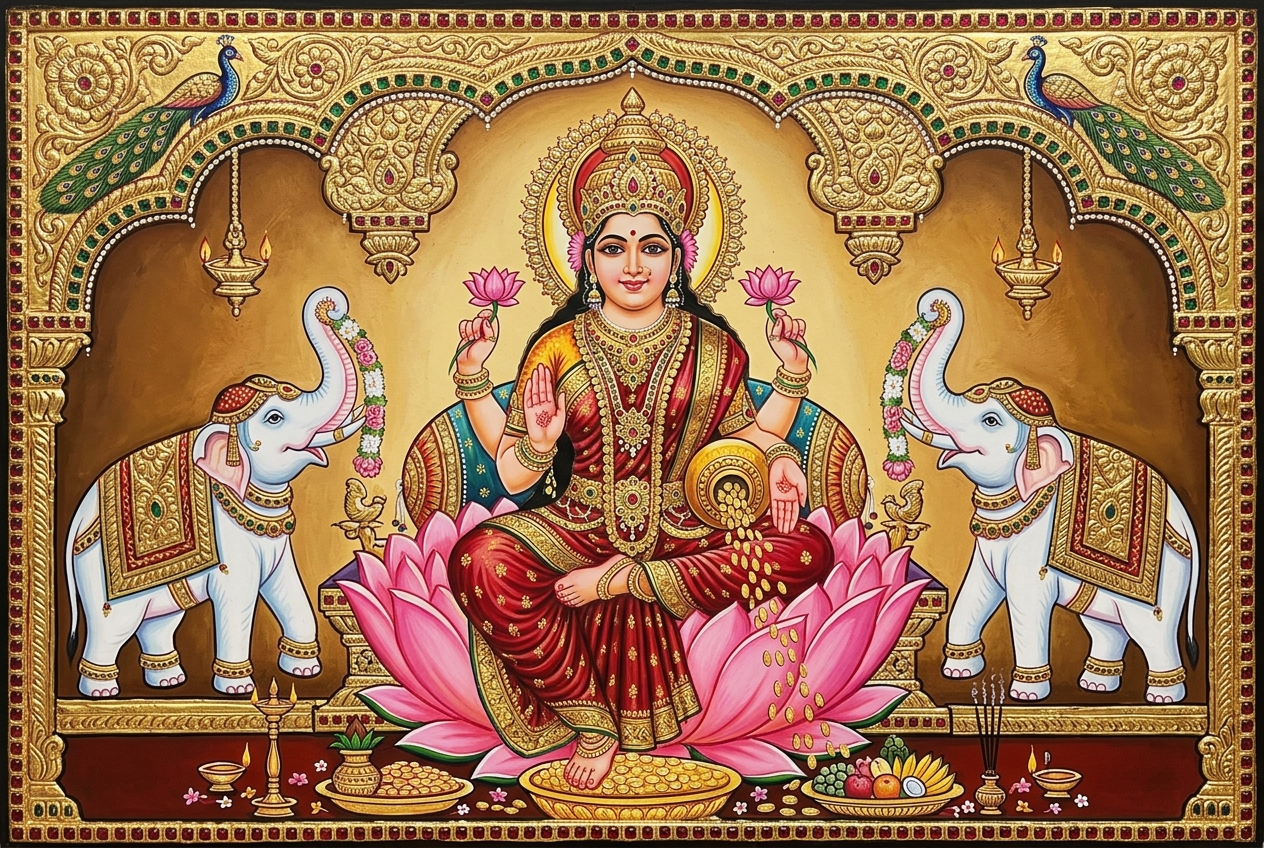
Mahalakshmi Mantra
महालक्ष्मी मंत्र
Mahalakshmi Beeja-Nama Mantra
Goddess Mahalakshmi is the Supreme Mother of the universe, governing not only material wealth but also spiritual prosperity, beauty, and auspiciousness. This powerful mantra anchors the devotee to Her through Her supreme seed syllable, "Shreem".
- Deity
- Lakshmi
- Tradition
- Vaishnava, Shakta, Universal
- Purpose
- Attainment of wealth, abundance, good fortune, peace.
- Source
- Vaiṣṇava and Śākta traditions, now universal.
मूल पाठ
Sanskrit textॐ श्रीं महालक्ष्म्यै नमः
Oṃ śrīṃ mahālakṣmyai namaḥ
Mahalakshmi Mantra — recitation
अर्थ
Meaning"Om" is the primordial cosmic vehicle. "Shreem" is the specific seed sound (Beej) of Goddess Mahalakshmi, representing pure wealth, beauty, and satisfaction. "Mahalakshmiyai" means "to the Great Goddess Lakshmi", and "Namah" means "salutations". Together: "Om, I offer my salutations to the Great Goddess Lakshmi, invoked through Her seed of abundance."
संदर्भ
ContextThis mantra is universally utilised across all Hindu traditions for daily worship and massive wealth-attraction rituals.
प्रयोग
How it is traditionally usedChant 108 or 1008 times daily using a Kamal Gatta (dried lotus seed) or Sphatik (crystal) mala. The lotus seed is Her absolute favourite and specifically attracts material wealth, while crystal is used for spiritual peace. Sit ideally facing north, as North is the direction of Kubera (the Lord of Wealth), to maximise material accumulation; or face east for spiritual devotion to Her. Fridays, the festival of Diwali, and the Pushya nakshatra are exceptionally auspicious for this practice.
Sources & References
Dharmartha presents traditional knowledge with respect for its sources. Practices vary by lineage and region; this material does not assert exclusive or universal authority.
Spot an error or have a suggestion?
Help us keep this accurate — report a mistake or suggest content for this page.
Your notes
Private reflections you can revisit anytime.
Questions & Discussions
Ask a question or start a discussion about this page.
- No questions or discussions yet — be the first.
Related Knowledge
Gayatri Mantra
गायत्री मंत्र
The most revered Vedic prayer addressed to the Sun God (Savitr), chanted to illuminate the intellect and dispel ignorance.
Om Namah Shivaya
ॐ नमः शिवाय
The great redeeming five-syllable (Panchakshari) mantra of Lord Shiva, offering purification, inner peace and spiritual awakening.
Continue your journey