Daily practice
Shiva Puja Vidhi
- Deity
- Shiva
- Tradition
- Shaiva
- Occasion
- Daily practice
- Source
- Nitya Karm Pooja Prakash (Gita Press); Shukla Yajurveda Rudram (Mahamrityunjaya); Rudrashtakam.
सामग्री
Required materials- Shivalinga or Shiva murti
- Copper vessel and abhisheka spout (if available)
- Clean water, and Gangajal if available
- Panchamrit (milk, curd, ghee, honey, sugar)
- Bilva (bel) leaves — trifoliate, offered upside down
- White flowers (dhatura, aak also traditional)
- Chandan (sandal) and vibhuti (bhasma)
- Akshata (unbroken rice)
- Dhoop and a ghee lamp
- Fruit and a simple bhog for naivedya
- Camphor for aarti
- Belpatra count as available (traditionally in threes)
संकल्प
Sankalpaॐ विष्णुर्विष्णुर्विष्णुः। अद्य (देश-काल-तिथि-वार-नक्षत्रोच्चारणपूर्वकम्) (नाम)-नामाहं (गोत्र)-गोत्रः मम आत्मनः श्रुतिस्मृतिपुराणोक्तफलप्राप्त्यर्थं श्रीShivaप्रीत्यर्थं यथाशक्ति पूजनम् अहं करिष्ये॥
Recite the sankalpa holding water, flowers and rice in the right palm; then release the water.
पूजा विधि
Step-by-step procedure- 1
Achamana & Sankalpa (आचमन-संकल्प)
Purify with achamana, then state the sankalpa of intent with water and akshata.
- 2
Dhyana & Aavahan (ध्यान-आवाहन)
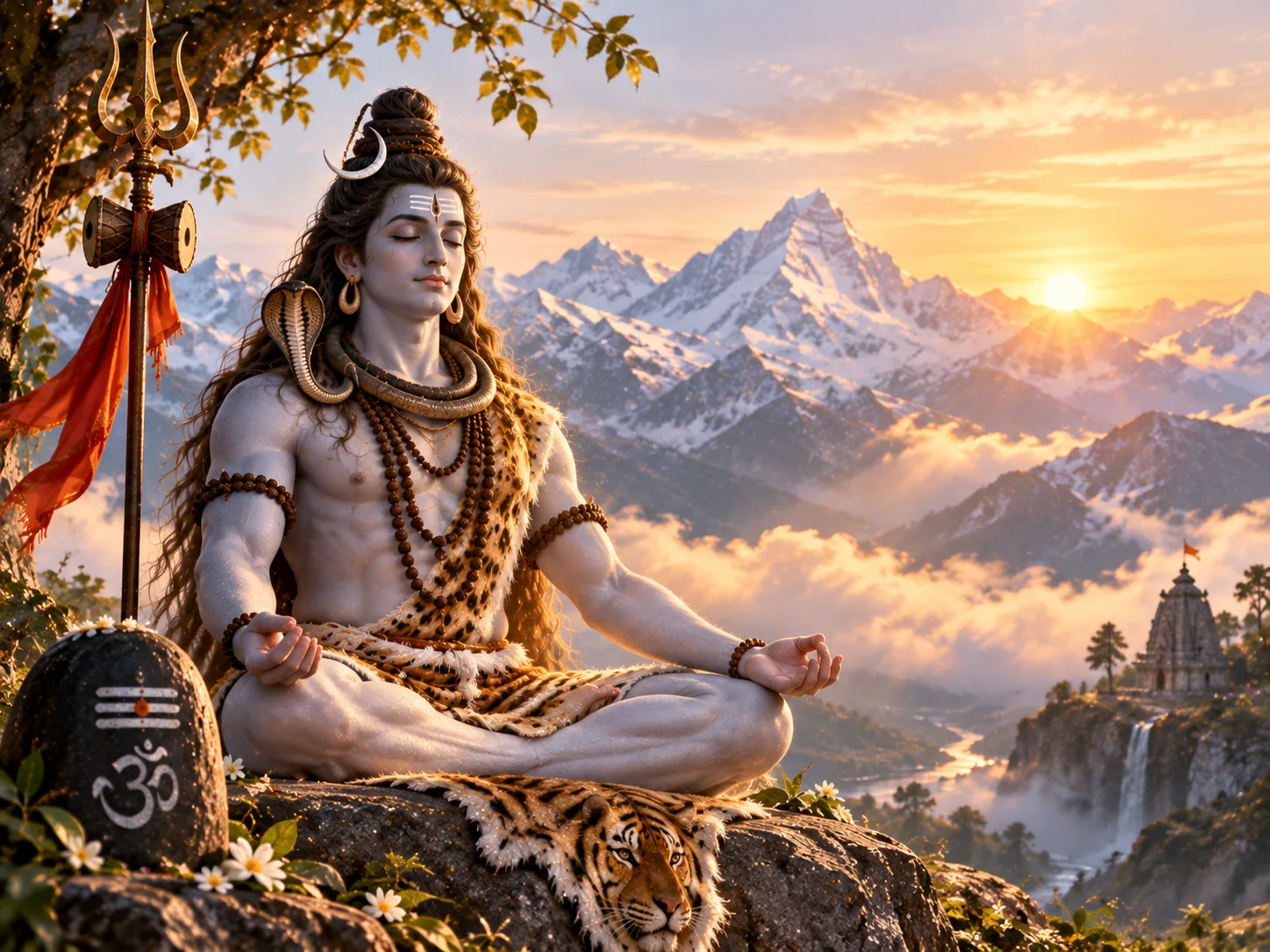
Meditate on Shiva as the calm, auspicious one and invoke him with 'ॐ नमः शिवाय'.
- 3
Abhisheka (अभिषेक)
Bathe the linga with water/Gangajal, then panchamrit, then pure water, chanting 'ॐ नमः शिवाय' or the Rudra mantra throughout.
- 4
Vibhuti & Chandan (विभूति-चन्दन)
Apply three horizontal lines of bhasma and chandan tilak.
- 5
Bilva-patra & Pushpa (बिल्वपत्र)
Offer bilva leaves (smooth side down) and white flowers, one per mantra.
- 6
Akshata & Dhoop-Deep (अक्षत-धूप-दीप)
Offer unbroken rice, then incense and the lamp.
- 7
Naivedya (नैवेद्य)
Offer fruit / simple bhog and water; avoid haldi-kumkum on the linga itself.
- 8
Rudra Namaskara (नमस्कार)
Recite the Mahamrityunjaya and offer prostrations.
- 9
Aarti & Pradakshina (आरती-प्रदक्षिणा)
Perform camphor aarti; circumambulate only up to the jaladhari (do not cross it) and return.
- 10
Kshama & Prasada (क्षमा-प्रसाद)
Seek forgiveness, pray for well-being, and share prasada.
मंत्र
Mantrasॐ नमः शिवाय
oṃ namaḥ śivāya
The Panchakshara — the five-syllable heart of Shiva worship; used for abhisheka and offerings.
ॐ त्र्यम्बकं यजामहे सुगन्धिं पुष्टिवर्धनम्। उर्वारुकमिव बन्धनान् मृत्योर्मुक्षीय माऽमृतात्॥
oṃ tryambakaṃ yajāmahe sugandhiṃ puṣṭi-vardhanam · urvārukam iva bandhanān mṛtyor mukṣīya mā'mṛtāt
Mahamrityunjaya — we worship the three-eyed one; may he free us from the bondage of death, as the cucumber from its stalk, unto immortality.
नमामीशमीशान निर्वाणरूपं विभुं व्यापकं ब्रह्मवेदस्वरूपम्।
namāmīśam īśāna nirvāṇa-rūpaṃ vibhuṃ vyāpakaṃ brahma-veda-svarūpam
Opening of the Rudrashtakam — I bow to Ishana, of the form of liberation, all-pervading, the very form of Brahman and the Veda.
उपचार
Offerings (Upachara)ॐ गन्धं समर्पयामि।
oṃ gandhaṃ samarpayāmi
I offer sandal paste (gandha).
ॐ पुष्पं समर्पयामि।
oṃ puṣpaṃ samarpayāmi
I offer flowers (pushpa).
ॐ धूपमाघ्रापयामि।
oṃ dhūpam āghrāpayāmi
I offer incense (dhupa).
ॐ दीपं दर्शयामि।
oṃ dīpaṃ darśayāmi
I show the lamp (deepa).
ॐ नैवेद्यं निवेदयामि।
oṃ naivedyaṃ nivedayāmi
I offer the food (naivedya).
Standard panchopachara — offer each item while reciting the corresponding mantra.
Sources & References
Dharmartha presents traditional knowledge with respect for its sources. Practices vary by lineage and region; this material does not assert exclusive or universal authority.
Spot an error or have a suggestion?
Help us keep this accurate — report a mistake or suggest content for this page.
Your notes
Private reflections you can revisit anytime.
Questions & Discussions
Ask a question or start a discussion about this page.
- No questions or discussions yet — be the first.
Related Knowledge
Continue your journey