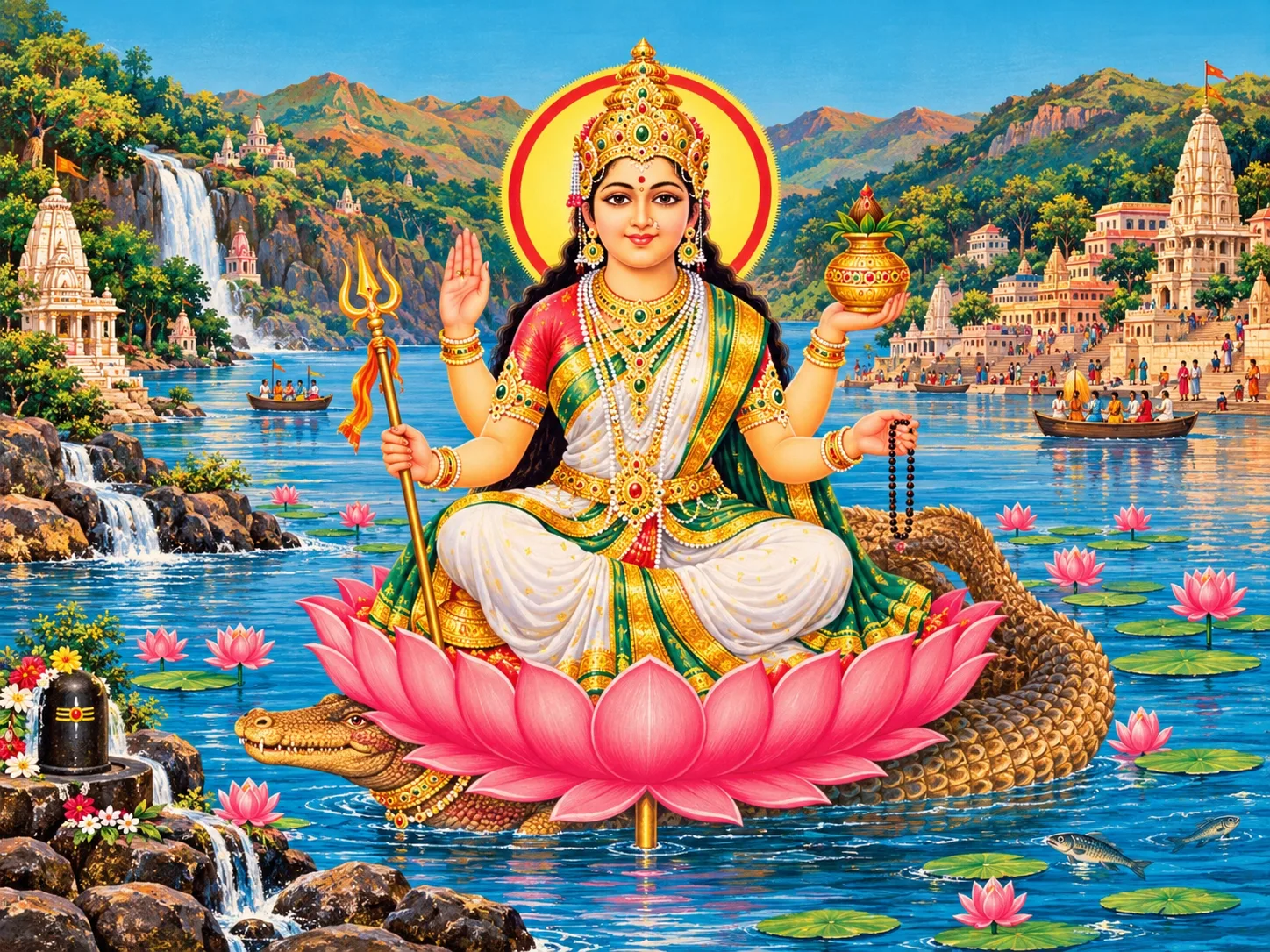
Narmada
Narmadashtakam
श्री नर्मदाष्टकम्
The Narmadashtakam is an ancient devotional hymn attributed to Jagadguru Adi Shankaracharya celebrating the sacred river Narmada (also known as Reva). Widely chanted along the river's ghats and during pilgrimage circuits, each verse concludes with the iconic surrender, "Tvadīya-pāda-paṅkajaṁ namāmi devi narmade" ("O Goddess Narmada, I bow at your lotus feet"). It exalts the river as a cosmic sanctifier worshipped by gods, sages, and the divine Trinity.
- Deity
- Narmada
- Source
- Advaita Vedanta / Smarta & Shakta Traditions
मूल पाठ
Sanskrit textसबिन्दुसिन्धुसुस्खलत्तरङ्गभङ्गरञ्जितं द्विषत्सु पापजातजातकारिवारिसंयुतम् । कृतान्तदूतकालभूतभीतिहारिवर्मदे त्वदीयपादपङ्कजं नमामि देवि नर्मदे
Sabindu-sindhu-suskhalat-taraṅga-bhaṅga-rañjitaṁ Dviṣatsu pāpajāta-jāt-akāri-vāri-saṁyutam | Kṛtānta-dūta-kālabhūta-bhītihāri-varmade Tvadīya-pāda-paṅkajaṁ namāmi devi narmade
॥ १ ॥
त्वदम्बुलीनदीनमीनदिव्यसम्प्रदायकं कलौ मलौघभारहारिसर्वतीर्थनायकम् । सुमत्स्यकच्छनक्रचक्रवाकचक्रशर्मदे त्वदीयपादपङ्कजं नमामि देवि नर्मदे
Tvadambu-līna-dīna-mīna-divya-sampradāyakaṁ Kalau malaugha-bhārahāri-sarva-tīrtha-nāyakam | Sumatsya-kaccha-nakra-cakravāka-cakra-śarmade Tvadīya-pāda-paṅkajaṁ namāmi devi narmade
॥ २ ॥
महापभीरनीरपूरपापधूतभूतलं ध्वनत्समस्तवोरघोरसंवितारिताचलम् । जगद्विलये महाभये विभवकारिहर्मदे त्वदीयपादपङ्कजं नमामि देवि नर्मदे
Mahāpabhīra-nīrapūra-pāpadhūta-bhūtalaṁ Dhvanat-samasta-vora-ghora-saṁvitāritācalam | Jagadvilaye mahābhaye vibhavakāri-harmade Tvadīya-pāda-paṅkajaṁ namāmi devi narmade
॥ ३ ॥
शतं तवामृताम्बु भूरिभावितं भवाम्बुधौ सुतीर्थसञ्चयावृतं सुरप्रकाशिताश्रितम् । सुपुण्यदानदीक्षिते महाकृपाकटाक्षदे त्वदीयपादपङ्कजं नमामि देवि नर्मदे
Śataṁ tavāmṛtāmbu bhūribhāvitaṁ bhavāmbudhau Sutīrtha-sañcayāvṛtaṁ sura-prakāśitāśritam | Supuṇyadāna-dīkṣite mahākṛpā-kaṭākṣade Tvadīya-pāda-paṅkajaṁ namāmi devi narmade
॥ ४ ॥
कृदन्तदूतभीतिहारि सन्ततेह दुर्विषाद् अमन्दभक्तिसारदे महासुखैकसाधके । विरञ्चिविष्णुशङ्करप्रपूजिताङ्घ्रिनर्मदे त्वदीयपादपङ्कजं नमामि देवि नर्मदे
Kṛdanta-dūta-bhītihāri santateha durviṣād Amanda-bhaktisārade mahāsukhaika-sādhake | Virañci-viṣṇu-śaṅkara-prapūjitāṅghri-narmade Tvadīya-pāda-paṅkajaṁ namāmi devi narmade
॥ ५ ॥
रसोद्भवं प्रभावतीं सुरैरपारमर्चितां भुजङ्गदंशनाशनं महाविमोक्षदायिनम् । अजस्रकीर्तिवर्धिनीं भवाब्धितारिहर्मदे त्वदीयपादपङ्कजं नमामि देवि नर्मदे
Rasodbhavaṁ prabhāvatīṁ surairapāram-arcitāṁ Bhujaṅga-daṁśa-nāśanaṁ mahāvimokṣa-dāyinam | Ajasrakīrti-vardhinīṁ bhavābdhitāri-harmade Tvadīya-pāda-paṅkajaṁ namāmi devi narmade
॥ ६ ॥
शताननेकमर्कटालिगाढताङ्गसङ्गते विशुद्धबुद्धिदायिनि प्रबुद्धभक्तसाधके । जनार्दनाङ्घ्रिपद्मपूततीर्थपूरधारिणे त्वदीयपादपङ्कजं नमामि देवि नर्मदे
Śatānaneka-markaṭāli-gāḍhatāṅga-saṅgate Viśuddha-buddhi-dāyini prabuddha-bhakta-sādhake | Janārdanāṅghri-padma-pūta-tīrtha-pūra-dhāriṇe Tvadīya-pāda-paṅkajaṁ namāmi devi narmade
॥ ७ ॥
सितासितप्रवाहहारिसौम्यकामरूपिणीं समस्तव्याधिदुःखनाशकारितातवारिणीम् । सुहंससारसस्वनाभिरम्यरम्यवाहिनीं त्वदीयपादपङ्कजं नमामि देवि नर्मदे
Sitāsita-pravāha-hāri-saumya-kāmarūpiṇīṁ Samasta-vyādhi-duḥkha-nāśakāritāta-vāriṇīm | Suhaṁsa-sārasa-svanābhiramya-ramya-vāhinīṁ Tvadīya-pāda-paṅkajaṁ namāmi devi narmade
॥ ८ ॥
फलश्रुति: इदं तु नर्मदाष्टकं त्रिकालमेव ये जनाः पठन्ति ते निरन्तरं न यान्ति दुर्गतिं कदा । सुलभवैकुण्ठवासिनो भवेन्नरो हि दुर्लभं लभेत सर्वसम्पदं मुकुन्दभक्तिसंयुतः
Phalaśruti: Idaṁ tu narmadāṣṭakaṁ trikālameva ye janāḥ Paṭhanti te nirantaraṁ na yānti durgatiṁ kadā | Sulabha-vaikuṇṭhavāsino bhavennaro hi durlabhaṁ Labheta sarvasampadaṁ mukunda-bhakti-saṁyutaḥ
Narmadashtakam — recitation
अर्थ
MeaningVerse 1: Your flowing currents glisten with gentle foam and splashing waves, destroying the sins of those who seek refuge. You remove the fear of Yama’s messengers and time itself; O Goddess Narmada, I bow at your lotus feet.
Verse 2: You bestow a divine state even upon the humble fish dwelling in your depths. You are the supreme crown of all pilgrimage waters, purging dense impurities in Kaliyuga, and granting bliss to aquatic life and birds; O Goddess Narmada, I bow at your lotus feet.
Verse 3: Your vast, fearless torrent cleanses the earth of evil and echoes through towering mountains, offering shelter from cosmic dissolution and terrors; O Goddess Narmada, I bow at your lotus feet.
Verse 4: Your waters flow like nectar, revered by the gods and surrounded by countless holy shrines. You are committed to granting merit and boundless compassionate glances; O Goddess Narmada, I bow at your lotus feet.
Verse 5: You eradicate the terror of mortality and the poison of worldly affliction, bestowing deep devotion and supreme spiritual bliss. Your lotus feet are worshipped by Brahma, Vishnu, and Shiva; O Goddess Narmada, I bow at your lotus feet.
Verse 6: Born of divine essence, radiant, worshipped endlessly by celestial beings, you neutralize poisonous bites and grant final emancipation across the ocean of worldly existence; O Goddess Narmada, I bow at your lotus feet.
Verse 7: Inhabited by joyful creatures on your lush banks, you grant pure intellect and elevate wise devotees, carrying the sanctity of Lord Vishnu's lotus feet; O Goddess Narmada, I bow at your lotus feet.
Verse 8: Flowing with fair and dark currents, charming in form, you eradicate every disease and suffering while echoing the sweet calls of swans and sarus cranes; O Goddess Narmada, I bow at your lotus feet.
Phalashruti: Whoever recites this Narmadashtakam continuously during the three junctions of the day (dawn, noon, dusk) never faces degradation; such a soul attains the rare abode of Vaikuntha, gains all prosperity, and remains devoted to Mukunda.
प्रयोग
How it is traditionally usedChanted daily during morning/evening sandhya or personal prayers for purification of mind and body.
Recited during the sacred Narmada Parikrama (circumambulation pilgrimage of the Narmada River) at river crossings, temple stops, and daily halts.
Sung collectively during the evening Narmada Maha Aarti at major pilgrimage ghats like Omkareshwar, Amarkantak, Maheshwar, and Jabalpur.
Performed on auspicious river-related festivals, particularly Narmada Jayanti (Magha Shukla Saptami).
Sources & References
Dharmartha presents traditional knowledge with respect for its sources. Practices vary by lineage and region; this material does not assert exclusive or universal authority.
Spot an error or have a suggestion?
Help us keep this accurate — report a mistake or suggest content for this page.
Your notes
Private reflections you can revisit anytime.
Questions & Discussions
Ask a question or start a discussion about this page.
- No questions or discussions yet — be the first.
Related Knowledge
Ganesha Pancharatnam
गणेश पञ्चरत्नम्
A five-verse hymn to Ganesha attributed to Adi Shankaracharya.
Hanuman Chalisa
हनुमान चालीसा
The forty-verse hymn to Hanuman composed by Tulsidas, with context.
Madhurashtakam
मधुराष्टकम्
A sweet eight-verse hymn to Krishna by Vallabhacharya, on his all-pervading sweetness.
Related Services
Bring this into practice
Have a Narmada-related pooja, homam or yagya performed for you in the traditional way.
Continue your journey