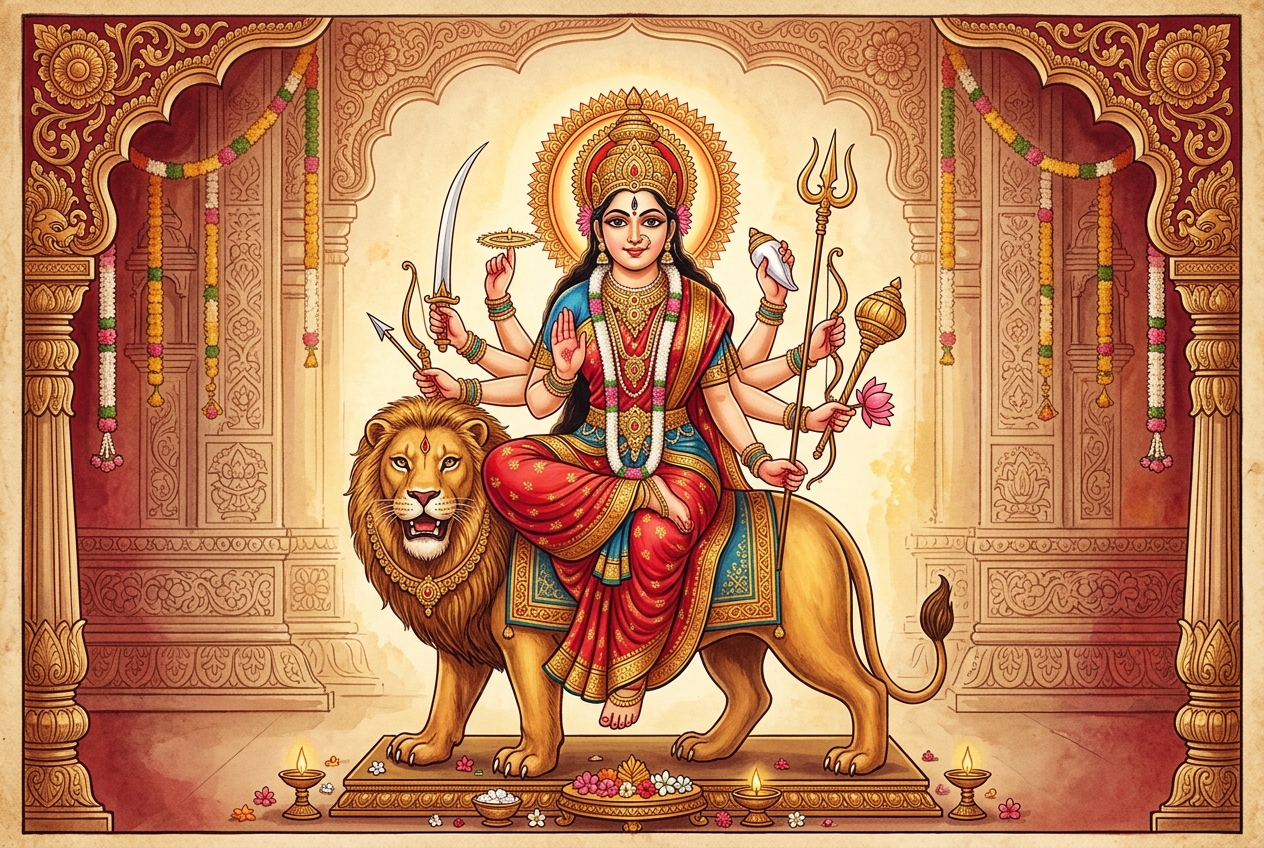
Navratri
About the Nine Nights of Devi
Navratri is a vibrant period of spiritual awakening, entirely dedicated to invoking the supreme grace of the Divine Mother. Across these nine sacred nights, devotees engage in intense Vrata, prayer, and celebration to immerse themselves in Her divine presence, seeking Her boundless compassion and inner strength.
- Deity
- Shakti (Parvati)
- Tradition
- Shaktism, Smarta
- Purpose
- Spiritual purification, conquering internal vices (kama, krodha), honouring the Divine Feminine
- Occasion
- Sharada Navratri, Chaitra Navratri
- Source
- Devī Māhātmya (Mārkaṇḍeya Purāṇa); Śrīmad Devī Bhāgavata Purāṇa; Śākta Sampradāya
संदर्भ
ContextAccording to the Markandeya Purana (specifically the Devi Mahatmyam section), Goddess Durga defeated the buffalo-demon Mahishasura after a fierce nine-day battle to restore cosmic order. Esoterically, classical Shakta traditions view these nine nights as a period for inner purification—conquering the internal demons of ego, lust, and greed, and facilitating the upward movement of Kundalini energy towards union with Her.
विवरण
OverviewNavratri (Sanskrit: नवरात्रि, literally "nine nights") is a major Hindu festival celebrating the cosmic energy of the Divine Feminine, Devi. Prescribed by classical texts such as the Devi Bhagavata Purana, the observance spans nine nights and ten days, fundamentally focusing on the worship of the Navadurga (nine forms of Goddess Durga) to seek Her grace. It is primarily observed twice annually: Chaitra Navratri in the spring and Sharada Navratri in the autumn.
Sources & References
Dharmartha presents traditional knowledge with respect for its sources. Practices vary by lineage and region; this material does not assert exclusive or universal authority.
Spot an error or have a suggestion?
Help us keep this accurate — report a mistake or suggest content for this page.
Your notes
Private reflections you can revisit anytime.
Questions & Discussions
Ask a question or start a discussion about this page.
- No questions or discussions yet — be the first.
Related Knowledge
Diwali
The festival of lights: significance, traditions and commonly observed practices.
Raksha Bandhan
The observance of the protective thread (rakhi) between siblings.
Holi
The festival of colours: significance and commonly observed practices.
Continue your journey