Kathas · Puranic
Legacy of Prahlada
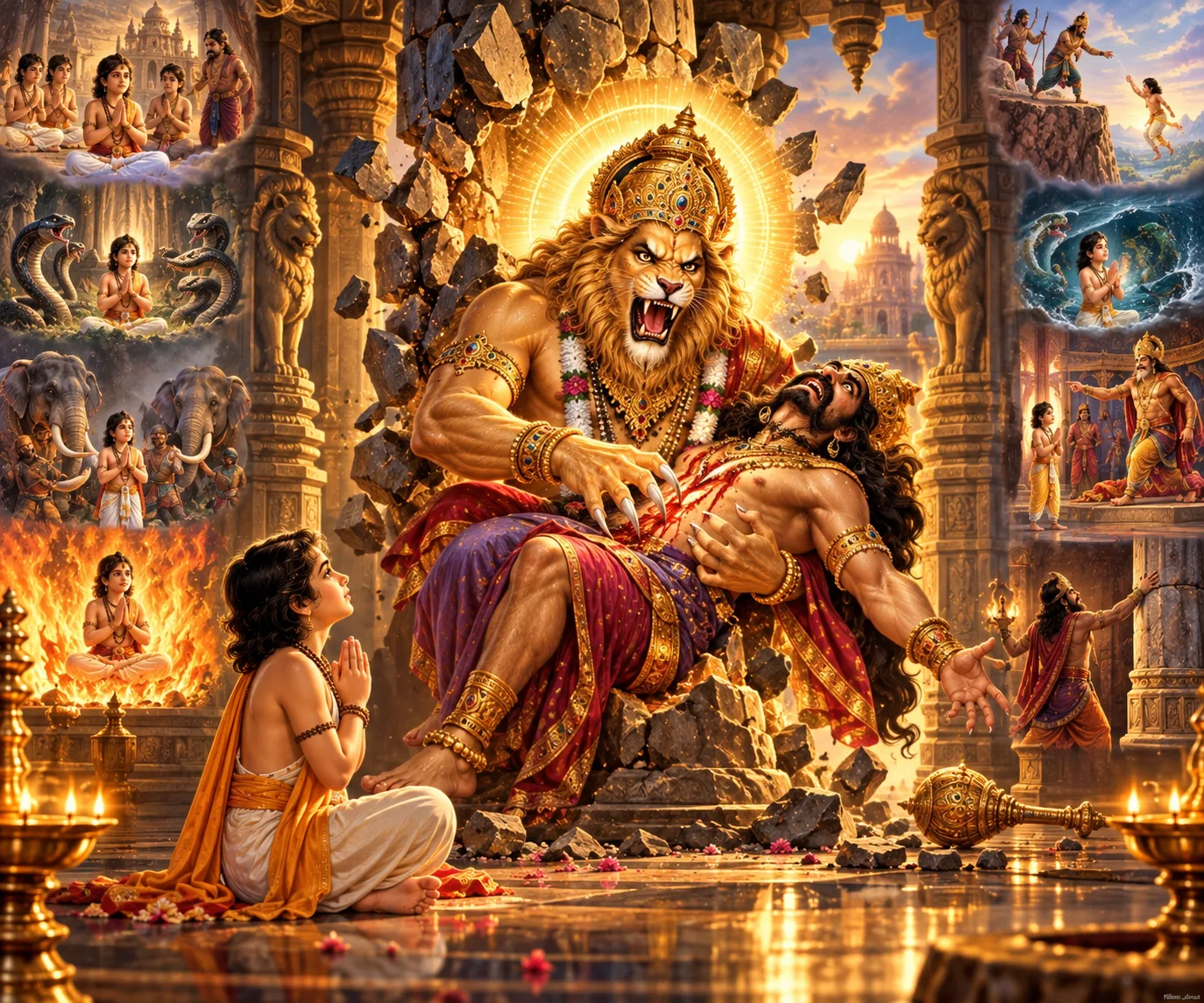
The story of Prahlada, his unwavering devotion to Lord Vishnu, persecution by Hiranyakashipu, and the divine appearance of Mahavatar Narasimha.
4 min
Chapter 1
The Womb of Devotion
भक्ति का गर्भ
The story begins before Prahlāda’s birth, during a time when his father, the demon king Hiranyakashipu, had left his kingdom to perform severe austerities on Mandara Mountain. His goal was to conquer the universe and attain immortality. In his absence, the Devas, led by King Indra, saw an opportunity to defeat the demons and attacked their kingdom. During the raid, Indra captured Hiranyakashipu’s pregnant wife, Kayadhu, intending to kill the child once it was born, fearing the offspring of a great Asura.
The celestial sage Narada Muni intercepted Indra on the way. Narada firmly forbade Indra from harming the queen, revealing that the unborn child within her womb was a sinless and exalted devotee of Lord Vishnu. Respecting the great sage, Indra released Kayadhu. Narada then took her to his ashram and provided her sanctuary until her husband returned.
While residing in the peaceful ashram, Kayadhu listened as Narada Muni instructed her on the Supreme Absolute Truth and the path of Bhakti. Although the pregnant queen eventually forgot these teachings with the passage of time, the child in her womb (Prahlāda) absorbed every word of this transcendental knowledge, becoming a fully realised devotee even before entering the world.
1 / 7
Sources & References
Source / TraditionŚrīmad-Bhāgavatam, Viṣṇu Purāṇa
Scriptural ReferencesŚrīmad-Bhāgavatam 7.5.39–42; Śrīmad-Bhāgavatam 7.5.43; Śrīmad-Bhāgavatam 7.5.44; Viṣṇu Purāṇa 1.17; Viṣṇu Purāṇa 1.18; Viṣṇu Purāṇa 1.19
Editorial NoteŚrīmad-Bhāgavatam 7.8.14 says, Hiraṇyakaśipu takes up his sword, rises from his throne, and then strikes the pillar with his fist. The Sanskrit is explicit: khaḍgaṁ pragṛhya = “taking up the sword”, and stambhaṁ tatāḍa … sva-muṣṭinā = “struck the pillar with his fist”.
Padma Purāṇa has its own variation, and this is where things become interesting. In the passage describing Nṛsiṁha’s emergence, Hiraṇyakaśipu first strikes the pillar with his hand, then, when Prahlāda declares that Viṣṇu is present there, he draws his sword and throws it at Prahlāda. At that very moment, the great sound comes from the pillar and Nṛsiṁha manifests.
Some Purāṇic traditions say Lord Śiva manifests as Śarabha to subdue the fierce form of Nṛsiṁhadeva. This episode is found in Śaiva traditions, including the Śiva Purāṇa, Śatarudra-saṁhitā, Chapters 10–12, and the Liṅga Purāṇa, Pūrvabhāga, Chapters 95–96. Our present narrative follows the account of the Śrīmad-Bhāgavatam.
Dharmartha presents traditional knowledge with respect for its sources. Practices vary by lineage and region; this material does not assert exclusive or universal authority.
Related Knowledge
Related Services
Bring this into practice
Have a Vishnu-related pooja, homam or yagya performed for you in the traditional way.
Your notes
Private reflections you can revisit anytime.
Sign in to take and save personal notes on this page. Sign in
Questions & Discussions
Ask a question or start a discussion about this page.
- No questions or discussions yet — be the first.