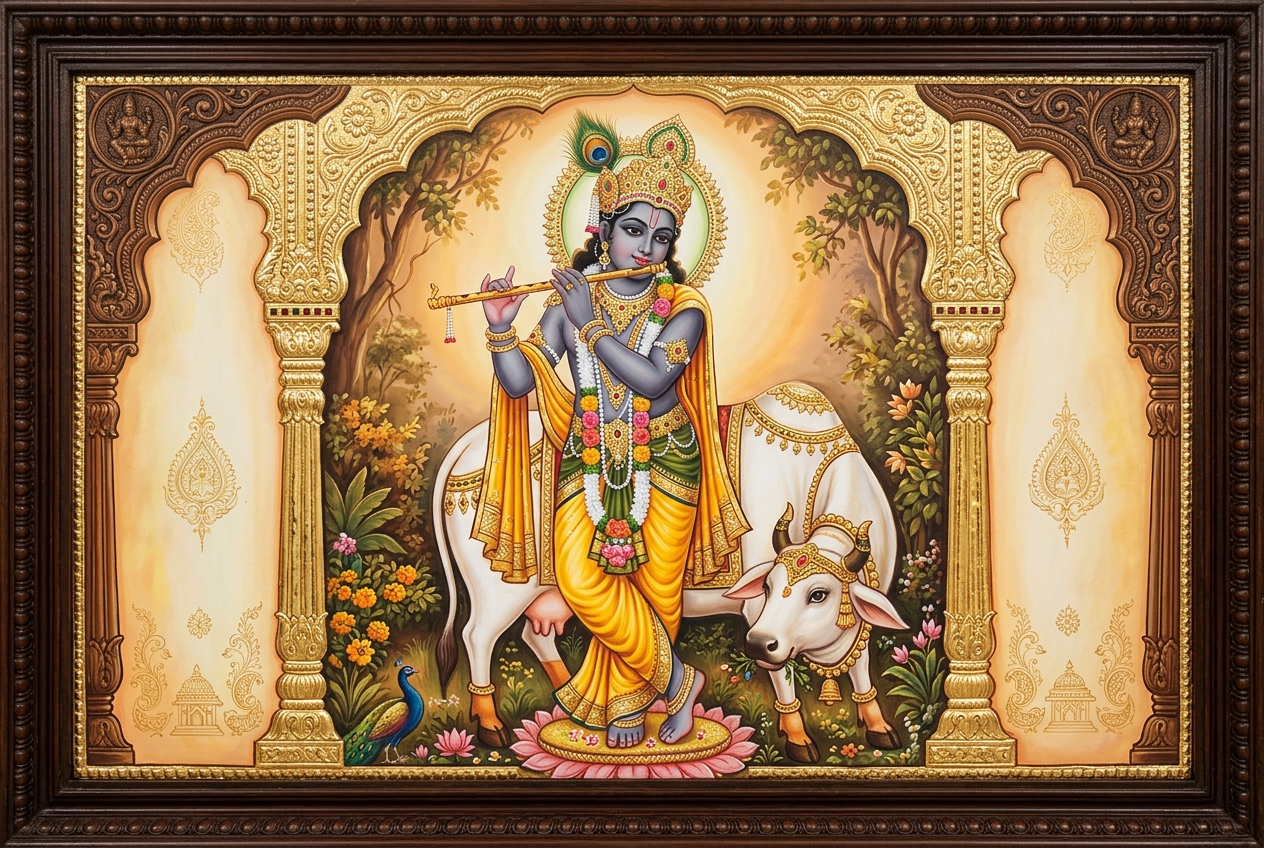
Hare Krishna Mahamantra
हरे कृष्ण महामंत्र
About the Hare Krishna Mahamantra
The Hare Krishna Mahamantra is the supreme redeeming chant (Taraka Mantra) revealed specifically for the current age of Kali (Kali Yuga). Composed of sixteen divine names and thirty-two syllables, it addresses the Supreme Personality of Godhead through His primary potencies and forms: "Hare", "Krishna", and "Rama". Unlike ritualistic Vedic mantras that require exacting fire altars, rigid societal qualifications, or complex purascharana rules, the divine name carries intrinsic, self-sufficient spiritual potency. Chanting it acts as a transcendental cleansing agent (chitta-darpana-marjanam), systematically removing layers of material conditioning from the soul, extinguishing existential suffering, and filling the devotee's consciousness with His eternal, ecstatic presence.
- Deity
- Krishna
- Tradition
- Vaishnava (Gaudiya, Universal), Vedic
- Purpose
- Dispelling the contaminations of the dark age, purification of consciousness, devotion to the divine names, unalloyed divine love, liberation.
- Source
- Vedic tradition (Kṛṣṇa Yajurveda), Gauḍīya Vaiṣṇava.
मूल पाठ
Sanskrit textहरे कृष्ण हरे कृष्ण कृष्ण कृष्ण हरे हरे। हरे राम हरे राम राम राम हरे हरे
hare kṛṣṇa hare kṛṣṇa kṛṣṇa kṛṣṇa hare hare | hare rāma hare rāma rāma rāma hare hare
Hare Krishna Mahamantra — recitation
अर्थ
Meaning"Hare" is the vocative form of "Hara", addressing the Supreme Pleasure Potency (Hladini Shakti) of the Lord, personified as Goddess Radha, who captivates His heart with pure love. "Krishna" signifies the All-Attractive Supreme Absolute Truth, the fountainhead of all existence. "Rama" represents the Supreme Reservoir of Divine Pleasure, who delights all living beings. Together, the chant is a humble, unmotivated prayer: "O Supreme Pleasure Potency (Hare), O All-Attractive Supreme Lord (Krishna), O Infinite Source of Bliss (Rama), please engage me eternally in Your transcendental loving service."
संदर्भ
ContextRevealed in the Kalisantarana Upanishad of the Krishna Yajurveda and universally propagated across the Indian subcontinent by Chaitanya Mahaprabhu in the 16th century, this mantra is practiced in two primary forms: solitary meditative counting on beads (japa) and melodic congregational singing accompanied by musical instruments (sankirtana).
प्रयोग
How it is traditionally usedChant on a genuine Tulasi (Holy Basil) mala, holding the beads between the thumb and middle finger of the right hand without crossing the head bead (Sumeru). Practice across the authentic ladder of discipline: 1 round (108 repetitions daily) as the foundational minimum for daily remembrance; 4 rounds (432 repetitions daily) as the intermediate standard; 16 rounds (1,728 repetitions daily) as the canonical daily commitment established across classical Gaudiya Vaishnava lineage for initiated practitioners; or 64 rounds (6,912 repetitions daily, which completes one lakh holy names or Laksha-Nama) as the intensive ascetic ideal. Sit ideally facing east or north during the morning hours (Brahma Muhurta) for peaceful, focused japa. However, for congregational singing (kirtana) or spontaneous remembrance, scriptural injunctions state that it may be chanted anywhere, at any time, free from rigid directional or ritual purity constraints. Strict shiksha requires distinct, audible articulation of each of the sixteen names so that the practitioner's own ears hear the sound clearly (shravanam), without rushing or mumbling the sacred syllables.
Sources & References
Dharmartha presents traditional knowledge with respect for its sources. Practices vary by lineage and region; this material does not assert exclusive or universal authority.
Spot an error or have a suggestion?
Help us keep this accurate — report a mistake or suggest content for this page.
Your notes
Private reflections you can revisit anytime.
Questions & Discussions
Ask a question or start a discussion about this page.
- No questions or discussions yet — be the first.
Related Knowledge
Birth of Mahabharata
A gripping narrative illustrating how the Mahabharat was transmitted to the humans.
Krishnashtakam
कृष्णाष्टकम्
Eight verses adoring Krishna as Jagadguru — 'Vasudeva-sutam Devam'.
Madhurashtakam
मधुराष्टकम्
A sweet eight-verse hymn to Krishna by Vallabhacharya, on his all-pervading sweetness.
Continue your journey