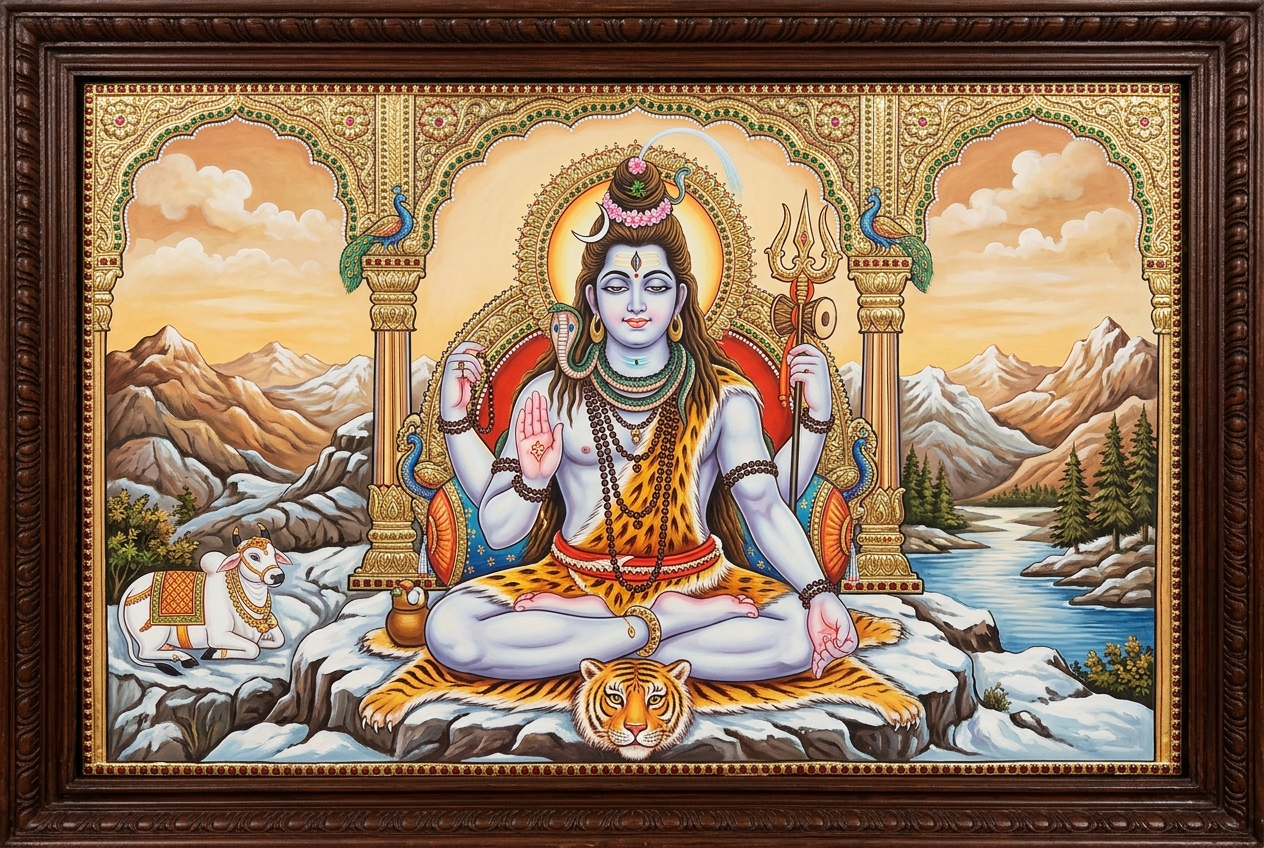
Om Purnamadah Purnamidam
ॐ पूर्णमदः पूर्णमिदं
About the Purnamadah Shanti Patha
This is one of the most profound invocations of peace in the Vedic tradition. Originating directly from the Bṛhadāraṇyaka Upaniṣad (and frequently utilised as an opening chant for Vedantic study), it elegantly encapsulates the highest philosophy of Advaita Vedanta: the Supreme Reality (Brahman) is infinitely complete. Even when the entire manifested universe emerges from It, the Supreme remains utterly whole, untainted, and undiminished.
- Tradition
- Vedic, Advaita Vedanta, Universal
- Purpose
- Peace, attainment of wisdom, feeling of absolute completeness, self-realisation.
- Source
- Vedic tradition (Śukla Yajurveda), Advaita Vedānta.
मूल पाठ
Sanskrit textॐ पूर्णमदः पूर्णमिदं पूर्णात्पूर्णमुदच्यते। पूर्णस्य पूर्णमादाय पूर्णमेवावशिष्यते
Oṃ pūrṇamadaḥ pūrṇamidaṃ pūrṇātpūrṇamudacyate | pūrṇasya pūrṇamādāya pūrṇamevāvaśiṣyate
ॐ शान्तिः शान्तिः शान्तिः
Oṃ śāntiḥ śāntiḥ śāntiḥ
Om Purnamadah Purnamidam — recitation
अर्थ
Meaning"Om. That (the Unmanifest Absolute) is Complete. This (the manifest universe) is Complete. From the Complete, the Complete emerges. Even when the Complete is taken away from the Complete, only the Complete remains. Om. Peace, Peace, Peace."
संदर्भ
ContextTraditionally chanted before and after the study of sacred scriptures, deep meditation, or spiritual gatherings. It centres the mind and invokes cosmic peace across all three realms of existence (physical, mental, and spiritual).
प्रयोग
How it is traditionally usedChant 3, 11, or 21 times before commencing any study, meditation, or auspicious endeavour to invoke absolute peace and remove obstacles. As a pure Vedic Śruti verse, it does not require a specific mala or strict purascharana counts like a Tantric beeja mantra. It can be chanted facing any direction, though East or North is traditionally preferred for spiritual contemplation. The final "Shanti" is chanted strictly three times to pacify the three types of cosmic miseries: Ādhyātmika (internal physical and mental distress), Ādhibhautika (harm originating from other living beings and external elements), and Ādhidaivika (disruptions caused by grand cosmic forces or natural disasters).
Sources & References
Dharmartha presents traditional knowledge with respect for its sources. Practices vary by lineage and region; this material does not assert exclusive or universal authority.
Spot an error or have a suggestion?
Help us keep this accurate — report a mistake or suggest content for this page.
Your notes
Private reflections you can revisit anytime.
Questions & Discussions
Ask a question or start a discussion about this page.
- No questions or discussions yet — be the first.
Related Knowledge
Continue your journey