Suktas
Devi Suktam (Rigvedic · Ambhrini)
श्री देवी सूक्तम् (वाक् सूक्तम् / वागाम्भृणी सूक्तम्)
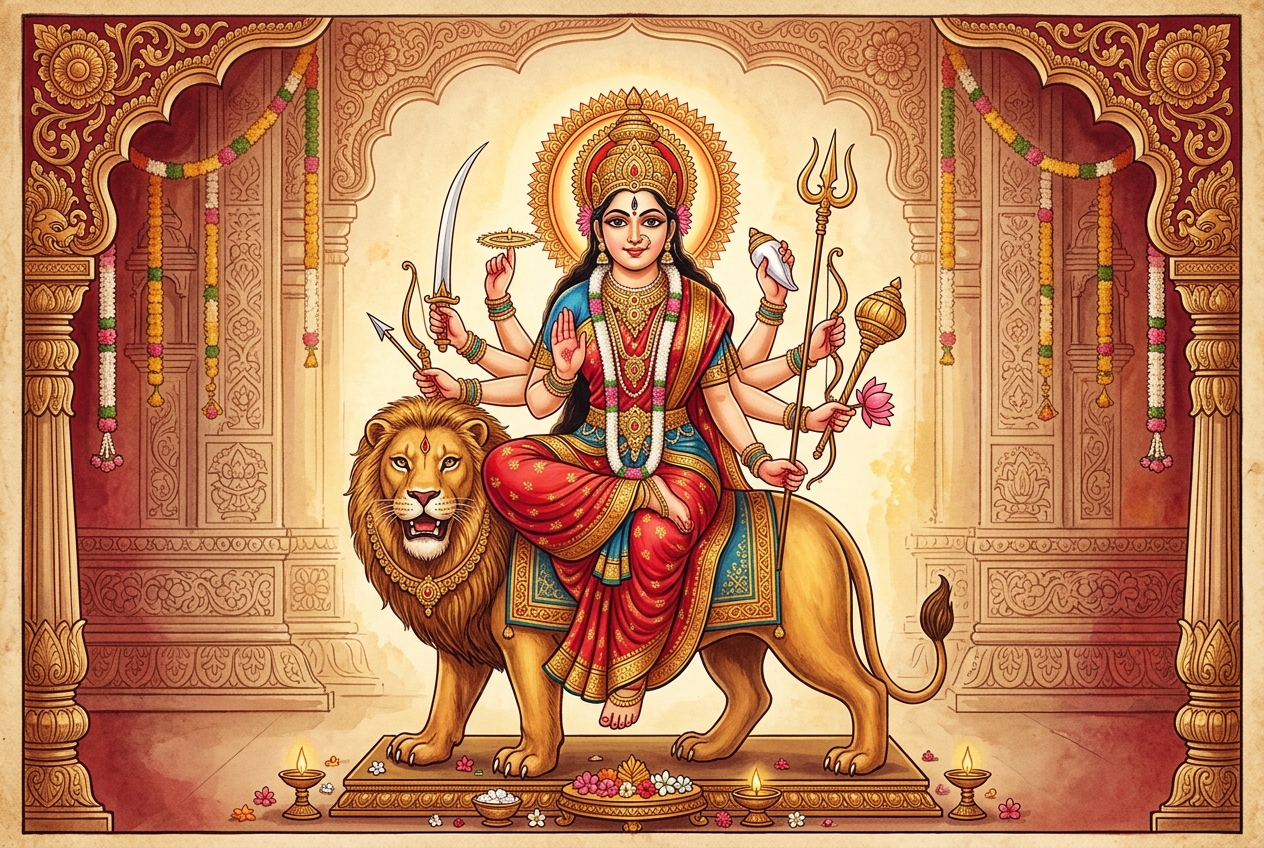
The Śrī Devī Sūktam (Rigveda Mandala 10, Sukta 125), widely revered as the Vāk Sūktam or Āmbhṛṇī Sūktam, is the profoundest scriptural authority for Shakta non-dual philosophy (Śāktādvaita). Unlike hymns where a worshiper prays outward to an external divinity, this hymn is composed in the first person: the enlightened female seer Vāc Āmbhṛṇī, dissolved in direct identity with the Supreme Mother, speaks directly as the Divine Consciousness Itself. Across eight mantras, she affirms that she sustains the Rudras, Vasus, Adityas, and all divinities; breathes life into all beings; draws the bow for Rudra to conquer evil; and spans the entire cosmic expanse while transcending both earth and heaven. Traditionally, it forms the mandatory scriptural seal recited at the conclusion of every Durgā Saptaśatī (Chandi Path) recitation alongside the Rātri Sūktam.
- Deity
- Devi
- Tradition
- Rigvedic (Mandala 10, Sukta 125) / Atharvaveda (Kanda 4, Sukta 30) / Shakta & Smarta Traditions (Chandi Path Anga)
- Purpose
- Experiential realization of non-dual consciousness and awakening the Divine Mother within one's own self (Aham Brahmāsmi). Essential concluding Vedic limb (Vaidika Devī Sūktam) recited after completing the 13 chapters of Durga Saptashati. Bestowing fearlessness, supreme eloquence, poetic inspiration, and mastery over speech (Vāk-siddhi). Complete eradication of inner darkness, negative psychic vulnerabilities, and worldly distress during Navaratri and Chandi Homa.
- Occasion
- Navaratri
- Source
- Rigveda Samhita (Mandala 10, Sukta 125, Mantras 1–8), Atharvaveda Samhita (Kanda 4, Sukta 30)
मूल पाठ
Sanskrit textसूक्त-पाठः (ऋग्वेद १०.१२५.१–८) ॐ अ॒हं रु॒द्रेभि॒र्वसु॑भिश्चराम्य॒हमा॑दि॒त्यैरु॒त वि॒श्वदे॑वैः । अ॒हं मि॒त्रावरु॑णो॒भा बि॑भर्म्य॒हमि॑न्द्रा॒ग्नी अ॒हम॒श्विनो॒भा
Sūkta-Pāṭhaḥ (Rigveda 10.125.1–8) Oṁ ahaṁ rudrebhirvasubhiścarāmyahamādityairuta viśvadevaiḥ | ahaṁ mitrāvaruṇobhā bibharmyahamindrāgnī ahamaśvinobhā
॥ १ ॥
अ॒हं सोम॑माह॒नसं॑ बिभर्म्य॒हं त्वष्टा॑रमु॒त पू॒षणं॒ भग᳚म् । अ॒हं द॑धामि॒ द्रवि॑णं ह॒विष्म॑ते सुप्रा॒व्ये॒३॒ यज॑मानाय सुन्व॒ते
ahaṁ somamāhanasaṁ bibharmyahaṁ tvaṣṭāramuta pūṣaṇaṁ bhagam | ahaṁ dadhāmi draviṇaṁ haviṣmate suprāvye yajamānāya sunvate
॥ २ ॥
अ॒हं राष्ट्री᳚ सं॒गम॑नी॒ वसू॑नां चिकि॒तुषी᳚ प्रथ॒मा य॒ज्ञिया॑नाम् । तां मा᳚ दे॒वा व्य॑दधुः पुरु॒त्रा भूरि॑स्थात्रां॒ भूर्या᳚वे॒शय॑न्तीम्
ahaṁ rāṣṭrī saṁgamanī vasūnāṁ cikituṣī prathamā yajñiyānām | tāṁ mā devā vyadadhuḥ purutrā bhūristhātrāṁ bhūryāveśayantīm
॥ ३ ॥
मया॒ सो अन्न॑मत्ति॒ यो वि॒पश्य॑ति॒ यः प्राणि॑ति॒ य ईं᳚ शृ॒णोत्यु॒क्तम् । अ॒म॒न्तवो॒ मां त उप॑ क्षियन्ति श्रु॒धि श्रु॑तं श्रद्धे॒यं ते᳚ वदामि
mayā so annamatti yo vipaśyati yaḥ prāṇiti ya īṁ śṛṇotyuktam | amantavo māṁ ta upa kṣiyanti śrudhi śrutaṁ śraddheyaṁ te vadāmi
॥ ४ ॥
अ॒हमे॒व स्व॒यमि॒दं व॑दामि॒ जुष्टं᳚ दे॒वेभि॑रु॒त मानु॑षेभिः । यं काम॑ये॒ तंत॑मु॒ग्रं कृ॑णोमि॒ तं ब्र॒ह्माणं॒ तमृषिं॒ तं सु॑मे॒धाम्
ahameva svayamidaṁ vadāmi juṣṭaṁ devebhiruta mānuṣebhiḥ | yaṁ kāmaye taṁ-tamugraṁ kṛṇomi taṁ brahmāṇaṁ tamṛṣiṁ taṁ sumedhām
॥ ५ ॥
अ॒हं रु॒द्राय॒ धनु॒रा त॑नोमि ब्रह्म॒द्विषे॒ शर॑वे॒ हन्त॒वा उ॑ । अ॒हं जना॑य स॒मदं॑ कृणोम्य॒हं द्यावा॑पृथि॒वी आ वि॑वेश
ahaṁ rudrāya dhanurā tanomi brahmadviṣe śarave hantavā u | ahaṁ janāya samadaṁ kṛṇomyahaṁ dyāvāpṛthivī ā viveśa
॥ ६ ॥
अ॒हं सु॑वे पि॒तर॑मस्य मू॒र्धन् मम॒ योनि॑र॒प्स्व१॒न्तः स॑मु॒द्रे । ततो॒ वि ति॑ष्ठे॒ भुव॒नानु॒ विश्वो॒तामूं द्यां व॒र्ष्मणाोप॑ स्पृशामि
ahaṁ suve pitaramasya mūrdhan mama yonirapsvantaḥ samudre | tato vi tiṣṭhe bhuvanānu viśvotāmūṁ dyāṁ varṣmaṇopa spṛśāmi
॥ ७ ॥
अ॒हमे॒व वात॑ इव॒ प्र वा॒म्या॒रभ॑माणा॒ भुव॑नानि॒ विश्वा᳚ । प॒रो दि॒वा प॒र ए॒ना पृ॑थि॒व्यैताव॑ती महि॒ना सं ब॑भूव
ahameva vāta iva pra vāmyārabhamāṇā bhuvanāni viśvā | paro divā para enā pṛthivyaitāvatī mahinā saṁ babhūva
॥ ८ ॥
Devi Suktam (Rigvedic · Ambhrini) — recitation
अर्थ
MeaningVerse 1: I move with the Rudras, with the Vasus, with the Adityas, and with all the universal divinities (Viśvedevas). I hold and sustain both Mitra and Varuna; I sustain Indra and Agni, and I uphold the twin Ashvins.
Verse 2: I support and nourish the exhilarating Soma juice; I sustain Tvashtar (the celestial shaper), Pushan, and Bhaga. I bestow wealth and spiritual fruit upon the devoted sacrificer who pours the libation with deep devotion and offers oblations to the divine.
Verse 3: I am the sovereign Queen of the universe, the gatherer of all treasures, the knower of the Supreme Reality, and the foremost among all worshipful divinities. The cosmic gods have distributed me into many abodes, residing in numerous places and manifesting through manifold forms.
Verse 4: Through me alone does one eat food, through me does one see, through me does one breathe, and through me does one hear spoken speech. Those who do not perceive or comprehend me within themselves decline and perish. Hear, O wise one! I speak unto you the sacred truth that is worthy of faith and conviction.
Verse 5: I, of my own accord, declare this truth which is cherished by gods and mortals alike: Whomever I love and favor, I make mighty and powerful; him I make a knower of Brahman, him a visionary sage (Rishi), and him a person of luminous wisdom (Sumedhā).
Verse 6: I bend and string the bow for Lord Rudra, so that his arrow may strike down the hater of sacred truth and destroyer of righteousness. I wage battle to protect and liberate noble seekers; I have permeated and entered into both heaven and earth!
Verse 7: I bring forth the cosmic father (the heavens) upon the summit of this manifest universe. My eternal source and dwelling is within the waters of the infinite causal ocean of consciousness (Samudra). Thence I spread out through all created worlds, and touch the yonder heavens with my transcendent majesty.
Verse 8: I blow forth freely like the wind, giving birth to all created worlds by my own sovereign will. Transcending the distant heavens, far beyond this earthly realm—such am I, established in boundless, all-pervading splendor!
संदर्भ
ContextThe Śrī Devī Sūktam represents the absolute peak of Shakta monism (Śāktādvaita) within the core Rigvedic Samhita:
The Seer Vāc Āmbhṛṇī: The rishi of this hymn is a woman—Vāc, the daughter of Sage Ambhrina. Having attained direct experiential identity with the Supreme Consciousness, she does not pray to the Divine; she proclaims as the Divine. This firmly establishes that the highest summits of Vedic enlightenment transcended all gender distinctions.
First-Person Non-Dual Proclamation: Every mantra begins with "Aham" ("I"): "Ahaṁ rudrebhirvasubhiścarāmi...", "Ahameva svayamidaṁ vadāmi...". This is the Rigvedic progenitor of the Upanishadic Mahavakya "Aham Brahmāsmi" ("I am Brahman"). The seer reveals that the gods do not operate independently; it is the single energy of Supreme Consciousness that acts through Indra's power, Rudra's bow, Agni's heat, and the human faculties of sight, breath, and speech.
Synthesis of Immanence and Transcendence: Verses 7 and 8 present a magnificent cosmological vision: the Divine Mother gives birth to the heavens (suve pitaram), abides within the causal ocean of consciousness (mama yonirapsvantaḥ samudre), sweeps through all creation like the free wind (vāta iva pra vāmi), and yet remains infinitely beyond both heaven and earth (paro divā para enā pṛthivyā).
प्रयोग
How it is traditionally usedConcluding Anga of Durga Saptashati: Recited mandatorily as the Vaidika Devī Sūktam at the end of the 13 chapters of the Chandi Path (following the three Rahasyas or alongside the Tantrik Devi Suktam from Chapter 5) to seal the parayana in Vedic non-dual awareness.
Navaratri Parayana: Chanted during the nine nights of Navaratri facing North or East before the consecrated Kalasha or Durga idol to awaken inner divine feminine presence, conquer fear, and purify the faculty of speech.
Chandi Homa Oblations: Chanted during consecrated fire sacrifices where oblations of cow's ghee, red lotus petals, and payasam are offered with each of the 8 verses ending in Svāhā.
Sadhana for Eloquence and Vaksiddhi: Recited by spiritual aspirants, Vedic students, and teachers at dawn to awaken wisdom, intellectual clarity, and speech imbued with spiritual authority.
Sources & References
Dharmartha presents traditional knowledge with respect for its sources. Practices vary by lineage and region; this material does not assert exclusive or universal authority.
Spot an error or have a suggestion?
Help us keep this accurate — report a mistake or suggest content for this page.
Your notes
Private reflections you can revisit anytime.
Questions & Discussions
Ask a question or start a discussion about this page.
- No questions or discussions yet — be the first.
Related Knowledge
Purusha Suktam
श्री पुरुष सूक्तम्
The supreme cosmogonic hymn of the Vedic canon preserved in the Rigveda and Taittiriya Aranyaka of the Krishna Yajurveda, revealing the cosmic sacrifice (Yajña) of the Supreme Being (Puruṣa), from whose cosmic limbs the entire universe, natural elements, Vedic hymns, and social fabric manifest.The paramount cosmogonic hymn of the Vedic canon preserved in the Rigveda, Shukla Yajurveda, and Krishna Yajurveda (Taittiriya Aranyaka), delineating the supreme sacrifice (Yajña) of the primordial Cosmic Being (Puruṣa), from whose transcendental self the entire visible and invisible universe, natural cycles, sacred meters, and interdependent social orders manifest.
Shri Suktam
श्री सूक्तम्
An ancient Vedic hymn from the Rigvedic Khilas dedicated to Goddess Sri-Lakshmi, invoking the divine mother through Agni to bestow radiant prosperity, health, noble progeny, and spiritual abundance while permanently dispelling misfortune.
Mantra Pushpam
श्री मन्त्रपुष्पम्
A profound Vedic hymn from the Taittiriya Aranyaka of the Krishna Yajurveda, chanted during the sacred offering of flowers (Mantra Pushpanjali) at the culmination of worship, revealing waters (Āpaḥ) as the cosmic matrix of fire, air, sun, moon, constellations, clouds, and time, concluding with imperial sovereignty and divine prosperity.
Continue your journey