Sukta
Durga Suktam
दुर्गासूक्तम्
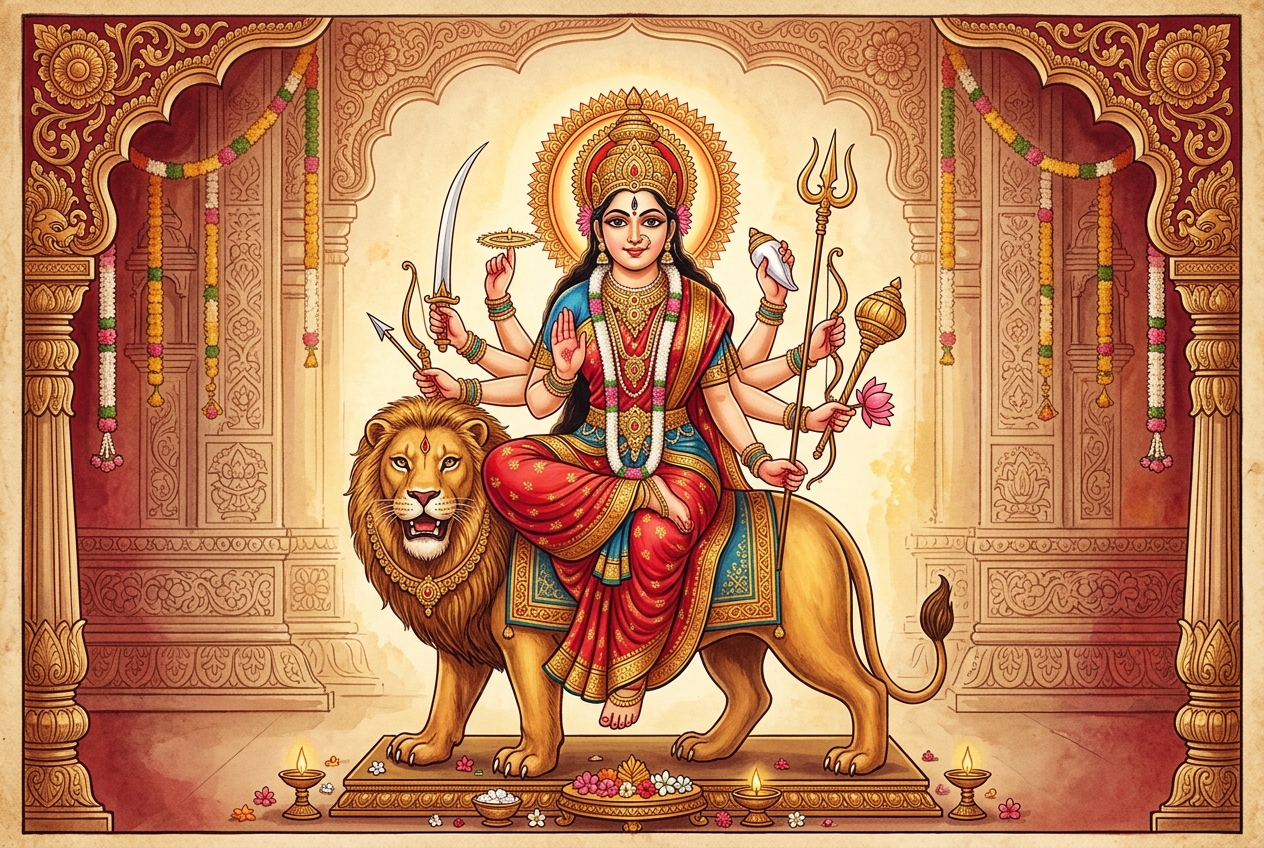
The Durgā Sūktam is an ancient Vedic hymn found in the Mahānārāyaṇa Upaniṣad of the Krishna Yajurveda (also occurring across the Taittirīya Āraṇyaka). Uniquely synthesizing the Vedic fire god (Jātavedas / Agni) with the supreme feminine principle of protection, the hymn venerates Goddess Durga as the luminous, transcendent power of the Divine. Through vivid imagery of a celestial ship navigating turbulent storm waters, the seeker implores the fiery goddess to burn accumulated sins, dissolve external and internal enemies, and safely ferry the soul across the afflictions (durgama) of mundane existence toward final liberation.
- Tradition
- Vedic / Shakta / Smarta (Krishna Yajurveda, Taittiriya Aranyaka)
- Purpose
- Overcoming insurmountable life crises, financial or legal entanglements, and existential fears (Durgāṇi atidurgāṇi). Burning accumulated mental impurities, guilt, and karmic sins through divine inner fire. Protection from adversarial forces, malevolent planetary effects, and spiritual stagnation. Essential Vedic recitation during Chandi Homa, Navaratri, and temple Devi abhisheka for strength and liberation (Moksha).
- Source
- Vedic Revelation / Taittiriya Shakha of Krishna Yajurveda
मूल पाठ
Sanskrit textजातवेदसे सुनवाम सोममरातीयतो निदहाति वेदः। स नः पर्षदति दुर्गाणि विश्वा नावेव सिन्धुं दुरितात्यग्निः
jātavedase sunavāma somam arātīyato nidahāti vedaḥ | sa naḥ parṣad ati durgāṇi viśvā nāveva sindhuṃ duritāty agniḥ
॥ १ ॥
तामग्निवर्णां तपसा ज्वलन्तीं वैरोचनीं कर्मफलेषु जुष्टाम्। दुर्गां देवीं शरणमहं प्रपद्ये सुतरसि तरसे नमः
tām agnivarṇāṃ tapasā jvalantīṃ vairocanīṃ karmaphaleṣu juṣṭām | durgāṃ devīṃ śaraṇam ahaṃ prapadye sutarasi tarase namaḥ
॥ २ ॥
अग्ने त्वं पारया नव्यो अस्मान्स्वस्तिभिरति दुर्गाणि विश्वा। पूश्च पृथ्वी बहुला न उर्वी भवा तोकाय तनयाय शंयोः
agne tvaṃ pārayā navyo asmān svastibhir ati durgāṇi viśvā | pūś ca pṛthvī bahulā na urvī bhavā tokāya tanayāya śaṃyoḥ
॥ ३ ॥
विश्वानि नो दुर्गहा जातवेदः सिन्धुं न नावा दुरितातिपर्षि। अग्ने अत्रिवन्मनसा गृणानोऽस्माकं बोध्यविता तनूनाम्
viśvāni no durgahā jātavedaḥ sindhuṃ na nāvā duritātiparṣi | agne atrivan manasā gṛṇāno'smākaṃ bodhy avitā tanūnām
॥ ४ ॥
पृतनाजितं सहमानमुग्रमग्निं हुवेम परमात्सधस्थात्। स नः पर्षदति दुर्गाणि विश्वा क्षामद्देवो अति दुरितात्यग्निः
pṛtanājitaṃ sahamānam ugram agniṃ huvema paramāt sadhasthāt | sa naḥ parṣad ati durgāṇi viśvā kṣāmad devo ati duritāty agniḥ
॥ ५ ॥
प्रत्नोषि कमीड्यो अध्वरेषु सनाच्च होता नव्यश्च सत्सि। स्वां चाग्ने तनुवं पिप्रयस्वास्मभ्यं च सौभगमायजस्व
pratnoṣi kam īḍyo adhvareṣu sanāc ca hotā navyaś ca satsi | svāṃ cāgne tanuvaṃ piprayasvāsmabhyaṃ ca saubhagam āyajasva
॥ ६ ॥
गोभिर्जुष्टमयुजो निषिक्तं तवेन्द्र विष्णोरनुसंचरेम। नाकस्य पृष्ठमभि संवसानो वैष्णवीं लोक इह मादयन्ताम्
gobhir juṣṭam ayujo niṣiktaṃ tavendra viṣṇor anusaṃcarema | nākasya pṛṣṭham abhi saṃvasāno vaiṣṇavīṃ loka iha mādayantām
॥ ७ ॥
Durga Suktam — recitation
अर्थ
MeaningVerse 1 (The Boat Across Adversity): We press and offer the sacred Soma juice unto Jatavedas (the all-knowing fire). May he burn away the wealth and malice of those who harbor hostility against us. May that divine Agni deliver us safely across all perils and obstacles (durgāṇi), just as a skilled mariner transports people across the raging ocean in a sturdy ship; may he ferry us past all sins and afflictions.
Verse 2 (Refuge in Goddess Durga): I take refuge in Her, Goddess Durga—who is radiant like blazing fire (Agni-varṇā), glowing brightly with the intensity of spiritual penance (tapas), self-luminous and resplendent (Vairocanī), and worshipped through the dedicated offering of the fruits of our actions. Salutations unto You, O supreme power who enables us to effortlessly cross over the perilous worldly mire!
Verse 3 (Prayer for Protection and Lineage): O Agni, ever praise-worthy and ever-new! Ferry us safely with auspicious blessings across all difficult barriers. Expand into a broad, vast, and impregnable fortress of safety on this earth for our dwelling; bestow uninterrupted health, peace, and prosperity upon our children and grandchildren.
Verse 4 (Delivery from Deep Misery): O Jatavedas, deliver us past all arduous and painful situations, carrying us over sins and misfortunes just as a boat sails over the churning ocean. O Lord Agni, praised by our devoted minds just as Sage Atri revered you of old, be the vigilant protector of our physical bodies and beings.
Verse 5 (Invocation from the Supreme Abode): We invoke from the highest heavenly station Lord Agni—the conqueror of enemy armies, the unyielding crusher of opposition, and the mighty force of cosmic will. May that radiant divine fire burn our sins to ashes, deliver us past all perils, and preserve our well-being on earth.
Verse 6 (The Eternal and Ever-New Priest): You are the most adorable one in our sacrificial rites. From times immemorial you have presided as the divine Hotar priest, and you sit anew in every rite today. O Agni, delight your own transcendent form through this offering, and grant unto us boundless auspiciousness and abundant fortune.
Verse 7 (Union with Highest Truth): Blessed with cattle and untouched by adversity, may we ever walk in close companionship with the supreme presence of Vishnu and Indra. Attaining the peak of highest spiritual illumination (Nākasya pṛṣṭham), may the seekers rejoice in this realm of all-pervading consciousness.
Verse 8 (Durga Gayatri): We realize the great divinity Katyayani; we meditate upon the eternal virgin Kanyakumari; may that glorious Goddess Durga inspire and guide our intellect toward truth.
संदर्भ
Contextप्रयोग
How it is traditionally usedChandi Homa & Devi Yajna: Chanted along with the Devi Suktam during Vedic fire rituals dedicated to Goddess Durga, where oblations are offered to remove obstacles and negative planetary configurations.
Navaratri Parayana: Recited daily during the nine nights of Sharadiya and Chaitra Navaratri to build an energetic shield (Kavacha) against mental distress and adversity.
Devi Abhisheka: Chanted by priests while pouring water, milk, and panchamrita over the idol or Sri Yantra in Shakta and Smarta temples.
Daily Sandhya & Overcoming Crises: Recited by spiritual seekers facing prolonged legal court battles, chronic health challenges, or spiritual stagnation to cultivate courage and invoke divine rescue.
Sources & References
Dharmartha presents traditional knowledge with respect for its sources. Practices vary by lineage and region; this material does not assert exclusive or universal authority.
Spot an error or have a suggestion?
Help us keep this accurate — report a mistake or suggest content for this page.
Your notes
Private reflections you can revisit anytime.
Questions & Discussions
Ask a question or start a discussion about this page.
- No questions or discussions yet — be the first.
Related Knowledge
Continue your journey