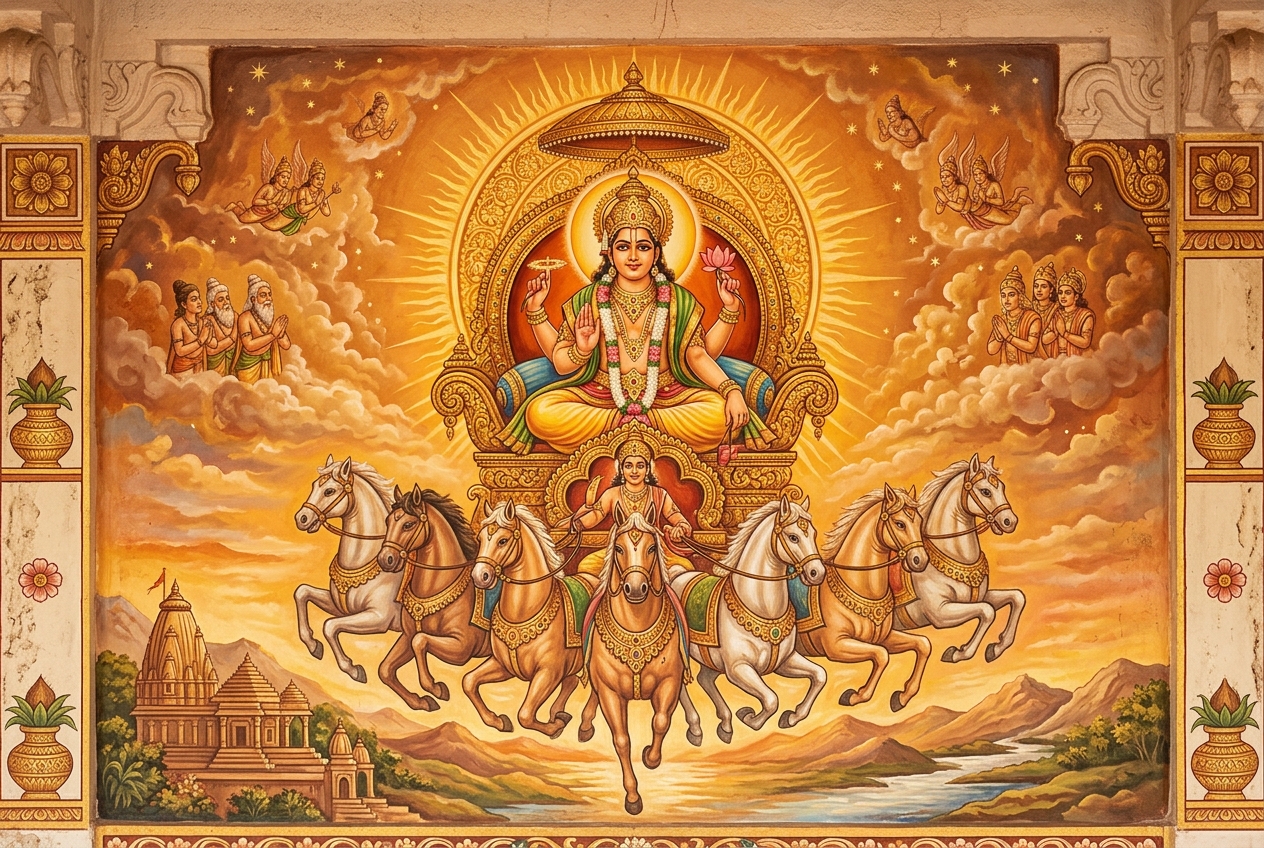
Surya, Savita, Aditya
Sūryopaniṣad
सूर्योपनिषद्
The Sūryopaniṣad (also known as Sūrya Upanishad) is one of the 108 Upanishads listed in the classical Muktika canon, categorized under the Saura (Sun-worshipping) tradition of the Atharvaveda. Framed as a dialogue where sage Angiras and other seers seek knowledge of the cosmic origin, the text reveals that Lord Surya is not merely a physical celestial body, but the visible living manifestation of the absolute Reality (Parabrahman). It synthesizes Vedic cosmology, ritual nyasa, the Gayatri meter, and the Surya Ashtakshara (eight-syllable) mantra to grant health, intellect, freedom from karmic affliction, and spiritual liberation.
- Deity
- Bhagavan Surya / Savita / Aditya (The Supreme Sun God as Visible Brahman)
- Tradition
- Atharvaveda / Saura Tradition / Smarta Tradition
- Purpose
- Eradicating physical ailments (especially eye disorders, skin diseases, and sluggishness) and granting longevity (Ayu), vitality, and radiant health. Awakening intellectual clarity, memory power, and speech through solar attunement. Eliminating sins committed through mind, speech, and action, and attaining non-dual union with the Sun as Parabrahman (Surya Sāyujya).
- Source
- Atharvaveda / Shaunaka Shakha / Saura Tradition
मूल पाठ
Sanskrit textशान्तिपाठः ॐ भ॒द्रं कर्णे॑भिः शृणु॒याम॑ देवाः । भ॒द्रं प॑श्येमा॒क्षभि॒र्यज॑त्राः । स्थि॒रैरङ्गै᳚स्तुष्टु॒वाग्ंस॑स्त॒नूभि॑: । व्यशे॑म दे॒वहि॑तं॒ यदायू॑: । स्व॒स्ति न॒ इन्द्रो॑ वृ॒द्धश्र॑वाः । स्व॒स्ति न॑: पू॒षा वि॒श्ववे॑दाः । स्व॒स्ति न॒स्तार्क्ष्यो॒ अरि॑ष्टनेमिः । स्व॒स्ति नो॒ बृह॒स्पति॑र्दधातु
Śāntipāṭhaḥ Oṁ bhadraṁ karṇebhiḥ śṛṇuyāma devāḥ | bhadraṁ paśyemākṣabhiryajatrāḥ | Sthirairaṅgaistuṣṭuvāgṁsastanūbhiḥ | vyaśema devahitaṁ yadāyuḥ | Svasti na indro vṛddhaśravāḥ | svasti naḥ pūṣā viśvavedāḥ | Svasti nastārkṣyo ariṣṭanemiḥ | svasti no bṛhaspatirdadhātu
ॐ शान्ति॒: शान्ति॒: शान्ति॑:
Oṁ śāntiḥ śāntiḥ śāntiḥ
उपनिषत्-पाठः अथ सूर्याथर्वाङ्गिरसं॑ व्याख्या॒स्या॒मः॑ । ब्रह्मा॒ ऋषि॑: । गाय॒त्री छन्द॑: । आ॒दि॒त्यो दे॒वता॑ । हं॒सः सोऽहम॒ग्निना॑रायण॒युक्तं॒ बीज॑म् । हृल्ले॑खा॒ शक्ति॑: । वि॒यदा॑दिसर्ग॒संयु॑क्तं॒ कील॑कम् । चतु॑र्विध-पुरुषा॒र्थ-सि॒द्धये॒ जपे॑ विनि॒योग॑:
Upaniṣat-Pāṭhaḥ Atha sūryātharvāṅgirasaṁ vyākhyāsyāmaḥ | Brahmā ṛṣiḥ | gāyatrī chandaḥ | ādityo devatā | Haṁsaḥ so'hamagninārāyaṇayuktaṁ bījam | Hṛllekhā śaktiḥ | viyadādisargasaṁyuktaṁ kīlakam | Caturvidhapuruṣārthasiddhaye jape viniyogaḥ | Ṣaṭsvarārūḍhena bījena ṣaḍaṅgaṁ raktāmbujasaṁsthitam | Saptāśvaharitaṁ vātaṁ prabaddhaṁ sārathiṁ bhuje
षट्स्व॑रारू॒ढेन॒ बीजे॑न षड॒ङ्गम् । र॒क्ता॒म्बु॒ज॒संस्थि॑तं स॒प्ताश्व॑ह॒रितं॒ वातं॑ प्रब॒द्धं सा॒रथिं॑ भु॒जे । द्विद॑लं च द्वि॒पद्मं॑ च चक्र॒चर्म॑वरा॒भय॑म् । हस्तै॒र्दधा॑नं वर॒दं ध्याये॑त् सूर्यम॒होद॑यम्
Dvidalaṁ ca dvipadmaṁ ca cakracarmavarābhayam | Hastairdadhānaṁ varadaṁ dhyāyet sūryamahodayam
अथ॒ मन्त्राः॑ ॐ भूः । ॐ भुव॑: । ॐ स्वः॑ । ॐ तत्स॑वि॒तुर्वरे᳚ण्यं॒ भर्गो॑ दे॒वस्य॑ धीमहि । धियो॒ यो न॑: प्रचो॒दया᳚त्
Atha mantrāḥ— Oṁ bhūḥ | Oṁ bhuvaḥ | Oṁ svaḥ | Oṁ tatsaviturvareṇyaṁ bhargo devasya dhīmahi | dhiyo yo naḥ pracodayāt
सूर्या᳚द्भवन्ति भू॒तानि॑ सूर्ये॑ण पालि॒तानि॑ तु । सूर्ये॑ ल॒यं प्रवि॑शन्ति॒ यः सूर्य॒: सोऽहमे॒व च॑
Sūryādbhavanti bhūtāni sūryeṇa pālitāni tu | Sūrye layaṁ praviśanti yaḥ sūryaḥ so'hameva ca
चक्षु॑र्नो दे॒वः स॑वि॒ता चक्षु॑र्न उ॒त पर्व॑तः । चक्षु॑र्धा॒ता द॑धातु नः
Cakṣurno devaḥ savitā cakṣurna uta parvataḥ | Cakṣurdhātā dadhātu naḥ
आ॒दि॒त्याय॑ वि॒द्महे॑ सहस्रकिर॒णाय॑ धीमहि । तन्नो॑ सूर्यः प्रचो॒दया᳚त्
Ādityāya vidmahe sahasrakiraṇāya dhīmahi | tannaḥ sūryaḥ pracodayāt
स॒वि॒ता प॒श्चात् स॑वि॒ता पु॒रस्ता॑त् सवि॒तोत्त॑रा॒त्तात् स॑वि॒ताध॑रा॒त्तात् । सवि॑ता नः सुवतु सर्व॒तातिं॑ सवि॒ता नो॑ रासतां दी॒र्घमायु॑:
Savitā paścāt savitā purastāt savitottarāttāt savitādharāttāt | Savitā naḥ suvatu sarvatātiṁ savitā no rāsatāṁ dīrghamāyuḥ
ॐ इत्येका॑क्ष॒रं ब्रह्म॑ । घृणि॒रिति॒ द्वे अ॑क्ष॒रे । सूर्य॒ इति॒ द्वे अ॑क्ष॒रे । आदि॒त्य इति॒ त्रीण्य॑क्ष॒राणि॑ । ए॒तद्वै सूर्य॑स्या॒ष्टाक्ष॑रो॒ मनु॑: । यः स॒दाऽह॑रह॒र्जप॑ति॒ स ब्रा॑ह्म॒णो भ॑वति॒ स ब्रा॑ह्म॒णो भ॑वति
Oṁ ityekākṣaro brahma | ghṛṇiriti dve akṣare | sūrya iti dve akṣare | āditya iti trīṇyakṣarāṇi | Etadvai sūryasyāṣṭākṣaro manuḥ | Yaḥ sadā'haraharjapati sa brāhmaṇo bhavati sa brāhmaṇo bhavati
सूर्या॑भिमु॒खो ज॑प्त्वा म॒हाव्या॑धिभ्यः प्रमु॑च्यते । अल॑क्ष्मी॒र्नश्य॑ति । अभ॑क्ष्यभक्ष॒णात् पू॒तो भ॑वति । अग॑म्यागम॒नात् पू॒तो भ॑वति । अस॑त्सङ्गा॒त् पू॒तो भ॑वति । प॒तित॑सम्भा॒षणा॒त् पू॒तो भ॑वति । सर्व॑पापेभ्यो॒ मुक्तो॑ भवति
Sūryābhimukho japtvā mahāvyādhibhyaḥ pramucyate | Alakṣmīrnaśyati | abhakṣyabhakṣaṇāt pūto bhavati | Agamyāgamanāt pūto bhavati | asatsaṅgāt pūto bhavati | Patitasambhāṣaṇāt pūto bhavati | sarvapāpebhyo mukto bhavati
सा॒यम॑धीया॒नो दि॑वसकृ॒तं पा॒पं ना॑शयति । प्रा॒तर॑धीया॒नो रा॑त्रिकृ॒तं पा॒पं ना॑शयति । सा॒यं प्रा॒तः प्र॑युञ्जा॒नः पा॒पोऽपा॑पो भवति । सर्व॑त्र ती॒र्थे स्ना॒तो भ॑वति । सर्व॑क्रतुभि॒रिष्ट॑वान् भवति । ए॒ताम॑थर्वाङ्गि॒रस॒वेलां॒ योऽधी॑ते॒ स सर्व॑वेदमधी॒तो भ॑वति । स सर्व॑वेदमधी॒तो भ॑वति । इत्युप॒निष॑त्
Sāyamadhīyāno divasakṛtaṁ pāpaṁ nāśayati | Prātaradhīyāno rātrikṛtaṁ pāpaṁ nāśayati | Sāyaṁ prātaḥ prayuñjānaḥ pāpo'pāpo bhavati | Sarvatra tīrthe snāto bhavati | sarvakratubhiriṣṭavān bhavati | Etāmatharvāṅgirasavelāṁ yo'dhīte sa sarvavedamadhīto bhavati | Sa sarvavedamadhīto bhavati | ityupaniṣat
ॐ भ॒द्रं कर्णे॑भिः शृणु॒याम॑ देवाः । ॐ शान्ति॒: शान्ति॒: शान्ति॑:
Oṁ bhadraṁ karṇebhiḥ śṛṇuyāma devāḥ | Oṁ śāntiḥ śāntiḥ śāntiḥ
Sūryopaniṣad — recitation
अर्थ
MeaningShanti Mantra: Om, O gods, may we hear with our ears what is auspicious; may we see with our eyes what is noble, O holy ones. Praising you with steady bodies and limbs, may we attain the full span of life granted by the divine. May Indra of ancient glory bestow well-being on us; may Pushan, the all-knowing fosterer, grant us well-being; may Tarkshya (Garuda), the wheel of unhindered protection, grant us well-being; may Brihaspati grant us prosperity and peace. Om Peace, Peace, Peace.
Viniyoga & Meditation: Now we expound the Atharvangirasa wisdom of the Sun. Brahma is the seer (Rishi); Gayatri is the poetic meter; Aditya is the presiding divinity. Hamsaḥ So'ham (He I am) united with Agni and Narayana is the seed syllable (bīja); Hrillekha (Hrim) is the dynamic energy (śakti); the primordial ether and cosmic manifestation form the pin (kīlaka). The application is its chanting for the attainment of the four human goals: Dharma (righteousness), Artha (prosperity), Kama (fulfillment), and Moksha (liberation).
Dhyana (Visualization): Let one meditate on the radiant rising Sun, seated on a red lotus, mounted on a chariot drawn by seven green-gold steeds, his charioteer (Aruna) holding the reins, bearing in his hands two lotuses, a discus, a shield, and gestures granting boons (varada) and dispelling fear (abhaya).
The Core Revelation: From Surya all beings are born; by Surya all beings are sustained; into Surya all beings dissolve at the end of time. That very Surya who is the creator, preserver, and dissolver—that supreme light, I verily am (So'ham). May Savita grant us vision; may the cosmic mountains and Dhata establish sight and spiritual clarity in our eyes.
Gayatri & Pervasiveness: We know the Aditya; we meditate upon the thousand-rayed Sun; may that Surya inspire our intellect. Savita is behind us, Savita is in front of us, Savita is to our north, Savita is beneath us; may Savita shower all auspicious gifts upon us, and may Savita grant us long life.
The Eight-Syllable Mantra (Ashtakshara): Om is one syllable representing Brahman; Ghṛ-ṇi consists of two syllables; Sū-rya consists of two syllables; Ā-di-tya consists of three syllables. This forms the divine eight-syllable mantra: ॐ घृणिः सूर्य आदित्यः (Oṁ Ghṛṇiḥ Sūrya Ādityaḥ). He who recites this daily becomes established in true spiritual knowledge.
Phalashruti (Spiritual Fruits): Chanting this facing the rising Sun frees a person from severe ailments, banishes poverty and misfortune (alakṣmī), and purifies one from the sins of improper food, improper association, and ignoble company. Recited in the evening, it destroys sins committed during the day; recited in the morning, it dissolves sins committed during the night; practicing it at both dawn and dusk, the sinner becomes pure, earns the merit of bathing in all sacred holy waters, and reaps the fruit of performing all Vedic sacrifices. He who studies this Atharvangirasa Upanishad has studied all the Vedas. Thus ends the Upanishad.
संदर्भ
ContextThe Sūryopaniṣad bridges the Vedic ritualism of the Atharvaveda with the non-dual philosophy of Vedanta. The Sun is presented not as an external object of pagan adoration, but as the visible Brahman (Pratyakṣa Brahma) and the inner soul (Antarātman) of all living beings, reflecting the Rigvedic declaration Sūrya ātmā jagatastasthuṣaśca ("The Sun is the soul of all that moves and unmoving"). It encapsulates the classical Sandhyavandana practices by uniting the Gayatri Mantra, the Pranava (Om), and the ancient Atharvan eight-syllable formula (Oṁ Ghṛṇiḥ Sūrya Ādityaḥ) into a single accessible Upanishadic text.
प्रयोग
How it is traditionally usedRecited at dawn (Brahmamuhurta to sunrise) facing east towards the rising Sun, accompanied by offering water (Arghya) from a copper vessel.
Chanted by spiritual seekers to cure chronic illnesses, weak eyesight, skin conditions, and physical fatigue.
Practiced on Sundays (Ravivara), Makar Sankranti, Ratha Saptami, and Chhath Puja as an essential scriptural hymn.
Used by sadhakas for mental rejuvenation, clearing planetary afflictions of the Sun (Surya Dosha), and awakening the Manipura (solar plexus) chakra.
Sources & References
Dharmartha presents traditional knowledge with respect for its sources. Practices vary by lineage and region; this material does not assert exclusive or universal authority.
Spot an error or have a suggestion?
Help us keep this accurate — report a mistake or suggest content for this page.
Your notes
Private reflections you can revisit anytime.
Questions & Discussions
Ask a question or start a discussion about this page.
- No questions or discussions yet — be the first.
Related Knowledge
Purusha Suktam
श्री पुरुष सूक्तम्
The supreme cosmogonic hymn of the Vedic canon preserved in the Rigveda and Taittiriya Aranyaka of the Krishna Yajurveda, revealing the cosmic sacrifice (Yajña) of the Supreme Being (Puruṣa), from whose cosmic limbs the entire universe, natural elements, Vedic hymns, and social fabric manifest.The paramount cosmogonic hymn of the Vedic canon preserved in the Rigveda, Shukla Yajurveda, and Krishna Yajurveda (Taittiriya Aranyaka), delineating the supreme sacrifice (Yajña) of the primordial Cosmic Being (Puruṣa), from whose transcendental self the entire visible and invisible universe, natural cycles, sacred meters, and interdependent social orders manifest.
Shri Suktam
श्री सूक्तम्
An ancient Vedic hymn from the Rigvedic Khilas dedicated to Goddess Sri-Lakshmi, invoking the divine mother through Agni to bestow radiant prosperity, health, noble progeny, and spiritual abundance while permanently dispelling misfortune.
Mantra Pushpam
श्री मन्त्रपुष्पम्
A profound Vedic hymn from the Taittiriya Aranyaka of the Krishna Yajurveda, chanted during the sacred offering of flowers (Mantra Pushpanjali) at the culmination of worship, revealing waters (Āpaḥ) as the cosmic matrix of fire, air, sun, moon, constellations, clouds, and time, concluding with imperial sovereignty and divine prosperity.
Continue your journey