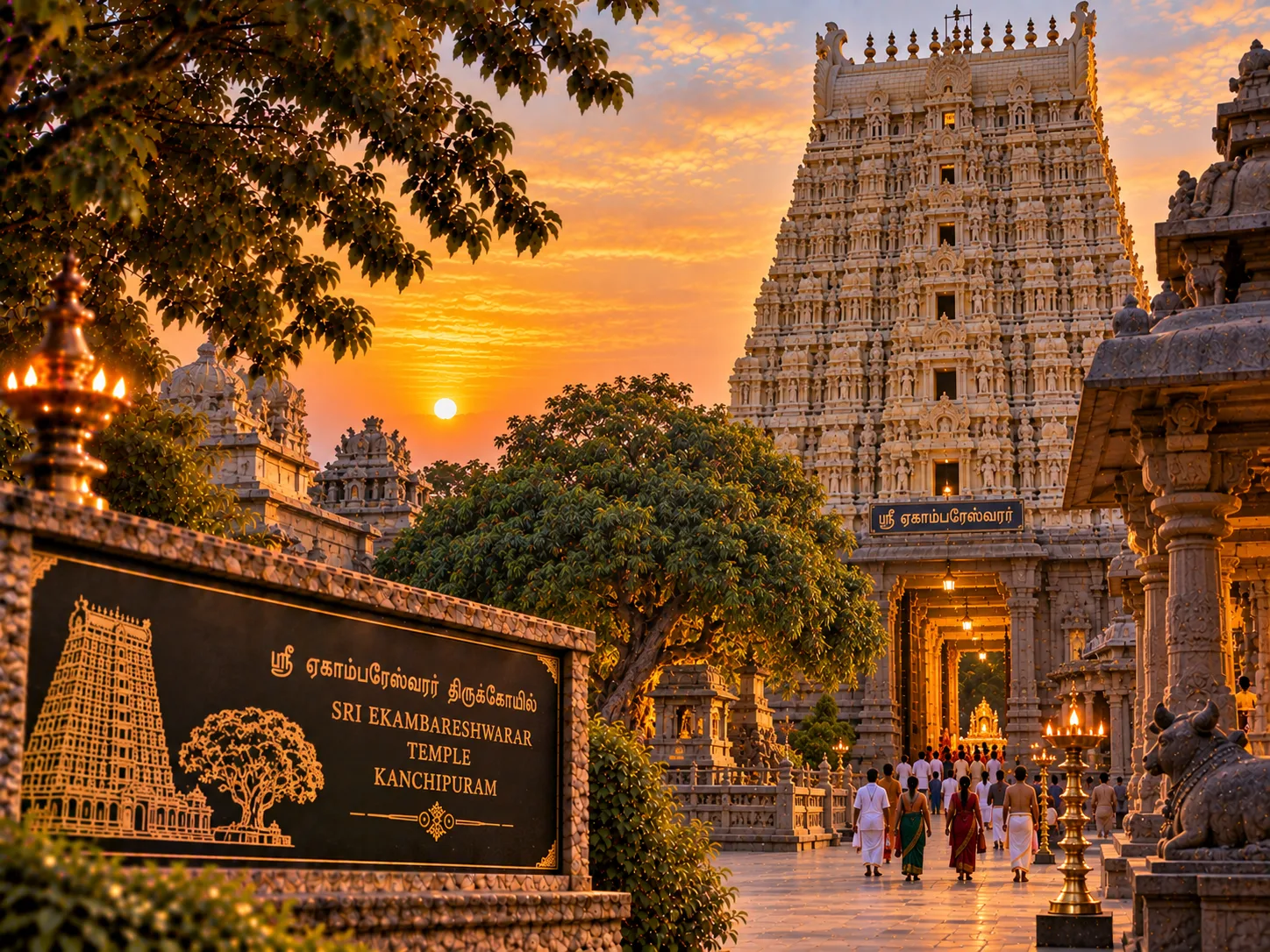
एकाम्बरेश्वर मंदिर
Ekambareswarar Temple
Kanchipuram, Tamil Nadu
- Deity
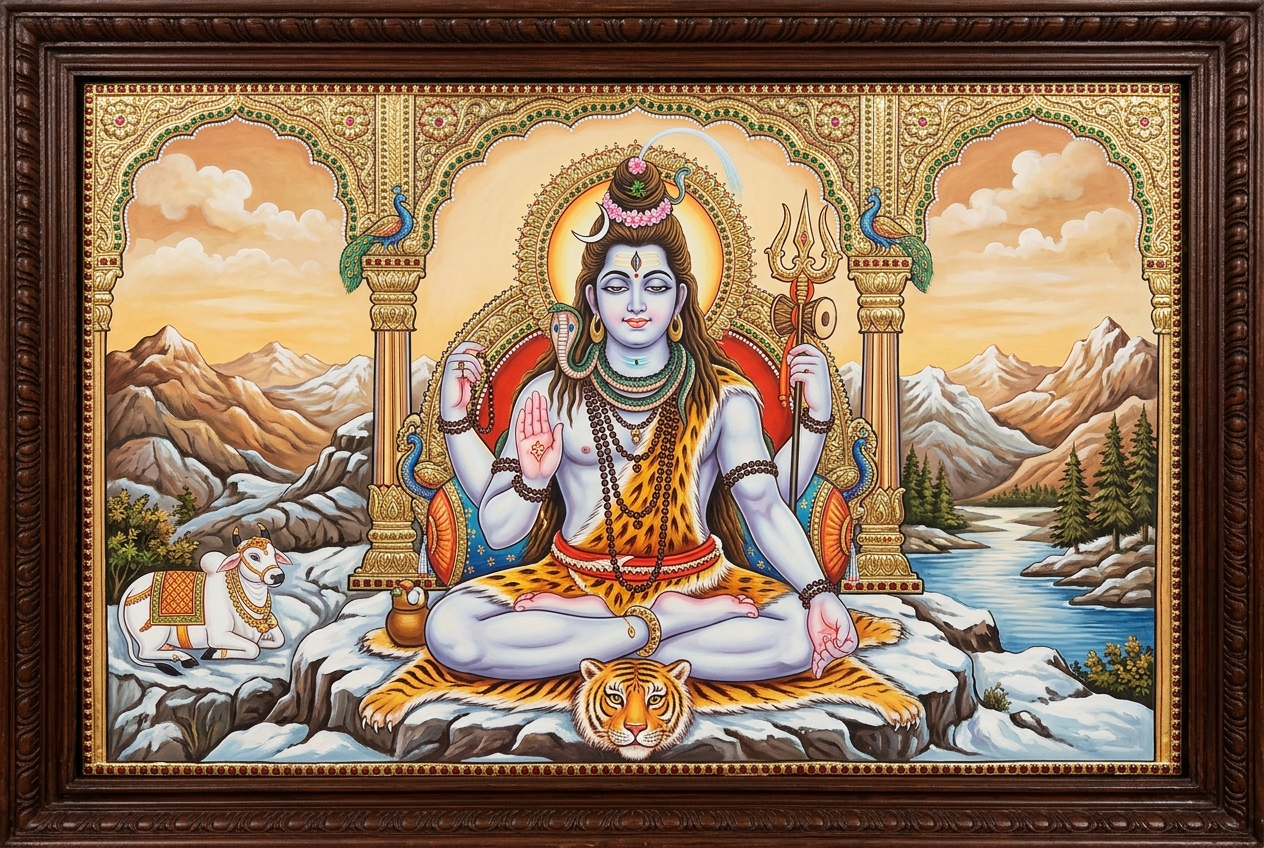
- Lord Shiva as Ekambareswarar / Ekambaranathar (Prithvi Lingam) and Goddess Parvati as Elavarkuzhali / Kamakshi
- Location
- Kanchipuram, Tamil Nadu
- Region
- South
- Era
- Pre-6th century CE origins under the Pallava dynasty; comprehensively rebuilt and expanded under the Medieval Cholas, Later Pandyas, and the Vijayanagara Empire (notably by Emperor Krishnadevaraya in 1509 CE, who commissioned the 192-foot Raja Gopuram).
Ekambareswarar Temple, located in the historic temple city of Kanchipuram, Tamil Nadu, is a monumental temple complex dedicated to Lord Shiva. It was commissioned by the Pallava rulers, expanded by the Cholas and Pandyas, and brought to its grandest form by the Vijayanagara Emperor Krishnadevaraya. Revered as one of the sacred Pancha Bhoota Sthalams, it embodies the element of Earth (Prithvi). The sanctum houses the Prithvi Lingam, an earthen lingam traditionally fashioned out of sand, which receives no direct water Abhishekam to preserve its sacred form.
Spanning over 23 acres, it ranks among the largest temple complexes in South India. It features four massive entrance towers (gopurams), prominent among which is the southern Raja Gopuram standing at approximately 192 feet (59 metres)—commissioned by the Vijayanagara ruler Krishnadevaraya in 1509 CE. The complex includes five sprawling concentric courtyards (Prakarams) and a magnificent Thousand-Pillared Hall.
Unlike conventional Shiva temples, the complex does not have an independent inner sanctum for Goddess Parvati, as Goddess Kamakshi at the nearby Kamakshi Amman Temple is revered as the sole presiding Shakti for all Shiva shrines across Kanchipuram. Celebrated as one of the 275 Paadal Petra Sthalams, its sanctity has been extolled in the 7th-to-9th century Tevaram hymns of the Nayanmar saints Appar, Sambandar, Sundarar, and Manikkavasagar.
Presiding Deities
Darshan Timings
06:00 AM - 12:30 PM and 04:00 PM - 08:30 PM. During major festival days, the temple often remains open continuously or extends night hours past 09:00 PM.
Major Festivals
महत्त्व
SignificanceGoddess Parvati performed rigorous penance under a mango tree on the banks of the Vegavathi River to expiate the sin of playfully covering Lord Shiva's eyes. She fashioned a lingam out of sand (Prithvi Lingam) and worshipped it. To test her devotion, Lord Shiva caused the river to swell. To protect the lingam from being washed away, the Goddess embraced it closely to her chest, prompting Shiva to appear, accept her devotion, and marry her. Due to her embrace, marks of her bangles and bosom remain imprinted on the Lingam.
The temple derives its name from Eka-Amra-Natha ("Lord of the Single Mango Tree"), commemorating the ancient, sacred Sthala Vriksham under which the divine reunion occurred. The courtyard also houses the celebrated Sahasra Lingam—a single monolithic granite pillar exquisitely carved with 1,008 individual miniature Shiva Lingams.
Highlights
- Pancha Bhoota Sthalam - Manifestation of the Prithvi (Earth) Element
- Sacred Sand Lingam (Prithvi Lingam) preserved without direct liquid abhishekam
- Monumental 192-foot South Raja Gopuram built by Krishnadevaraya (1509 CE)
- Sacred Sthala Vriksham - Ancient mango tree representing the Four Vedas
- Sahasra Lingam shrine featuring 1,008 miniature lingams carved on a single stone
- Vast 23-acre complex featuring a historic Thousand-Pillared Hall
Your notes
Private reflections you can revisit anytime.
Questions & Discussions
Ask a question or start a discussion about this page.
- No questions or discussions yet — be the first.