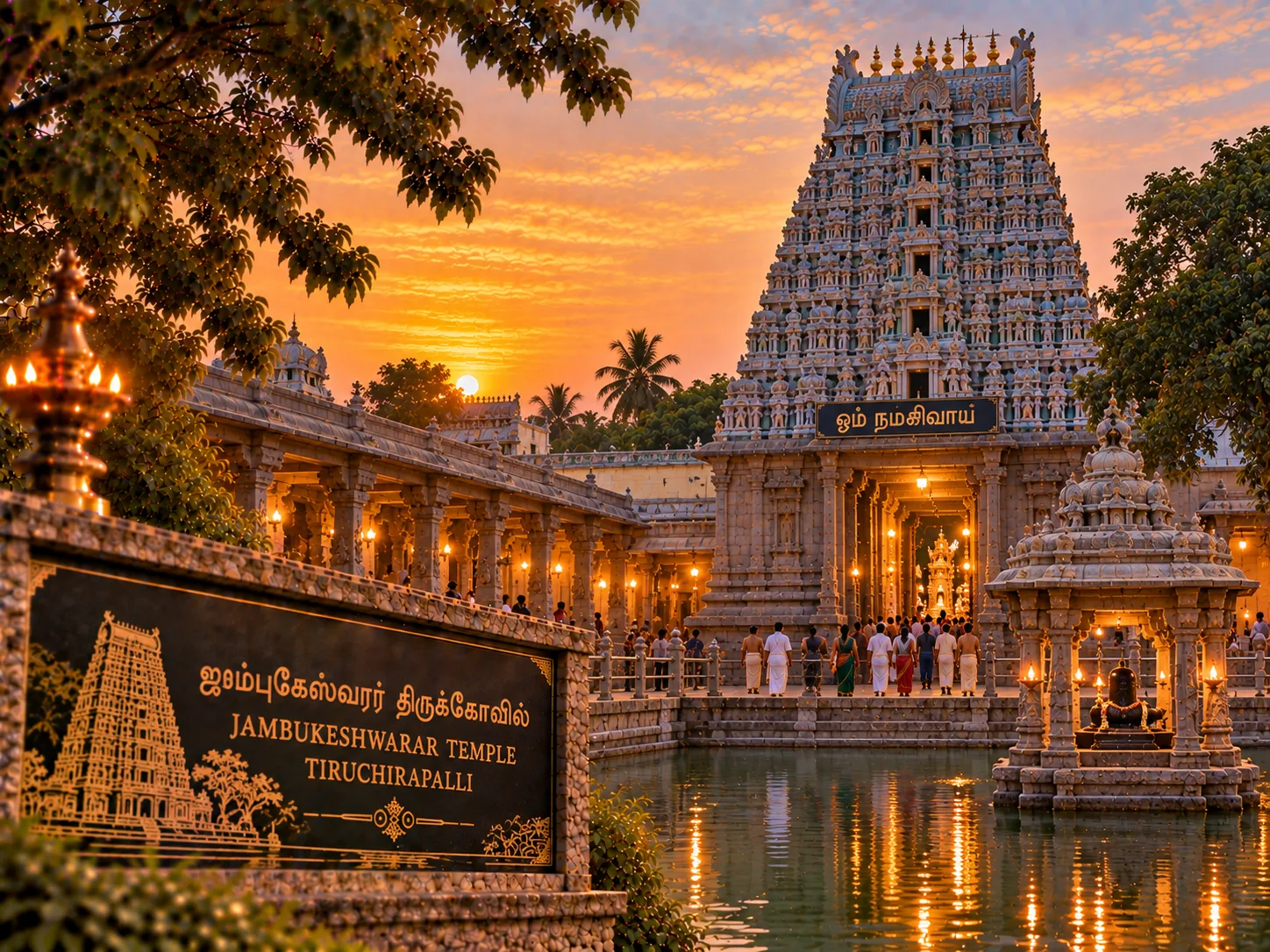
जम्बुकेश्वर मंदिर
Jambukeswarar Temple
Thiruvanaikaval, Tiruchirapalli, Tamil Nadu
- Deity
- Lord Shiva as Jambukeswarar (Appu Lingam) and Goddess Parvati as Akhilandeswari
- Location
- Thiruvanaikaval, Tiruchirapalli, Tamil Nadu
- Region
- South
- Era
- Early Chola period (c. 2nd century CE / ~1,800 years ago, built by King Kochenganan Chola; expanded by Hoysalas, Pandyas, and Vijayanagara Empire)
Jambukeswarar Temple, situated in Thiruvanaikaval near Srirangam, Tiruchirappalli, Tamil Nadu, is rooted in Early Chola architecture and dedicated to Lord Shiva. Revered as one of the sacred Pancha Bhoota Sthalams, it represents the element of Water (Appu). Built around a perennial natural spring, the sanctum sanctorum remains continually filled with water, keeping the Shiva Lingam partially submerged.
Spanning over 18 acres, the complex is renowned for its architectural grandeur, featuring five magnificent concentric enclosures (Prakarams) supported by intricately carved pillars and monumental Gopurams.
For devotees, Thiruvanaikaval carries deep significance as one of the 275 Paadal Petra Sthalams—Shiva temples glorified in the Tevaram hymns of the Nayanmar saints—and as a temple where, according to tradition, the Goddess Herself performed penance and received spiritual instruction directly from Shiva. This is reflected in daily worship practice: the temple's noon puja, in which the chief priest traditionally dresses in feminine attire in honour of Akhilandeswari's devotion, is among its most distinctive living rituals.
Presiding Deities
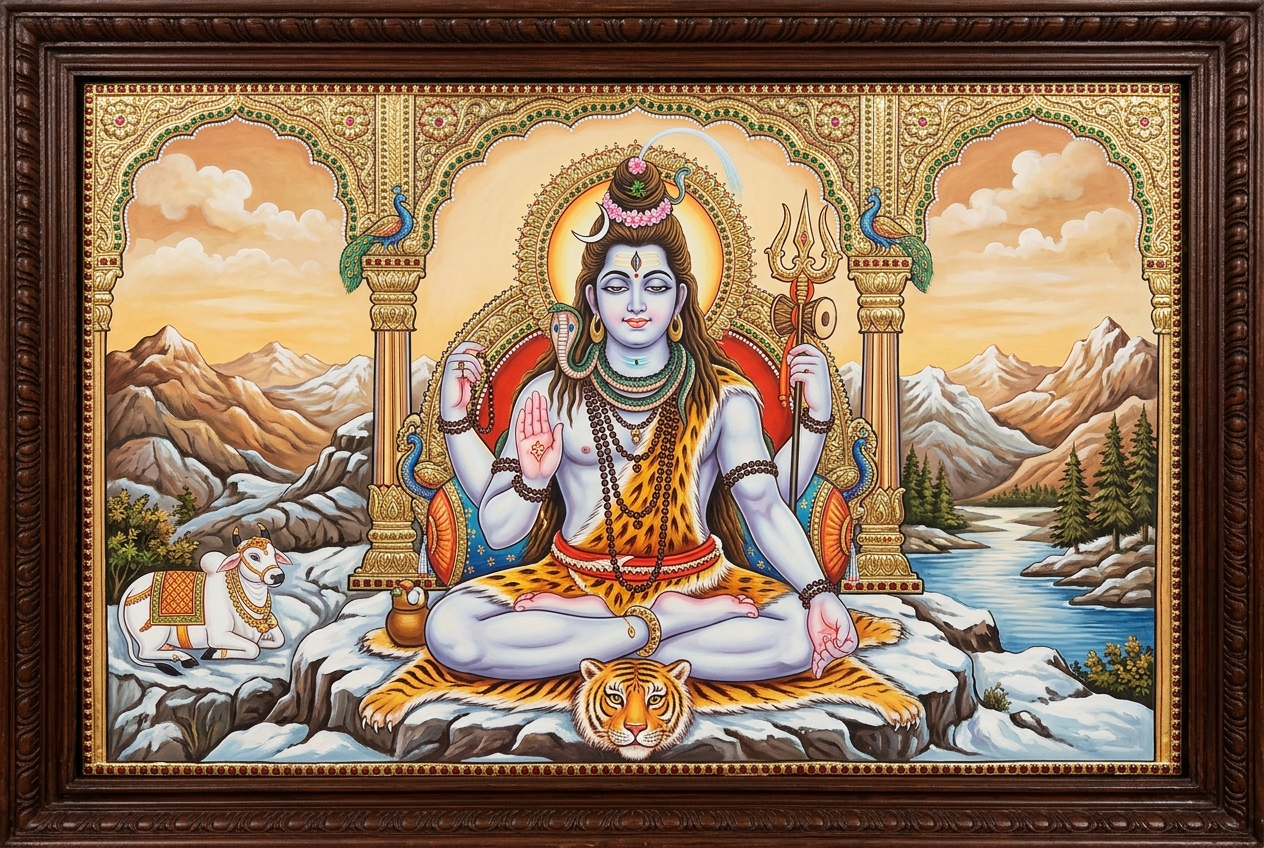
Darshan Timings
05:30 AM - 01:00 PM and 03:00 PM - 08:30 PM (Fridays, Sundays, and festival days may remain open continuously or extend till 09:00 PM)
Major Festivals
महत्त्व
SignificanceDesignated as an Upadesha Sthalam, the temple honours Goddess Akilandeswari learning Shiva Gnana from Lord Shiva. According to legend, Goddess Parvati fashioned the Appu Lingam from the waters of the Kaveri River under the sacred White Jambu tree. It is also the sacred site where two cursed Shivaganas, Maliyavan and Pushpadandhan, reincarnated as an elephant and a spider to offer singular devotion to the water Lingam and attained salvation (Moksha). Praised in the Tevaram hymns by Appar, Thirugnanasambandhar, Sundarar, and Manickavasagar, the temple sanctum was constructed as a 'mada kovil' with narrow entrances by King Kochenganan Chola.
Highlights
- Pancha Bhoota Sthalam - Manifestation of the Appu (Water) Element
- Sanctum Sanctorum featuring a continuous underground water spring
- Sacred White Jambu Tree (Sthala Vriksham)
- Unique noon pooja where the priest dresses as Goddess Parvati
Your notes
Private reflections you can revisit anytime.
Questions & Discussions
Ask a question or start a discussion about this page.
- No questions or discussions yet — be the first.