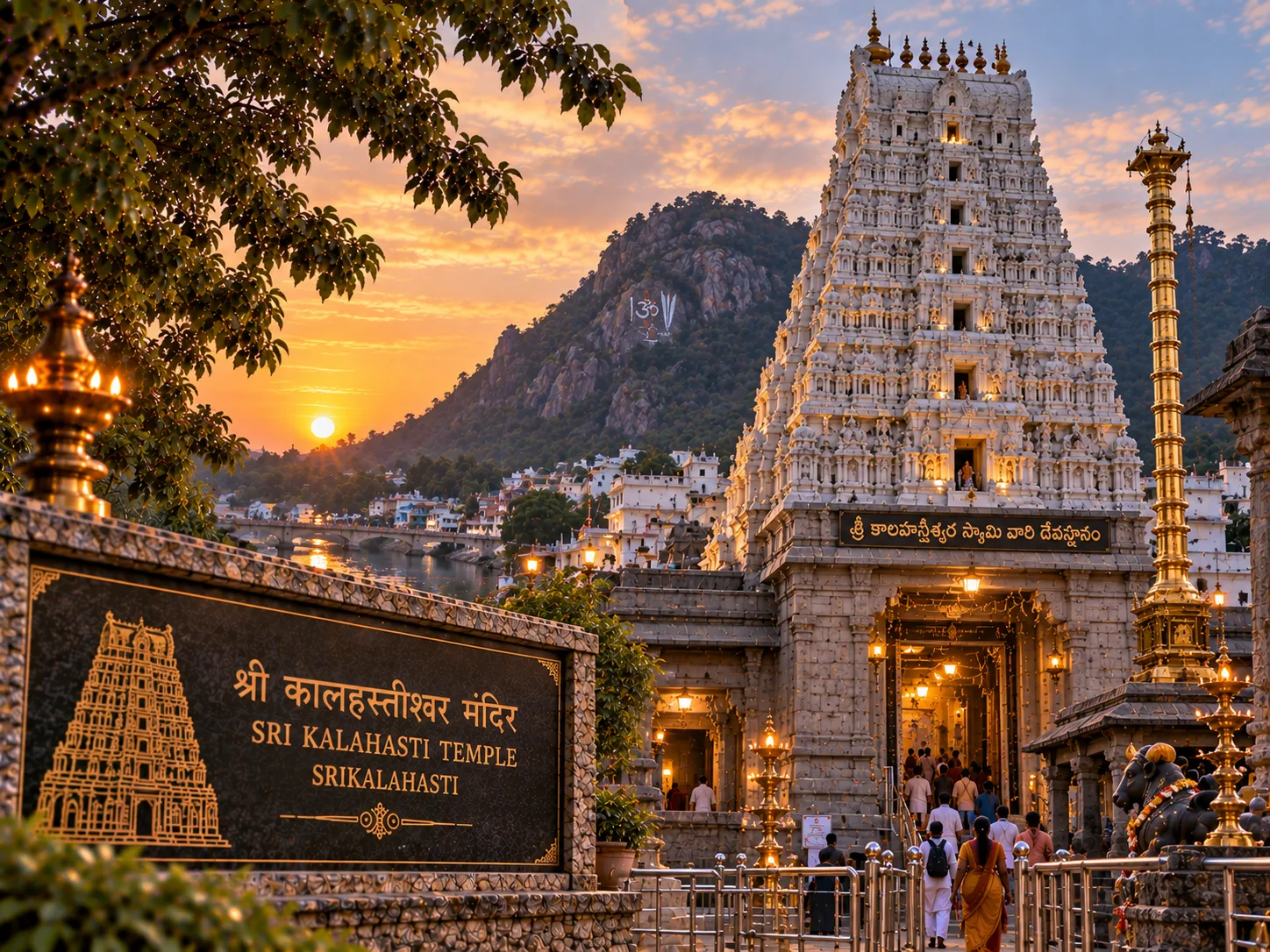
श्रीकालहस्तीश्वर मंदिर
Srikalahasteeswara Temple
Srikalahasti, Tirupati District, Andhra Pradesh
- Deity
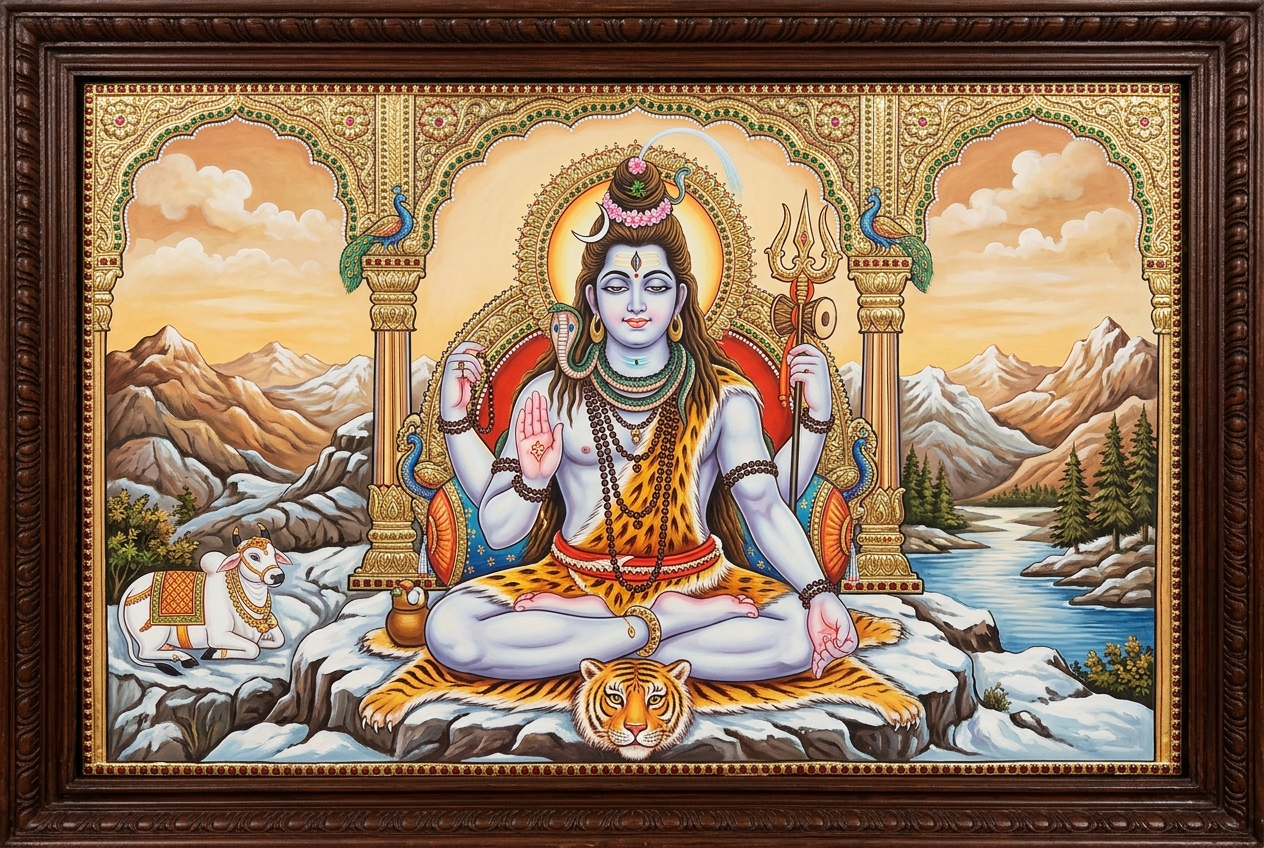
- Lord Shiva as Kalahasteeswara (Vayu Lingam) and Goddess Parvati as Gnana Prasunambika Devi
- Location
- Srikalahasti, Tirupati District, Andhra Pradesh
- Region
- South
- Era
- Origins date to classical antiquity (pre-5th century CE, associated with Kannappa Nayanar); the inner stone sanctum was constructed in the 5th century CE under the Pallavas, extensively expanded during the 11th–12th centuries by the Chola emperors (notably Rajendra Chola I and Kulothunga Chola I), and significantly aggrandised in 1516 CE by the Vijayanagara Emperor Krishnadevaraya, who built the 100-pillared hall and the monumental western Gopuram.
Srikalahasteeswara Temple, situated on the banks of the Swarnamukhi River in Srikalahasti near Tirupati, Andhra Pradesh, is an ancient Dravidian temple complex dedicated to Lord Shiva. Revered as one of the sacred Pancha Bhoota Sthalams, it represents the element of Air (Vayu). The sanctum houses the Vayu Lingam, a self-manifested (Swayambhu) white lingam that is never touched by human hands (Theenda Thirumeni), even during formal worship.
Nestled between the surrounding Kailasagiri and Kannappa hillocks, the sprawling temple complex features monolithic rock-cut architecture, an ornate 100-pillared hall, and towering Gopurams commissioned by the Vijayanagara ruler Krishnadevaraya in 1516 CE. A distinctive physical phenomenon confirms its representation of the wind element: even though the deep, stone-enclosed sanctum sanctorum has no windows and the oil lamps illuminating the outer shrine stay completely still, the two eternal flame lamps positioned right beside the Vayu Lingam flicker constantly.
Celebrated as one of the 275 Paadal Petra Sthalams glorified by the Nayanmar saints Appar, Sambandar, Sundarar, and Manikkavasagar in the Tevaram, the temple is equally renowned across the world as the foremost Parihara Sthalam for alleviating Rahu-Ketu and Sarpa Doshas.
Presiding Deities
Darshan Timings
06:00 AM - 09:00 PM (Open continuously throughout the day for Rahu-Ketu Pujas and Darshan)
Major Festivals
महत्त्व
SignificanceThe name Srikalahasti embodies three devoted creatures who offered singular worship to the Lord and attained Moksha: Sri (the Spider, which wove webs over the Lingam to shield it from dust), Kala (the Serpent, which placed precious gems to adorn the Lingam), and Hasti (the Elephant, which bathed the Lingam with water carried in its trunk). It is also the sacred site where the hunter-devotee Kannappa Nayanar demonstrated supreme devotion by plucking out his own eyes to heal the bleeding eyes of the Lingam, earning the eternal grace of Lord Shiva.
The presiding Goddess, Gnana Prasunambika Devi, wears the sacred Meru Chakra on her chest and is worshipped as the granter of supreme gnana (cosmic wisdom). Astronomically and spiritually, the temple represents the junction of solar and lunar nodes (Rahu and Ketu), making its daily Rahu Kala Abhishekam and Sarpa Dosha Nivarana pujas the most sought-after astrological remedies in Sanatana Dharma.
Highlights
- Pancha Bhoota Sthalam - Manifestation of the Vayu (Air) Element
- Perpetually flickering inner lamps beside the Swayambhu Lingam inside a sealed stone sanctum
- Premier Parihara Sthalam for Rahu-Ketu and Kaal Sarpa Dosha Nivarana
- Sacred land of Kannappa Nayanar's supreme eye-sacrifice and liberation
- Named after the singular devotion of Sri (Spider), Kala (Serpent), and Hasti (Elephant)
- Historic 100-Pillared Hall commissioned by Vijayanagara Emperor Krishnadevaraya (1516 CE)
Your notes
Private reflections you can revisit anytime.
Questions & Discussions
Ask a question or start a discussion about this page.
- No questions or discussions yet — be the first.