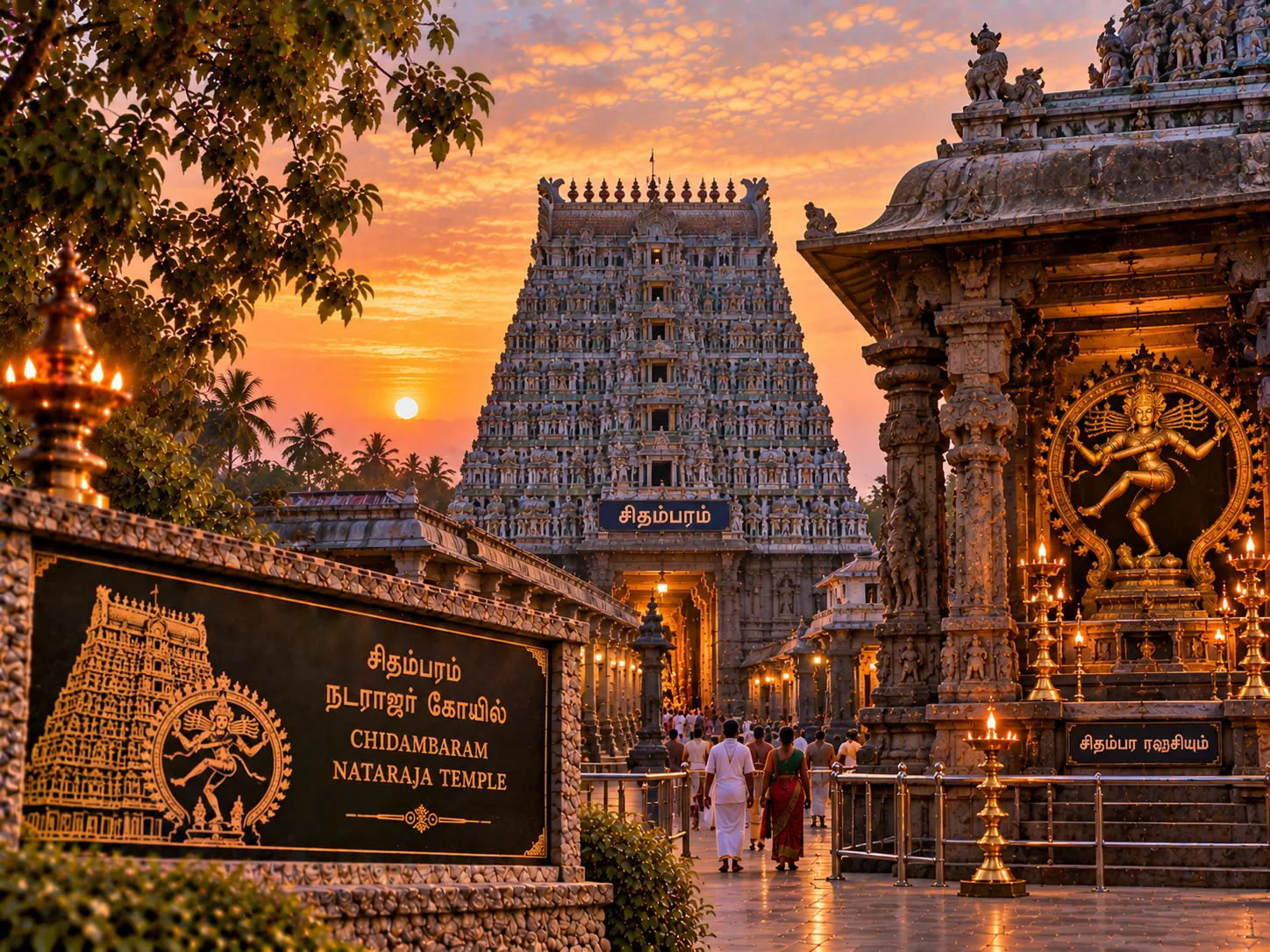
थिल्लई नटराज मंदिर
Thillai Nataraja Temple
Chidambaram, Tamil Nadu
- Deity
- Lord Shiva as Nataraja (Akasha Lingam / Chidambara Rahasya) and Goddess Parvati as Shivakamasundari
- Location
- Chidambaram, Tamil Nadu
- Region
- South
- Era
- Origins trace back to classical antiquity (pre-5th century CE Thillai forest shrine); major stone sanctums, the golden roof (Kanaka Sabha), and concentric enclosures were erected and embellished under the Early and Medieval Cholas (notably Parantaka I, Rajaraja I, and Kulothunga I), with extensive additions by the Later Pandyas and Vijayanagara monarchs (Krishnadevaraya built the North Gopuram in the 16th century).
Thillai Nataraja Temple, situated in Chidambaram, Tamil Nadu, is one of the most celebrated and spiritually significant Dravidian temple complexes in India. Dedicated to Lord Shiva in his cosmic dance posture (Ananda Tandava), it is the premier shrine among the sacred Pancha Bhoota Sthalams, embodying the subtlest primordial element: Space or Ether (Akasha).
Spread across approximately 40 acres, the temple is distinguished by its five sacred sabhas (halls)—the Chit Sabha, Kanaka Sabha, Natana Sabha, Deva Sabha, and Raja Sabha (Thousand-Pillared Hall). The sanctum’s superstructure (Kanaka Sabha) is crowned with a gilded roof made of 21,600 gold tiles, symbolising human breaths, fastened by 72,000 gold nails representing the vital nadis of the human body.
The complex features four monumental seven-tiered Gopurams facing the cardinal directions, each elaborately carved on its granite passage walls with all 108 classical karanas (dance postures) from the Natya Shastra. Glorified extensively in the 7th-to-9th century Tevaram by the Nayanmar saints, it serves as the spiritual heart of Tamil Shaivism, where the Tirumurai texts were historically recovered.
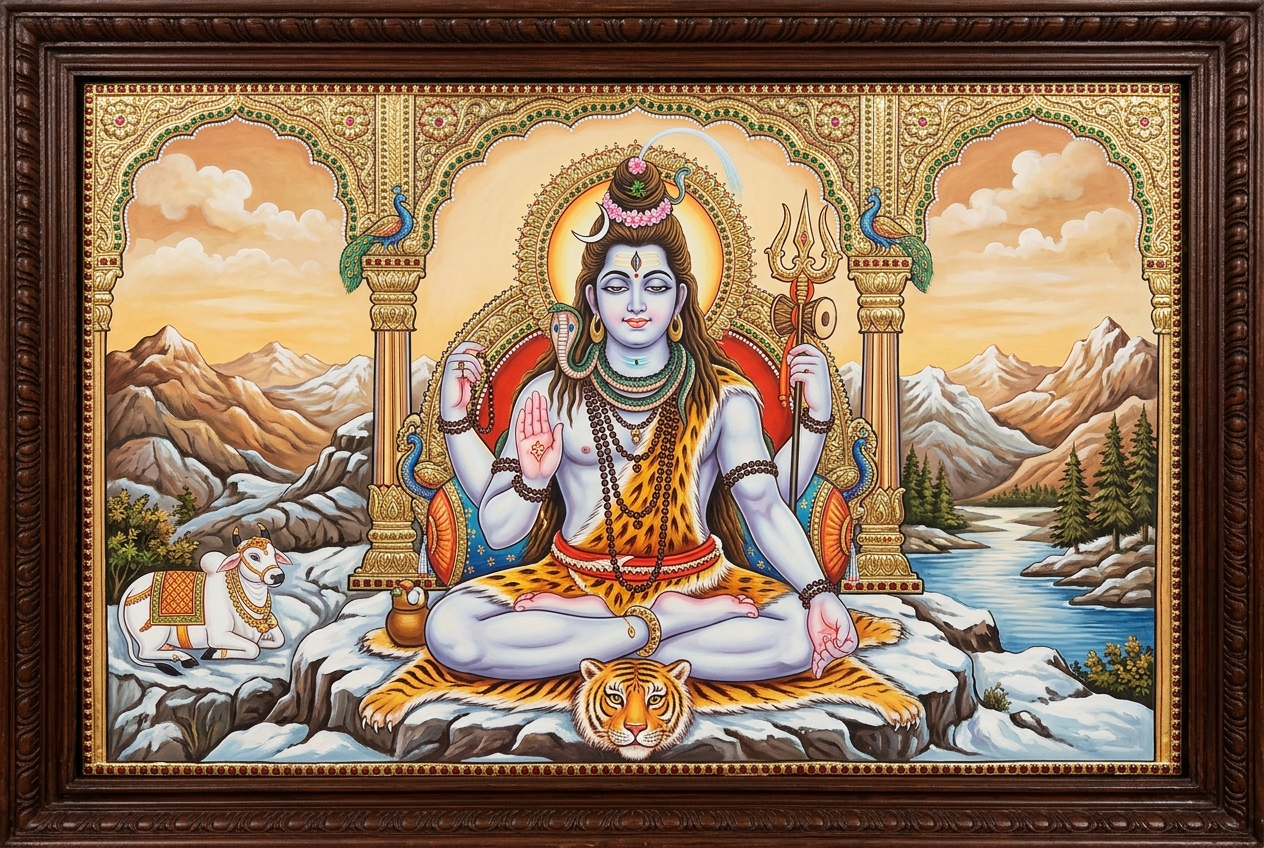
Presiding Deities
Darshan Timings
06:00 AM - 12:00 PM and 05:00 PM - 10:00 PM
Major Festivals
महत्त्व
SignificanceChidambaram signifies Chit (pure consciousness) and Ambaram (boundless sky). Unlike standard Shiva shrines where the deity is worshipped as a stone aniconic lingam, the Lord is venerated here in three distinct states: Anthropomorphic (Murti of Nataraja performing the Ananda Tandava), Semi-form (the crystalline Sphatika Lingam bathed during the six daily pujas), and Formless (the Chidambara Rahasya).
The Chidambara Rahasya (secret of Chidambaram) resides to the right of Nataraja behind a black veil representing ignorance. When the curtain is parted during ritual worship, it reveals an empty space adorned only with a garland of golden vilva (bilva) leaves, epitomising the supreme divine reality existing as infinite, formless space (Akasha). It is also the sacred site where Sages Patanjali and Vyaghrapada performed arduous penance to witness the eternal cosmic dance of Shiva.
Highlights
- Pancha Bhoota Sthalam - Manifestation of the Akasha (Ether/Space) Element
- Chidambara Rahasya - Formless worship of the Divine represented as empty space adorned with golden bilva leaves
- Kanaka Sabha (Golden Hall) roof gilded with 21,600 gold tiles held by 72,000 gold nails
- Patanjali and Vyaghrapada Sthalam - The site where the Sages witnessed the Ananda Tandava
- Carvings of all 108 classical Natya Shastra Karanas across the four towering Gopurams
- Five Sacred Sabhas: Chit Sabha, Kanaka Sabha, Natana Sabha, Deva Sabha, and Raja Sabha
Your notes
Private reflections you can revisit anytime.
Questions & Discussions
Ask a question or start a discussion about this page.
- No questions or discussions yet — be the first.