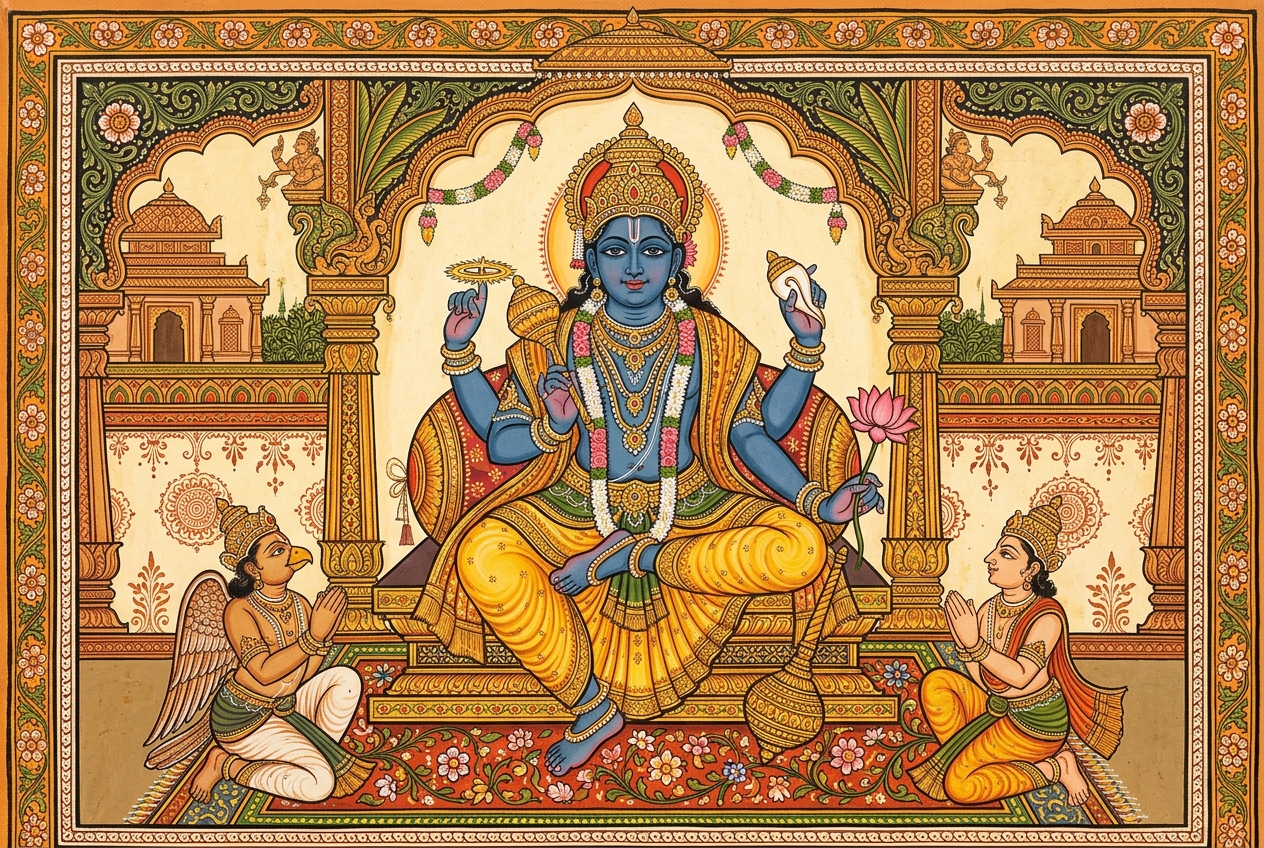
Om Namo Bhagavate Vasudevaya
ॐ नमो भगवते वासुदेवाय
Vasudeva Dvadasakshari Mantra
Known as the Dvadasakshari (twelve-syllable) mantra, this is the principal chant of the Bhagavata tradition, dedicated to Lord Vishnu and his supreme incarnation, Lord Krishna (Vasudeva). It is a profoundly peaceful mantra that awakens deep spiritual devotion (bhakti) and frees the chanter from the cycle of birth and death.
- Deity
- Vishnu
- Tradition
- Vaishnava, Universal
- Purpose
- Bhakti (devotion), Moksha (liberation), Atma-jnana (self-realisation).
- Source
- Vaiṣṇava tradition (Bhāgavata sampradāya), now universal.
मूल पाठ
Sanskrit textॐ नमो भगवते वासुदेवाय
Oṃ namo bhagavate vāsudevāya
Om Namo Bhagavate Vasudevaya — recitation
अर्थ
Meaning"Om" is the primordial cosmic sound. "Namo" means "I bow or offer salutations". "Bhagavate" translates to "to the Divine or the Supreme Lord". "Vasudevaya" means "to Vasudeva" (the one who dwells in all beings, Lord Krishna). Together: "I bow to the Supreme Lord Vasudeva."
संदर्भ
ContextThis mantra forms the spiritual core of the Srimad Bhagavatam (Bhagavata Purana). It was famously given by Sage Narada to the young prince Dhruva, who achieved the ultimate divine vision through its continuous recitation.
प्रयोग
How it is traditionally usedChant 12, 108, or 1008 times daily using a Tulsi mala. The number 12 honours the exact syllable count of this Dvadasakshari mantra, while 108 aligns with a standard full mala. Sit ideally facing east for spiritual elevation or north for general well-being and peace. For profound spiritual mastery (purascharana), a sustained ritual practice of chanting it 12,00,000 times (one lakh for each of its twelve syllables) is traditionally prescribed. Ensure proper pronunciation based on shiksha, smoothly transitioning between the words without rushing, and clearly aspirating the 'bh' in 'bhagavate'.
Sources & References
Dharmartha presents traditional knowledge with respect for its sources. Practices vary by lineage and region; this material does not assert exclusive or universal authority.
Spot an error or have a suggestion?
Help us keep this accurate — report a mistake or suggest content for this page.
Your notes
Private reflections you can revisit anytime.
Questions & Discussions
Ask a question or start a discussion about this page.
- No questions or discussions yet — be the first.
Related Knowledge
Continue your journey