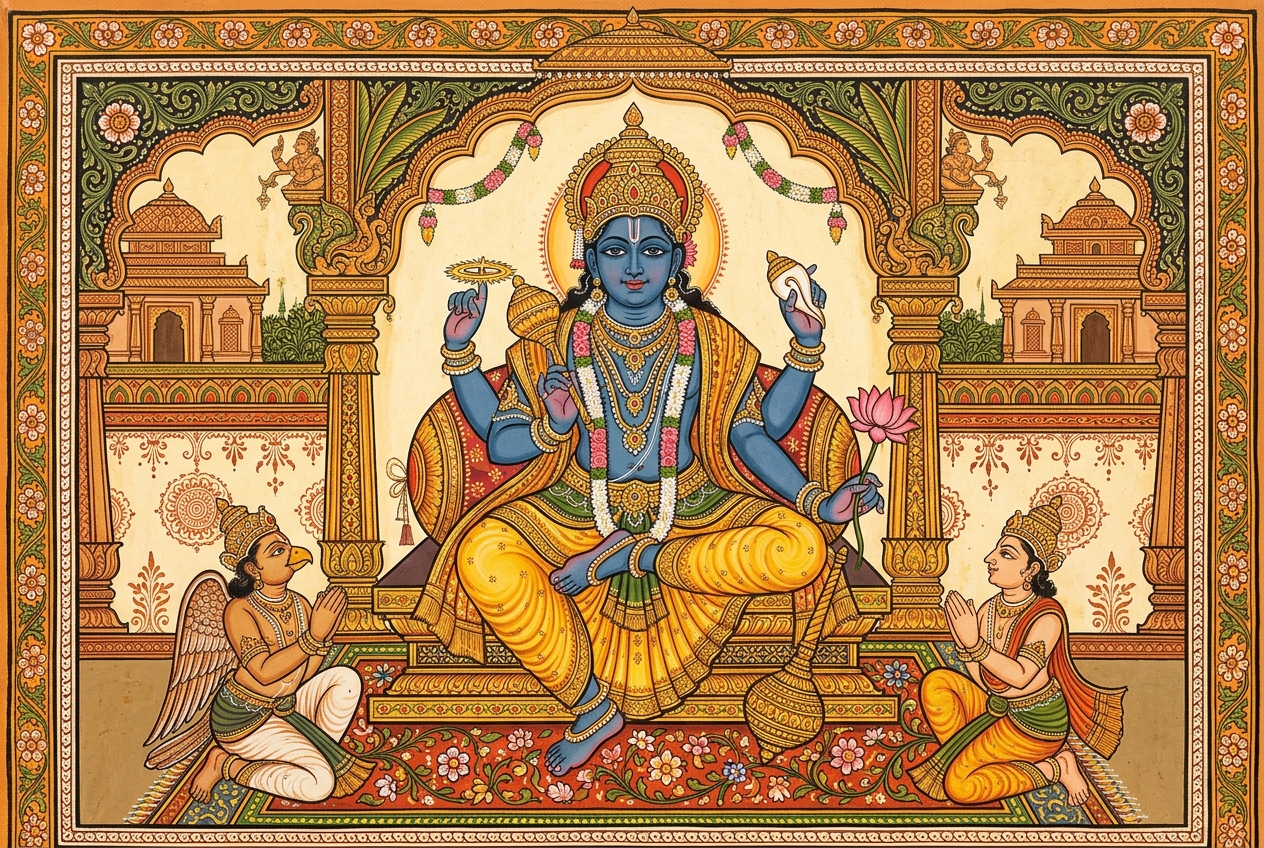
Om Namo Narayanaya
ॐ नमो नारायणाय
Vishnu Ashtakshara Mantra
Known as the Ashtakshara (eight-syllable) mantra, this is the most fundamental and potent chant dedicated to Lord Narayana (Vishnu). It represents the ultimate path of sharanagati (complete surrender to the Divine). It is deeply revered across all Vaishnava sampradayas as the key to crossing the ocean of worldly illusions and attaining supreme peace.
- Deity
- Vishnu
- Tradition
- Vaishnava, Universal
- Purpose
- Sharanagati (surrender), Moksha (liberation), Chitta-shuddhi (purification of the mind).
- Source
- Vaiṣṇava tradition, now universal.
मूल पाठ
Sanskrit textॐ नमो नारायणाय
Oṃ namo nārāyaṇāya
Om Namo Narayanaya — recitation
अर्थ
Meaning"Om" is the primordial cosmic sound. "Namo" means "I bow or offer salutations". "Narayanaya" translates to "to Lord Narayana" (the supreme refuge of all living beings). Together: "I surrender to Lord Narayana."
संदर्भ
ContextExtolled in the Tarasara Upanishad and the Narada Pancharatra, it is the crown jewel of the Vaishnava tradition. The great saint Ramanujacharya famously revealed this deeply guarded mantra from the temple rooftop in Tirukkoshtiyur so that all of humanity could attain liberation.
प्रयोग
How it is traditionally usedChant 8, 108, or 1008 times daily using a Tulsi mala. The number 8 honours the exact syllable count of this Ashtakshara mantra, while 108 aligns with a standard full mala. Sit ideally facing east for spiritual elevation or north for prosperity and peace. For complete mastery (purascharana), a sustained ritual practice of chanting it 8,00,000 times (one lakh for each of its eight syllables) is traditionally prescribed. Ensure proper pronunciation based on shiksha, maintaining a gentle, continuous flow without harsh breaks, and clearly distinguishing the retroflex 'ṇa' from the dental 'na'.
Sources & References
Dharmartha presents traditional knowledge with respect for its sources. Practices vary by lineage and region; this material does not assert exclusive or universal authority.
Spot an error or have a suggestion?
Help us keep this accurate — report a mistake or suggest content for this page.
Your notes
Private reflections you can revisit anytime.
Questions & Discussions
Ask a question or start a discussion about this page.
- No questions or discussions yet — be the first.
Related Knowledge
Continue your journey