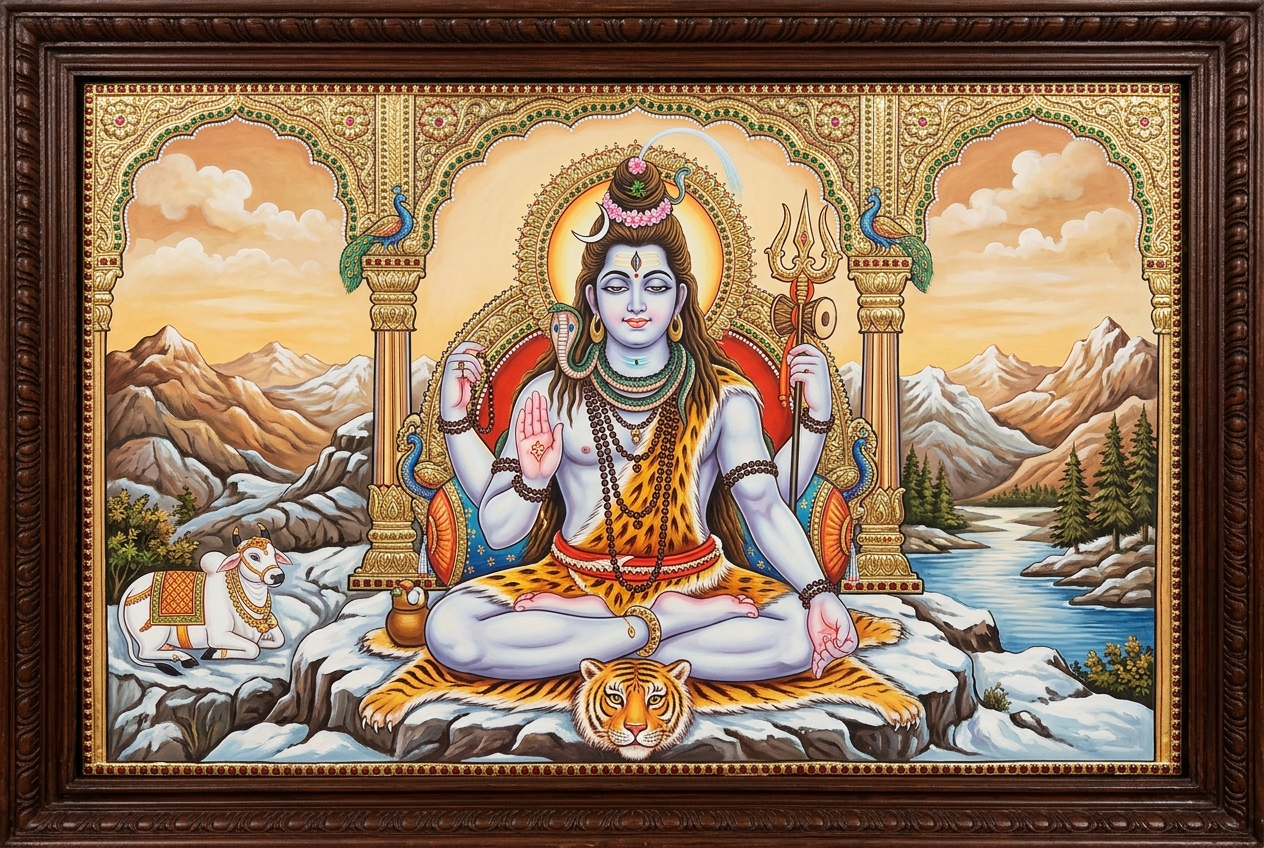
Om Sharavanabhavaya Namah
ॐ शरवणभवाय नमः
Murugan Nama Mantra
Lord Murugan is the divine commander who vanishes cosmic ignorance. This specific salutation acts as a spiritual grounding wire, allowing anyone—regardless of strict initiation or rigorous dietary rules—to safely invoke his immense protective energy, courage, and grace in their daily lives.
- Deity
- Murugan (Kartikeya)
- Tradition
- Kaumara, Universal
- Purpose
- Bhakti (devotion), Raksha (protection), Rina-mochana (freedom from debt), Shanti (peace).
- Source
- Kaumāra tradition, Śaiva Bhakti.
मूल पाठ
Sanskrit textॐ शरवणभवाय नमः
Oṃ śaravaṇabhavāya namaḥ
Om Sharavanabhavaya Namah — recitation
अर्थ
Meaning"Om" is the primordial cosmic vehicle. "Sharavana" means "the forest of reeds" (the divine lake of his birth), and "bhava" means "to manifest". The suffix "ya" translates to "to", and "Namah" means "salutations". Together: "Om, I offer my salutations to the Lord who manifested in the forest of reeds."
संदर्भ
ContextThe core syllables are glorified in the Skanda Purana, but this specific devotional arrangement is the most universally chanted form today. It is especially venerated in the Tamil tradition for its ability to dissolve modern-day anxieties and karmic debts through pure devotion.
प्रयोग
How it is traditionally usedChant 108 or 1008 times daily using a Red Sandalwood (Rakta Chandana) or Rudraksha mala. Sit ideally facing east for daily peace and spiritual wisdom, or facing south if you are specifically chanting to overcome severe debts, legal troubles, or enemies. Tuesdays, Sashti tithi (the 6th lunar phase), or Krittika nakshatra are exceptionally highly auspicious for this practice. Ensure proper pronunciation based on shiksha, smoothly rolling the retroflex 'ṇa' without breaking the chant's natural flow.
Sources & References
Dharmartha presents traditional knowledge with respect for its sources. Practices vary by lineage and region; this material does not assert exclusive or universal authority.
Spot an error or have a suggestion?
Help us keep this accurate — report a mistake or suggest content for this page.
Your notes
Private reflections you can revisit anytime.
Questions & Discussions
Ask a question or start a discussion about this page.
- No questions or discussions yet — be the first.
Related Knowledge
Gayatri Mantra
गायत्री मंत्र
The most revered Vedic prayer addressed to the Sun God (Savitr), chanted to illuminate the intellect and dispel ignorance.
Om Namah Shivaya
ॐ नमः शिवाय
The great redeeming five-syllable (Panchakshari) mantra of Lord Shiva, offering purification, inner peace and spiritual awakening.
Mahamrityunjaya Mantra
महा मृत्युंजय मंत्र
The great death-conquering Vedic mantra of Lord Shiva, chanted to overcome fear, promote profound healing, and grant liberation.
Continue your journey