Rituals & Pooja Guides
Navratri Durga Puja Vidhi
नवरात्रि दुर्गा पूजा विधि
Shardiya Navratri — the nine nights of Ashwin Shukla — is the foremost festival of Shakti. It begins with Ghatasthapana (kalash sthapana) on the first tithi and culminates in Vijayadashami. Each of the nine days honours one of the Navadurga, and many households keep a fast (vrat), light an akhand jyot, and recite the Durga Saptashati.
Below is a complete, traditional household procedure — from Ghatasthapana to the daily puja, Saptashati paath, aarti and kanya pujan. Where your family follows a specific kula-parampara or an acharya's vidhi, that should take precedence.
- Deity
- Durga
- Tradition
- Shakta
- Purpose
- Navaratri Ghatasthapana & daily Durga puja
- Occasion
- Navaratri
- Source
- Traditional household Navratri paddhati — after Gita Press 'Nitya Karm Pooja Prakash' / Durga Puja paddhati; mantras are canonical.
Auspicious Muhurta
Shardiya Navratri 2026
Sthapana
Sunday, 11 October 2026 · Ghatasthapana
Pratahkal muhurta ≈ 6:19 AM – 10:12 AM IST (Abhijit muhurta if unavailable) — confirm with your city's Panchang.
Visarjan
Tuesday, 20 October 2026 · Vijayadashami (Dussehra)
Kanya pujan on Ashtami (17 Oct) / Navami (18 Oct); paran & visarjan after Vijayadashami.
Ashwin Shukla Pratipada. Ghatasthapana is best in the morning; avoid Chitra nakshatra, Vaidhriti yoga and Rahu Kalam — otherwise use the Abhijit muhurta.
सामग्री
Required materials- मिट्टी का कलश जल सहित — Clay kalash filled with clean water (Gangajal if available)
- आम-पल्लव एवं नारियल — Mango leaves and a coconut (for the kalash)
- जौ बोने हेतु मिट्टी एवं मिट्टी का पात्र — Soil & an earthen pot to sow barley (jamvara)
- माँ दुर्गा की प्रतिमा अथवा चित्र — A murti or picture of Maa Durga
- लाल वस्त्र (चौकी हेतु) — Red cloth for the altar/chowki
- मौली / कलावा — Sacred red thread (mauli)
- रोली, कुंकुम, हल्दी, चन्दन, अक्षत — Roli, kumkum, turmeric, sandal & unbroken rice (akshat)
- लाल पुष्प — गुड़हल, गेंदा एवं माला — Red flowers (hibiscus, marigold) & a garland
- घी/तेल का दीप एवं अखण्ड ज्योति — Ghee/oil lamp & the akhand jyot
- धूप एवं अगरबत्ती — Dhoop and incense
- नैवेद्य / भोग — फल एवं मिष्ठान्न — Naivedya: fruit & sweets
- पान, सुपारी, लौंग, इलायची — Betel leaf, areca nut, clove, cardamom
- सिंदूर एवं श्रृंगार सामग्री — Sindoor & shringar items (bangles, bindi, etc.)
- दुर्गा सप्तशती पुस्तक — A copy of the Durga Saptashati (for paath)
संकल्प
Sankalpaॐ विष्णुर्विष्णुर्विष्णुः। अद्य ……… (गोत्र/नाम) अहं आश्विन-शुक्ल-प्रतिपदि आरभ्य नवरात्र-पर्यन्तं श्रीदुर्गा-प्रीत्यर्थं घटस्थापन-पूर्वकं नवरात्र-व्रत-पूजनम् अहं करिष्ये।
Recite the sankalpa holding water, flowers and rice in the right palm; then release the water.
पूजा विधि
Step-by-step procedure- 1
1. स्नान एवं शुद्धि · Snana & Shuddhi
प्रातः स्नान कर स्वच्छ वस्त्र धारण करें। पूजा-स्थान को गंगाजल छिड़ककर शुद्ध करें एवं लाल वस्त्र से ढकी चौकी पर माँ दुर्गा की प्रतिमा स्थापित करें। Bathe at dawn, wear clean clothes, purify the space by sprinkling Gangajal, and place Maa Durga's murti on a red-cloth chowki.
- 2
2. दीप-प्रज्वलन एवं गणेश स्मरण · Deepa & Ganesha Smaran
घी का दीप जलाएँ। किसी भी शुभ कार्य से पूर्व प्रथम-पूज्य श्रीगणेश का स्मरण कर उन्हें प्रणाम करें। Light the ghee lamp and, as before every auspicious act, first remember and bow to Lord Ganesha.
- 3
3. संकल्प · Sankalpa
दाहिने हाथ में जल, अक्षत एवं पुष्प लेकर नवरात्र-व्रत एवं पूजा का संकल्प करें, फिर जल भूमि पर छोड़ दें। Holding water, akshat and a flower in the right palm, take the vow of the Navratri vrat and puja, then release the water.
- 4
4. जौ बोना · Sowing the Jamvara
मिट्टी के पात्र में शुद्ध मिट्टी भरकर उसमें जौ बोएँ एवं थोड़ा जल छिड़कें — नौ दिन इसकी सिंचाई करें; अंकुरों की वृद्धि शुभ मानी जाती है। Fill an earthen pot with soil, sow barley seeds and sprinkle water — water it for nine days; healthy sprouts are considered auspicious.
- 5
5. कलश स्थापना · Kalash Sthapana
जौ-पात्र पर जल से भरा कलश रखें। कलश पर मौली बाँधें, उसमें अक्षत, सुपारी, सिक्का एवं दूर्वा डालें, मुख पर आम-पल्लव सजाकर ऊपर नारियल (लाल वस्त्र में लपेटकर) रखें। Place a water-filled kalash on the barley pot. Tie mauli around it, drop in akshat, an areca nut, a coin and durva, arrange mango leaves at the mouth and set a coconut (wrapped in red cloth) on top.
- 6
6. वरुण एवं तीर्थ-आवाहन · Invoking the sacred waters
कलश के जल में समस्त तीर्थों एवं वरुण देव का आवाहन करें — 'गंगे च यमुने चैव…' मंत्र से। Invoke all the sacred rivers and Varuna into the kalash water with the mantra 'Gange cha Yamune chaiva…'.
- 7
7. अखण्ड ज्योति · Akhand Jyot
यदि संकल्प हो तो नौ दिन अखण्ड ज्योति प्रज्वलित करें एवं उसकी रक्षा का ध्यान रखें। If you have resolved to, light the akhand jyot (continuous flame) for all nine days and tend it carefully.
- 8
8. देवी आवाहन एवं ध्यान · Avahana & Dhyana
हाथ जोड़कर माँ दुर्गा का आवाहन एवं ध्यान करें — 'आगच्छ त्वं महादेवि…' तथा 'या देवी सर्वभूतेषु…' का स्मरण करें। With folded hands invoke and meditate on Maa Durga — 'Aagaccha tvam Mahadevi…' and 'Ya Devi Sarvabhuteshu…'.
- 9
9. षोडशोपचार पूजन · Shodashopachara
माँ को आसन, पाद्य, अर्घ्य, आचमन, स्नान, वस्त्र, आभूषण, गंध (चन्दन-कुंकुम), अक्षत, पुष्प एवं माला, धूप, दीप, नैवेद्य, ताम्बूल, दक्षिणा एवं प्रदक्षिणा — इन सोलह उपचारों से पूजें। Offer the sixteen upacharas — seat, water for feet, arghya, achamana, bath, garments, ornaments, sandal-kumkum, akshat, flowers & garland, incense, lamp, naivedya, tambula, dakshina and pradakshina.
- 10
10. श्रृंगार अर्पण · Shringar Offering
माँ को सिंदूर, चूड़ी, बिंदी एवं अन्य श्रृंगार-सामग्री अर्पित करें — यह देवी को अति प्रिय है। Offer sindoor, bangles, bindi and other shringar items — dear to the Mother.
- 11
11. नवार्ण मंत्र जप · Navarna Japa
'ॐ ऐं ह्रीं क्लीं चामुण्डायै विच्चे' का यथासम्भव 108 बार जप करें। Chant the Navarna mantra 'Om Aim Hrim Klim Chamundayai Vicche' 108 times as capacity allows.
- 12
12. दुर्गा सप्तशती पाठ · Saptashati Paath
अंग-न्यास (देवी कवच · अर्गला · कीलक) के पश्चात् दुर्गा सप्तशती का पाठ करें — पूरा अथवा दिन-अनुसार अध्याय। After the angas (Devi Kavacham · Argala · Kilaka), recite the Durga Saptashati — the whole text or the day's chapters.
- 13
13. आरती · Arati
'जय अम्बे गौरी' आरती परिवार सहित गाएँ एवं कर्पूर/घी-दीप से माँ की आरती उतारें। Sing the 'Jai Ambe Gauri' arati with the family and offer the flame with camphor or a ghee lamp.
- 14
14. पुष्पांजलि एवं क्षमा-प्रार्थना · Pushpanjali & Kshama
पुष्पांजलि अर्पित कर पूजा में हुई त्रुटियों के लिए क्षमा-प्रार्थना करें। Offer pushpanjali and pray for forgiveness for any errors in the worship.
- 15
15. कन्या पूजन · Kanya Pujan (Ashtami/Navami)
अष्टमी अथवा नवमी को नौ कन्याओं (एवं एक बालक 'बटुक') के पाद-प्रक्षालन कर उन्हें भोजन (हलवा-पूरी-चना), वस्त्र एवं दक्षिणा अर्पित करें — इन्हें साक्षात् देवी-स्वरूप मानकर। On Ashtami/Navami, wash the feet of nine young girls (and a boy as 'Batuk'), feed them (halwa-puri-chana), and offer clothes and dakshina — honouring them as the living Goddess.
- 16
16. समापन एवं पारण · Conclusion & Paran
विजयादशमी पर अंतिम आरती कर माँ का आभार व्यक्त करें, जौ (जमवारा) को शिरोधार्य कर बाँटें, एवं विधिपूर्वक व्रत का पारण करें। On Vijayadashami perform the final arati with gratitude, distribute the jamvara sprouts with reverence, and break the vrat (paran) properly.
मंत्र
Mantrasवक्रतुण्ड महाकाय सूर्यकोटि समप्रभ। निर्विघ्नं कुरु मे देव सर्वकार्येषु सर्वदा॥
vakratuṇḍa mahākāya sūryakoṭi samaprabha | nirvighnaṃ kuru me deva sarvakāryeṣu sarvadā ||
Ganesha smaran before beginning — 'O curved-trunk, mighty one, radiant as a million suns, make all my undertakings free of obstacles, always.'
गंगे च यमुने चैव गोदावरि सरस्वति। नर्मदे सिन्धु कावेरि जलेऽस्मिन् सन्निधिं कुरु॥
gaṅge ca yamune caiva godāvari sarasvati | narmade sindhu kāveri jale'smin sannidhiṃ kuru ||
Invoking the sacred rivers into the kalash water — 'O Ganga, Yamuna, Godavari, Saraswati, Narmada, Sindhu and Kaveri, be present in this water.'
आगच्छ त्वं महादेवि स्थाने चात्र स्थिरा भव। यावत् पूजां करिष्यामि तावत्त्वं सन्निधौ भव॥
āgaccha tvaṃ mahādevi sthāne cātra sthirā bhava | yāvat pūjāṃ kariṣyāmi tāvat tvaṃ sannidhau bhava ||
Avahana — 'Come, O Mahadevi, and abide steadily in this seat; remain present here for as long as I perform the worship.'
ॐ ऐं ह्रीं क्लीं चामुण्डायै विच्चे॥
oṃ aiṃ hrīṃ klīṃ cāmuṇḍāyai vicce
The Navarna (nine-syllable) mantra — the heart-mantra of the Durga Saptashati, invoking Mahasaraswati, Mahalakshmi and Mahakali as Chamunda.
उपचार
Offerings (Upachara)ॐ गन्धं समर्पयामि।
oṃ gandhaṃ samarpayāmi
I offer sandal paste (gandha).
ॐ पुष्पं समर्पयामि।
oṃ puṣpaṃ samarpayāmi
I offer flowers (pushpa).
ॐ धूपमाघ्रापयामि।
oṃ dhūpam āghrāpayāmi
I offer incense (dhupa).
ॐ दीपं दर्शयामि।
oṃ dīpaṃ darśayāmi
I show the lamp (deepa).
ॐ नैवेद्यं निवेदयामि।
oṃ naivedyaṃ nivedayāmi
I offer the food (naivedya).
Standard panchopachara — offer each item while reciting the corresponding mantra.
आरती
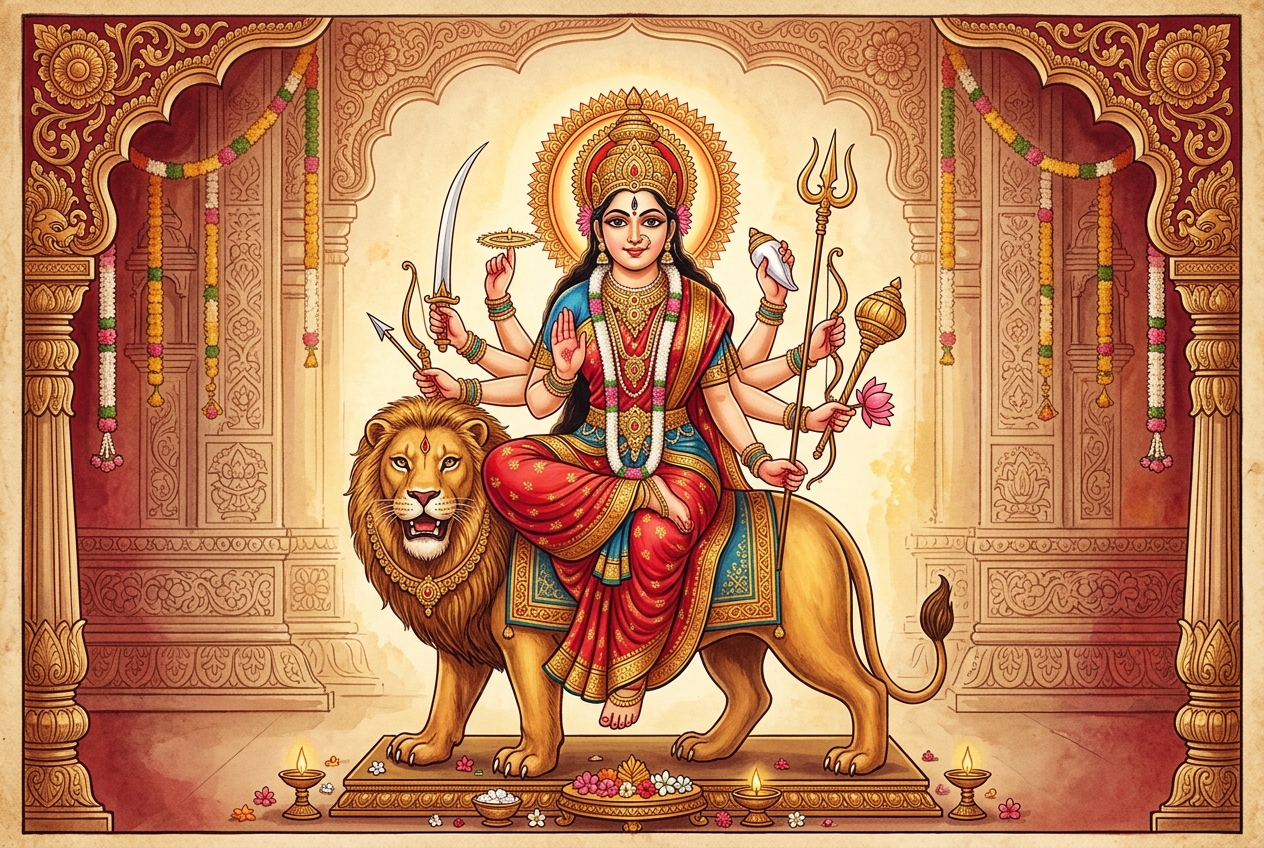
Aratiजय अम्बे गौरी, मैया जय श्यामा गौरी। तुमको निशिदिन ध्यावत, हरि ब्रह्मा शिवरी॥ माँग सिन्दूर विराजत, टीको मृगमद को। उज्ज्वल से दोउ नैना, चन्द्रवदन नीको॥ कनक समान कलेवर, रक्ताम्बर राजै। रक्तपुष्प गल माला, कण्ठन पर साजै॥ केहरि वाहन राजत, खड्ग खप्पर धारी। सुर-नर-मुनिजन सेवत, तिनके दुखहारी॥ कानन कुण्डल शोभित, नासाग्रे मोती। कोटिक चन्द्र दिवाकर, सम राजत ज्योती॥ श्री अम्बेजी की आरती, जो कोई नर गावै। कहत शिवानन्द स्वामी, सुख-सम्पत्ति पावै॥
Perform arati with a five-wick lamp or camphor, then — ॐ श्रीगणपतये नमः। कर्पूरनीराजनं समर्पयामि॥
नमस्कार एवं प्रार्थना
Namaskara & PrayerNamaskara
सर्वमङ्गलमाङ्गल्ये शिवे सर्वार्थसाधिके। शरण्ये त्र्यम्बके गौरि नारायणि नमोऽस्तु ते॥
Pushpanjali
ॐ नमो देव्यै महादेव्यै शिवायै सततं नमः। नमः प्रकृत्यै भद्रायै नियताः प्रणताः स्म ताम्॥
Final Prayer
अपराधसहस्राणि क्रियन्तेऽहर्निशं मया। दासोऽयमिति मां मत्वा क्षमस्व परमेश्वरि॥
पारम्परिक फल
Traditional benefitsIn traditional Hindu belief, this worship is associated with:
- Protection, courage and the removal of fear (abhaya)
- Prosperity, health and family wellbeing
- Victory of dharma and inner strength over adharma
- Purification of mind and steadiness in one's resolves
- The grace of the Divine Mother across all nine forms
पूजा का सम्पूर्ण क्रम
The complete sequence- 1Snana & shuddhi
- 2Light the lamp
- 3Ganesha smaran
- 4Sankalpa
- 5Sow the jamvara
- 6Kalash sthapana
- 7Invoke sacred waters
- 8Akhand jyot
- 9Devi avahana
- 10Dhyana
- 11Shodashopachara
- 12Shringar offering
- 13Navarna japa
- 14Devi Kavacham
- 15Argala Stotram
- 16Kilaka Stotram
- 17Durga Saptashati paath
- 18Devi Suktam
- 19Arati
- 20Pushpanjali
- 21Kshama prarthana
- 22Kanya pujan
- 23Conclusion & paran
Sources & References
Dharmartha presents traditional knowledge with respect for its sources. Practices vary by lineage and region; this material does not assert exclusive or universal authority.
Spot an error or have a suggestion?
Help us keep this accurate — report a mistake or suggest content for this page.
Your notes
Private reflections you can revisit anytime.
Questions & Discussions
Ask a question or start a discussion about this page.
- No questions or discussions yet — be the first.
Related Knowledge
Ganesh Puja Vidhi
A step-by-step guide to performing Ganesh Puja at home, presented as commonly practised.
Shiva Puja Vidhi
A simple daily Shiva puja arrangement as commonly practised at home.
Navratri Puja Vidhi
A commonly practised guide to daily Navratri worship of the Devi.
Continue your journey