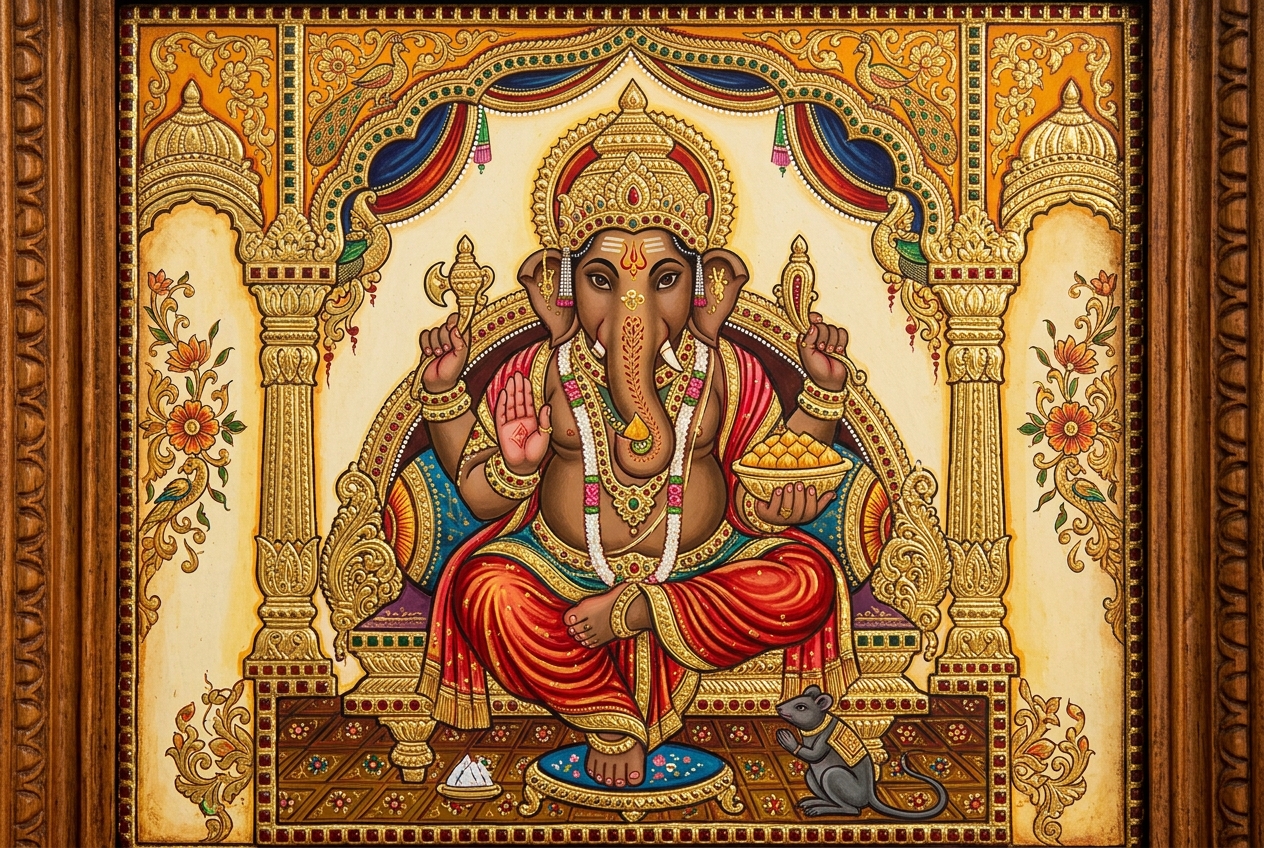
Ganesha, Ganapati
Śrī Gaṇānāṁ Tvā
श्री गणानां त्वा / गणपति मन्त्र
The sacred chant beginning with "Gaṇānāṁ Tvā" is universally recited at the very beginning of every Hindu ritual, homa, and puja to ensure unobstructed completion (Nirvighnatā). In the Vedic tradition, there are two prominent canonical recensions of this mantra:
The Rigvedic Recension (Rigveda 2.23.1): Revealed by Sage Gṛtsamada Śaunaka to Lord Brahmaṇaspati (the deity of sacred utterance, wisdom, and the preceptor of the gods, identified with Lord Ganesha in living tradition). It hails Him as the seer among poets (Kaviṁ kavīnām) and the sovereign king of prayers (Jyeṣṭharājaṁ brahmaṇām).
The Shukla Yajurvedic Recension (Vājasaneyi Saṁhitā 23.19): Chanted prominently in North Indian temple liturgies, the Rudrāṣṭādhyāyī (first chapter), and Ganesha Sthapana. It expands the invocation threefold: invoking the Lord as the leader of assemblies (Gaṇapati), the lord of all cherished beings (Priyapati), and the master of all treasures (Nidhipati).
- Deity
- Ganesha
- Tradition
- Rigveda (Mandala 2, Sukta 23) & Shukla Yajurveda (Vajasaneyi Samhita, Chapter 23 / Rudrashtadhyayi) / Pan-Vedic
- Purpose
- Mandatory opening invocation for seeking divine protection and total removal of obstacles before initiating any spiritual, familial, or material task. Invoking Lord Ganesha / Brahmanaspati to take His seat (Sādanam) upon the altar of worship. Bestowing sharp intellect, poetic insight, discernment, and mastery over sacred learning. Attaining supreme prosperity, spiritual treasures, and cosmic alignment.
- Source
- Rigveda Samhita (2.23.1) & Shukla Yajurveda (Vajasaneyi Samhita 23.19 / Madhyandina Shakha)
मूल पाठ
Sanskrit textपाठ १: ऋग्वेद संहिता (२.२३.१) ॐ ग॒णानां᳚ त्वा ग॒णप॑तिं हवामहे क॒विं क॑वी॒नामु॑प॒मश्र॑वस्तमम् । ज्ये॒ष्ठ॒राजं॒ ब्रह्म॑णां ब्रह्मणस्पत॒ आ न॑: शृ॒ण्वन्नू॒तिभि॑: सीद॒ साद॑नम्
Pāṭha 1: Ṛgveda Saṁhitā (2.23.1) Oṁ gaṇānāṁ tvā gaṇapatiṁ havāmahe kaviṁ kavīnāmupamamśravastamam | jyeṣṭharājaṁ brahmaṇāṁ brahmaṇaspata ā naḥ śṛṇvannūtibhiḥ sīda sādanam
पाठ २: शुक्लयजुर्वेद संहिता (२३.१९ / रुद्राष्टाध्यायी) ॐ ग॒णानां᳚ त्वा ग॒णप॑तिग्ं हवामहे प्रियाणां᳚ त्वा प्रि॒यप॑तिग्ं हवामहे निधी॒नां त्वा॑ निधि॒पति॑ग्ं हवामहे व्वसो मम । आहम॑जानि गर्भ॒धमा त्वम॑जासि गर्भ॒धम्
Pāṭha 2: Śukla Yajurveda Saṁhitā (23.19) Oṁ gaṇānāṁ tvā gaṇapatigṁ havāmahe priyāṇāṁ tvā priyapatigṁ havāmahe nidhīnāṁ tvā nidhipatigṁ havāmahe vvaso mama | āhamajāni garbhadhamā tvamajāsi garbhadham
Śrī Gaṇānāṁ Tvā — recitation
अर्थ
MeaningRigvedic Recension (2.23.1):
Om. We invoke You, who are the Lord and Leader of cosmic groups and assemblies (Gaṇapati), the seer and poet among poets (Kaviṁ kavīnām), the one of incomparable fame and supreme renown (Upamaśravastamam). You are the foremost sovereign ruler of sacred prayers and wisdom (Jyeṣṭharājaṁ brahmaṇām), O Lord Brahmaṇaspati! Hearing our prayers, please approach us with Your protective graces (Ūtibhiḥ) and be seated upon this sacred altar (Sīda sādanam)!
Shukla Yajurvedic Recension (23.19):
Om. We invoke You, who are the Lord of all cosmic assemblies (Gaṇapati); we invoke You, who are the Lord and guardian of all cherished beloveds (Priyapati); we invoke You, who are the sovereign master of all treasures and spiritual abundance (Nidhipati), O supreme treasure-essence of our life (Vaso mama)! May I actively nurture and bring forth this sacred potential of wisdom and creation; may You awaken and establish within us the divine seed of spiritual light and fulfillment!
संदर्भ
ContextThe Gaṇānāṁ Tvā mantra encapsulates the evolution of Vedic thought into classical Hindu iconography:
The Principle of Brahmaṇaspati: In the Rigveda, Brahmaṇaspati (or Bṛhaspati) represents the cosmic lord of the word (Brahman in the sense of mantra or prayer). He is the personification of the power of divine speech and inner intellect that shatters ignorance, exactly parallel to how Indra shatters the mountains with lightning.
From Vedic Lord to Classical Ganesha: The term Gaṇapati literally translates to "Lord of the hosts/assemblies". Over the centuries, the profound metaphysical attributes of Brahmanaspati—wisdom, poetic illumination, and authority over all divine assemblies—became directly personified in the elephant-headed Lord Ganesha.
The Threefold Mastery (Yajurveda): In the Shukla Yajurveda, invoking the Divine as Gaṇapati (mastery of collective consciousness), Priyapati (mastery of love and affection), and Nidhipati (mastery of spiritual and material treasure) affirms that God is the custodian of every faculty that makes life prosperous and sacred.
प्रयोग
How it is traditionally usedRitual Invocation (Āvāhana): Chanted while ringing the bell, holding unbroken sanctified rice grains (akṣata) and flowers, and offering them upon the idol, betel leaf, or consecrated coconut representing Lord Ganesha to invite the deity into the ritual space.
Rudrabhishekam Opening: Chanted as the very first verse of Chapter 1 in the Shukla Yajurvedic Rudrāṣṭādhyāyī before proceeding with the Śivasaṅkalpa Sūkta and the Namakam.
Homa & Yajna Preliminaries: Recited prior to the Āghāra-Ājyabhāga (initial ghee offerings) to purify the direction and dispel negative psychic or environmental hindrances.
Sources & References
Dharmartha presents traditional knowledge with respect for its sources. Practices vary by lineage and region; this material does not assert exclusive or universal authority.
Spot an error or have a suggestion?
Help us keep this accurate — report a mistake or suggest content for this page.
Your notes
Private reflections you can revisit anytime.
Questions & Discussions
Ask a question or start a discussion about this page.
- No questions or discussions yet — be the first.
Related Knowledge
Purusha Suktam
श्री पुरुष सूक्तम्
The supreme cosmogonic hymn of the Vedic canon preserved in the Rigveda and Taittiriya Aranyaka of the Krishna Yajurveda, revealing the cosmic sacrifice (Yajña) of the Supreme Being (Puruṣa), from whose cosmic limbs the entire universe, natural elements, Vedic hymns, and social fabric manifest.The paramount cosmogonic hymn of the Vedic canon preserved in the Rigveda, Shukla Yajurveda, and Krishna Yajurveda (Taittiriya Aranyaka), delineating the supreme sacrifice (Yajña) of the primordial Cosmic Being (Puruṣa), from whose transcendental self the entire visible and invisible universe, natural cycles, sacred meters, and interdependent social orders manifest.
Shri Suktam
श्री सूक्तम्
An ancient Vedic hymn from the Rigvedic Khilas dedicated to Goddess Sri-Lakshmi, invoking the divine mother through Agni to bestow radiant prosperity, health, noble progeny, and spiritual abundance while permanently dispelling misfortune.
Mantra Pushpam
श्री मन्त्रपुष्पम्
A profound Vedic hymn from the Taittiriya Aranyaka of the Krishna Yajurveda, chanted during the sacred offering of flowers (Mantra Pushpanjali) at the culmination of worship, revealing waters (Āpaḥ) as the cosmic matrix of fire, air, sun, moon, constellations, clouds, and time, concluding with imperial sovereignty and divine prosperity.
Continue your journey