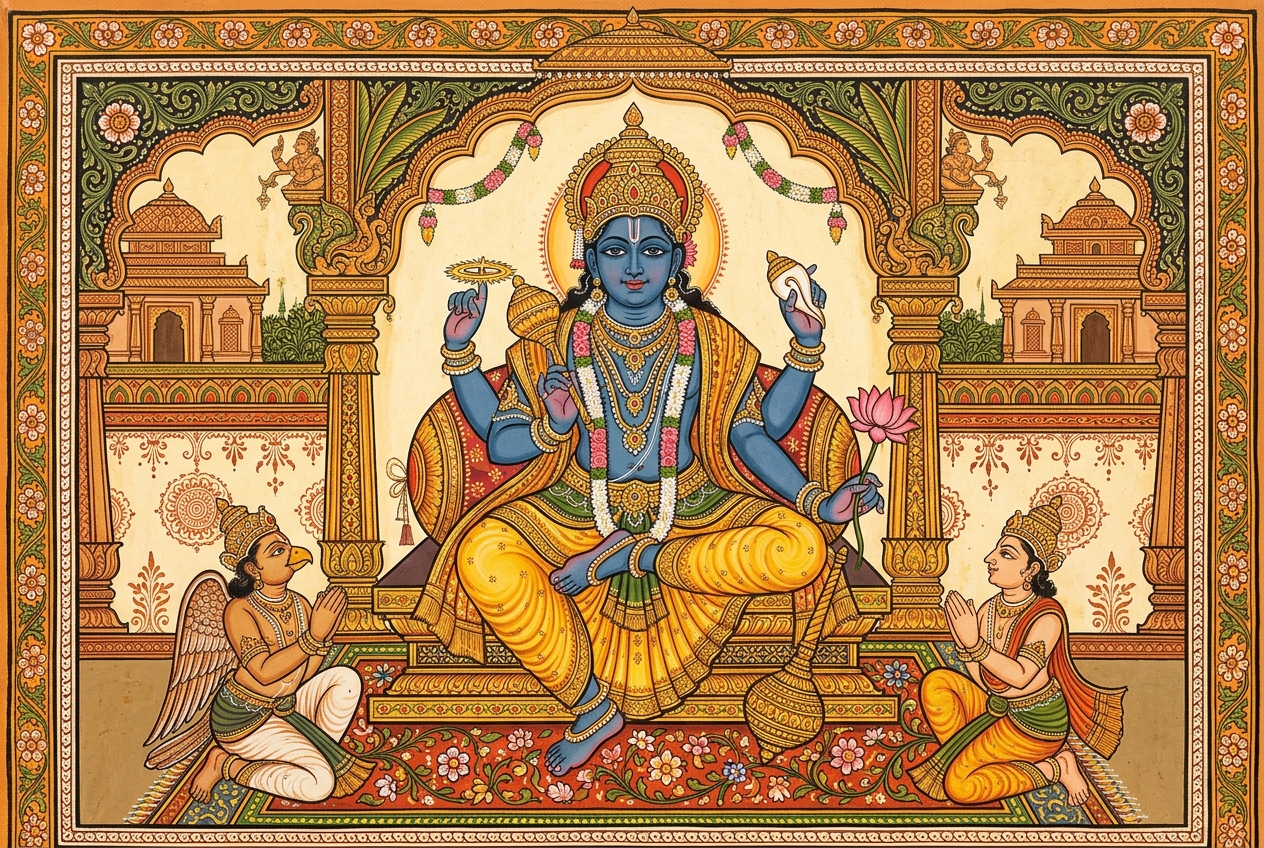
Narayana Gayatri Mantra
नारायण गायत्री मंत्र
About the Narayan Gayatri Mantra
The Narayana Gayatri is one of the most sacred Vedic Gayatri mantras, embedded within the Mahanarayana Upanishad (Taittiriya Aranyaka). It awakens divine intellect, burns away karmic ignorance, and floods the mind with His brilliant, protecting light.
- Deity
- Vishnu
- Tradition
- Vedic, Vaishnava, Universal
- Purpose
- Enhancement of intellect, peace of mind, divine protection, removal of sins, and spiritual liberation.
- Source
- Vedic tradition (Krishna Yajurveda / Taittiriya Aranyaka), Vaishnava.
मूल पाठ
Sanskrit textॐ नारायणाय विद्महे वासुदेवाय धीमहि । तन्नो विष्णुः प्रचोदयात्
oṃ nārāyaṇāya vidmahe vāsudevāya dhīmahi | tanno viṣṇuḥ pracodayāt
Narayana Gayatri Mantra — recitation
अर्थ
Meaning"Om. Let us realise Lord Narayana, the Supreme Abode of all beings. Let us meditate on Lord Vasudeva, the indweller of the universe. May that Supreme Lord Vishnu direct and inspire our intellect toward the highest truth."
संदर्भ
ContextThis mantra originates from the sacred Sruti texts of the Vedas. Unlike Tantric beeja mantras, Vedic Gayatris are supreme universal prayers for intellectual illumination and spiritual awakening, recited daily during sandhyavandanam or general meditation.
प्रयोग
How it is traditionally usedBest chanted during the morning twilight (Brahma Muhurta) or evening Sandhya facing East or North. Recited 11, 27, or 108 times using a Tulsi or white sandalwood (Chandan) mala. Chanted during daily Vishnu puja, Ekadashi observances, Shaligram abhishekam, and Satyanarayan rituals. Chanted sitting comfortably in Siddhasana or Padmasana on a woollen or kusha mat.
Sources & References
Dharmartha presents traditional knowledge with respect for its sources. Practices vary by lineage and region; this material does not assert exclusive or universal authority.
Spot an error or have a suggestion?
Help us keep this accurate — report a mistake or suggest content for this page.
Your notes
Private reflections you can revisit anytime.
Questions & Discussions
Ask a question or start a discussion about this page.
- No questions or discussions yet — be the first.
Related Knowledge
Churning of the Ocean
The epic of the Churning of the Cosmic Ocean by Devas and Asuras.
Time Travel Story of Revati and Balarama
A princess from Satya Yuga travels to Brahmaloka to find a groom, only to discover a shocking truth about cosmic time.
Om Namo Bhagavate Vasudevaya
ॐ नमो भगवते वासुदेवाय
The supreme twelve-syllable (Dvadasakshari) mantra of Lord Vishnu and Krishna, chanted for ultimate devotion, peace, and spiritual liberation.
Om Namo Narayanaya
ॐ नमो नारायणाय
The supreme eight-syllable (Ashtakshara) mantra of Lord Vishnu, chanted for complete surrender, spiritual liberation, and universal peace.
Mahalakshmi Mantra
महालक्ष्मी मंत्र
The supreme seed-salutation mantra of Goddess Mahalakshmi, chanted to invoke Her divine grace for immense wealth, spiritual abundance, and lasting peace.
Sarasvati Mantra
सरस्वती मंत्र
The supreme seed-salutation (beeja-nama) mantra of Goddess Sarasvati, chanted to invoke Her divine grace for intelligence, supreme wisdom, artistic mastery, and eloquence of speech.
Sarva Mangala Mangalye
सर्व मंगल मांगल्ये
The universal Vedic-Tantric prayer to Goddess Durga (Narayani) for auspiciousness, marital harmony, protection, and the fulfilment of all desires.
Legacy of Prahlada
The story of Prahlada, his unwavering devotion to Lord Vishnu, persecution by Hiranyakashipu, and the divine appearance of Mahavatar Narasimha.
Continue your journey