Shreem Beej Mantra
श्रीं बीज मंत्र
About the Shreem Beej Mantra
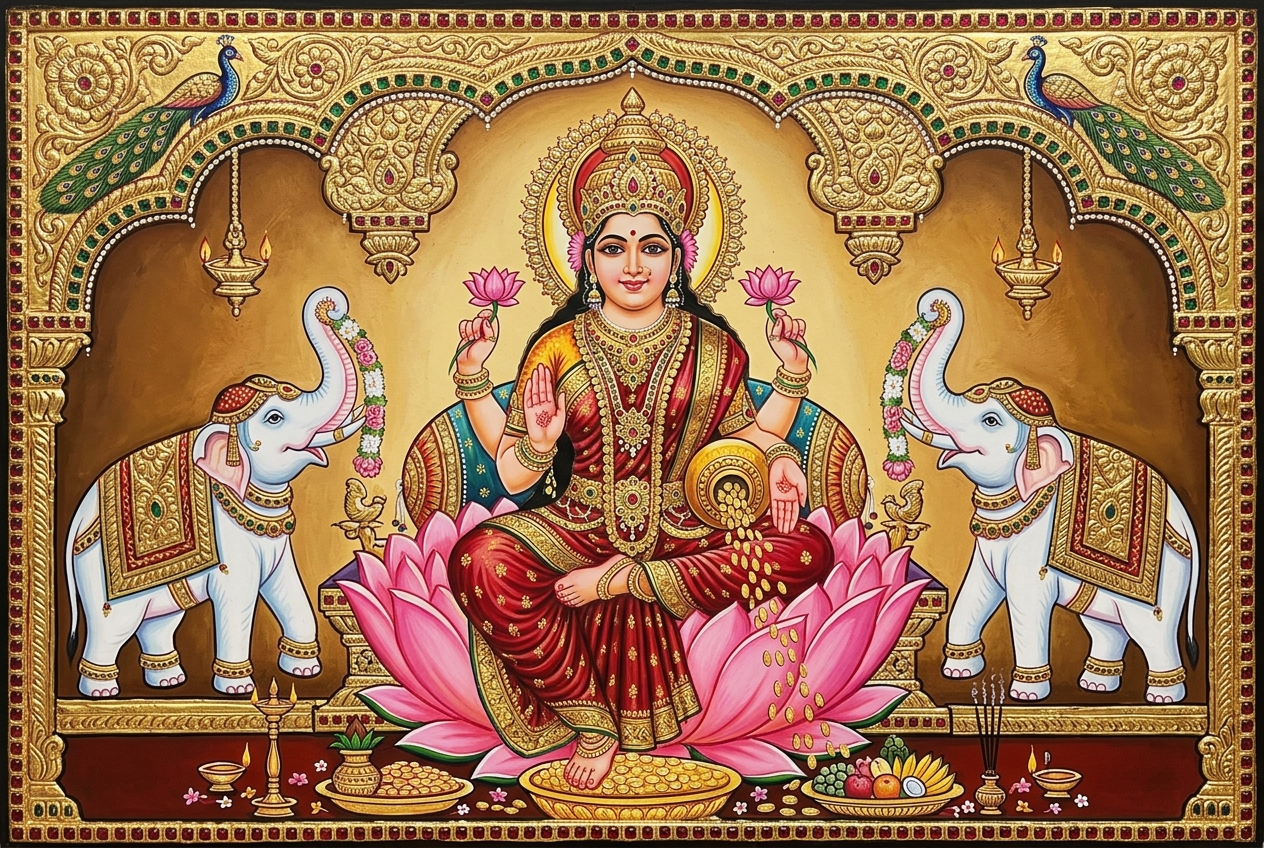
The Shreem Beej Mantra is the primordial root vibration of Goddess Mahalakshmi, representing cosmic harmony, radiance, nourishment, and sovereign abundance across temporal and spiritual planes.
- Deity
- Lakshmi
- Tradition
- Vedic (Sri Sukta), Sri Sampradaya, Shakta Tantra, Universal
- Purpose
- Eradication of poverty and scarcity, attainment of wealth and prosperity, cultivation of inner contentment, enhancement of radiance and beauty, dissolution of grief, attainment of divine grace.
- Source
- Vedic (Ṛgveda Khilāni / Śrī Sūkta), Śrī Sampradāya, Śākta Tantra, Pāñcarātra.
मूल पाठ
Sanskrit textश्रीं
| śrīṃ
Shreem Beej Mantra — recitation
अर्थ
MeaningAs codified in the Varada Tantra (and expounded in Mantra Rahasyam), the syllable "Shreem" comprises five subtle phonetic constituents:
Sha: Embodies Goddess Mahalakshmi, the primordial source of all splendor.
Ra: Represents Dhana and Aishwarya (wealth, affluence, and sovereign prosperity).
Ee: Denotes Tushti and Pushti (divine contentment, nourishment, and satisfaction).
Nada: Signifies Vishvamata, the loving Universal Mother of all creation.
Anusvara (Bindu): Denotes Dukhaharana, the absolute dispelling of grief, distress, and lack.
"May Goddess Mahalakshmi, the reigning sovereign of wealth, affluence, nourishment, and joyful contentment, who embraces creation as the Universal Mother, eradicate all poverty, sorrow, and afflictions from my life."
संदर्भ
ContextOriginating liturgically in the Sri Sukta of the Rigvedic corpus and codified across Agamic treatises like the Lakshmi Tantra and Sharada Tilaka Tantram, the Shreem seed is the heart of all prosperity sadhanas. As highlighted in Mantra Rahasyam, wealth divorced from contentment (tushti) yields spiritual degeneration; hence, ancient seers fused affluence (Ra) with satisfaction (Ee) and maternal protection (Nada) within this single syllable to guarantee balanced, holistic abundance.
प्रयोग
How it is traditionally usedChant 21 (foundational daily count), 54 (half mala), 108, or 1008 times daily using a genuine Lotus Seed (Kamal Ghatta) or Clear Quartz (Sphatika) mala. Lotus seed beads invoke sovereign wealth and Lakshmi's grace; quartz beads enhance pure sattva and mental clarity. Seated upon a clean yellow or red silk mat, sit ideally facing north (the direction of Kubera, wealth, and material nourishment) or east (for intellectual clarity and spiritual light). Practice during early morning twilight (Brahma Muhurta) or evening sandhya. Fridays (Shukravara), Purnima (full moon), Shukla Panchami, Dhana Trayodashi, and Deepavali are canonically propitious for initiating or intensifying this practice. Strict shiksha requires articulating the palatal sibilant "Ś" smoothly into the consonant "R", holding the prolonged vowel "Ī", and terminating in a clean, resonant nasal humming (anusvara) without abrupt cutoff.
Sources & References
Dharmartha presents traditional knowledge with respect for its sources. Practices vary by lineage and region; this material does not assert exclusive or universal authority.
Spot an error or have a suggestion?
Help us keep this accurate — report a mistake or suggest content for this page.
Your notes
Private reflections you can revisit anytime.
Questions & Discussions
Ask a question or start a discussion about this page.
- No questions or discussions yet — be the first.
Related Knowledge
Churning of the Ocean
The epic of the Churning of the Cosmic Ocean by Devas and Asuras.
Durga Mantra
दुर्गा मंत्र
The highly protective seed-salutation (Bija-Nama) mantra of Goddess Durga, chanted to build an impenetrable spiritual shield and overcome fear, anxiety, and danger.
Mahalakshmi Mantra
महालक्ष्मी मंत्र
The supreme seed-salutation mantra of Goddess Mahalakshmi, chanted to invoke Her divine grace for immense wealth, spiritual abundance, and lasting peace.
Sarasvati Mantra
सरस्वती मंत्र
The supreme seed-salutation (beeja-nama) mantra of Goddess Sarasvati, chanted to invoke Her divine grace for intelligence, supreme wisdom, artistic mastery, and eloquence of speech.
Sarva Mangala Mangalye
सर्व मंगल मांगल्ये
The universal Vedic-Tantric prayer to Goddess Durga (Narayani) for auspiciousness, marital harmony, protection, and the fulfilment of all desires.
Navratri Durga Puja Vidhi
नवरात्रि दुर्गा पूजा विधि
Complete home guide for Navratri — Ghatasthapana muhurta, samagri, step-by-step Durga puja with shodashopachara, mantras, Saptashati paath, aarti and kanya pujan.
Navratri
A nine-night Hindu festival honouring the Divine Mother (Shakti) in Her various manifestations, celebrating the victory of Dharma over Adharma through fasting, worship, and the reading of classical texts like the Devi Mahatmyam.
Continue your journey