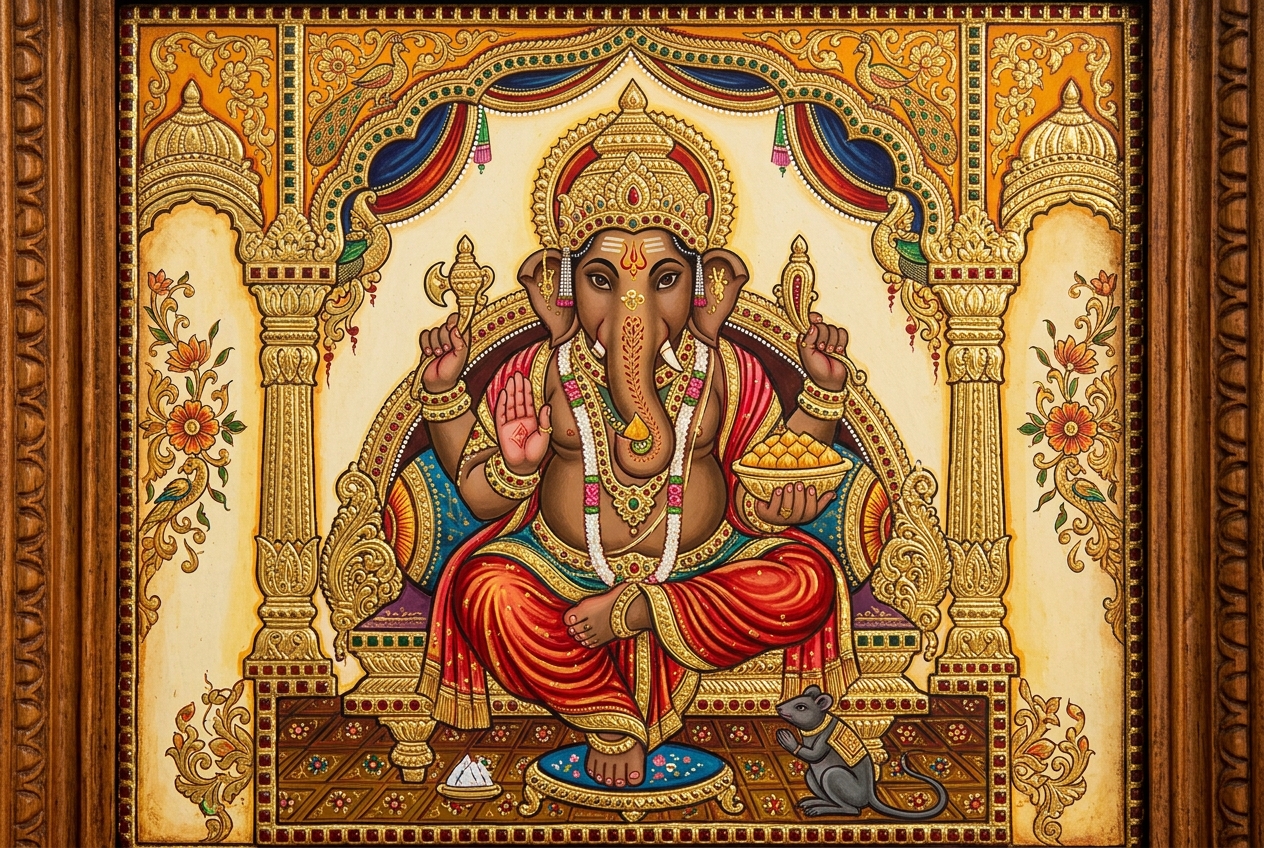
Ganesha Moola Mantra
गणेश मूल मंत्र
About the Ganesha Moola Mantra
The Ganesha Moola Mantra is the primordial energetic root connecting the practitioner directly to the cosmic source of Lord Ganapati. Anchored by the fundamental beeja "Gam", this mantra is the cornerstone of Ganapatya ritual science.
- Deity
- Ganesha
- Tradition
- Ganapatya, Tantra, Universal
- Purpose
- Eradication of obstacles, accomplishment of endeavours, wisdom and discrimination, prosperity and spiritual attainments.
- Source
- Gāṇapatya tradition, Śākta-Śaiva Āgama, Tantra.
मूल पाठ
Sanskrit textॐ गं गणपतये नमः
Oṃ gaṃ gaṇapataye namaḥ
Ganesha Moola Mantra — recitation
अर्थ
Meaning"Om" is the primordial cosmic matrix. "Gam" is the supreme root seed (beeja) of Lord Ganesha. "Ganapataye" means "unto the Lord and master of all cosmic hosts and categories (ganas)". "Namah" signifies selfless surrender and reverential salutation. Together: "Om, I offer my surrender and salutations unto Lord Ganapati, invoked through His supreme root seed Gam."
संदर्भ
ContextCodified across principal Agamas and Tantric treatises, this mantra is traditionally used during pratistha (consecration), archana, and individual purascharana. It forms the core sonic vehicle invoked prior to commencing any classical Vedic or Tantric rite to guarantee freedom from spiritual and material disruptions.
प्रयोग
How it is traditionally usedChant 21 (the sacred Ganapati count), 54 (half mala), 108, or 1008 times daily using a Red Sandalwood (Rakta Chandana), Red Coral (Pravala), or Rudraksha mala. Red sandalwood and coral specifically resonate with the earth element (Prithvi tattva) of the Mooladhara chakra, which Lord Ganesha eternally presides over. Sit ideally facing north for siddhi, prosperity, and the removal of material hardship, or facing east for pure intellect, spiritual focus, and inner peace. Early morning (Brahma Muhurta), Wednesdays (His planetary day under Mercury), and the fourth lunar day (Chaturthi tithi) of either fortnight are particularly propitious for initiating this practice. Shiksha demands that the anusvara in "Gam" be intoned cleanly through the nasal passage, blending smoothly without abrupt pauses into "Ganapataye".
Sources & References
Dharmartha presents traditional knowledge with respect for its sources. Practices vary by lineage and region; this material does not assert exclusive or universal authority.
Spot an error or have a suggestion?
Help us keep this accurate — report a mistake or suggest content for this page.
Your notes
Private reflections you can revisit anytime.
Questions & Discussions
Ask a question or start a discussion about this page.
- No questions or discussions yet — be the first.
Related Knowledge
Diwali
The festival of lights: significance, traditions and commonly observed practices.
Durga Saptashati (Devi Mahatmyam)
दुर्गा सप्तशती (देवी माहात्म्यम्)
The crown jewel of Shakta literature embedded in the Markandeya Purana, comprising 700 verses across 13 chapters that celebrate the cosmic battles, forms, and supreme philosophy of the Divine Mother as Mahakali, Mahalakshmi, and Mahasaraswati.
Śrī Gaṇānāṁ Tvā
श्री गणानां त्वा / गणपति मन्त्र
The premier Vedic invocation chanted to summon Lord Ganapati (Brahmanaspati) at the inception of all sacred rites, venerating the Divine as the supreme leader of cosmic groups, the wisest among the wise, the sovereign king of sacred prayers, and the ultimate treasure of existence.
Ganapati Atharvashirsha
गणपत्यथर्वशीर्षम्
The Upanishadic hymn to Ganapati as the supreme reality — complete text with the Ganapati Gayatri.
Ganesh Chaturthi · Home Sthapana and Puja Vidhi
A complete household procedure for Ganesh Chaturthi — Sthapana, sixteen upacharas, mantras, Atharvashirsha, arati and visarjan — with the 2026 muhurta.
Ganesh Puja Vidhi
A step-by-step guide to performing Ganesh Puja at home, presented as commonly practised.
Ganesha Pancharatnam
गणेश पञ्चरत्नम्
A five-verse hymn to Ganesha attributed to Adi Shankaracharya.
Story of Ganesha
The Purāṇic story of Ganesha's creation, his encounter with Shiva, his resurrection, and his consecration as the first deity to be worshipped.
Markandeya and Mahakala
The story of Sage Mārkaṇḍeya, his devotion to Lord Shiva, and his triumph over death.
Churning of the Ocean
The epic of the Churning of the Cosmic Ocean by Devas and Asuras.
Time Travel Story of Revati and Balarama
A princess from Satya Yuga travels to Brahmaloka to find a groom, only to discover a shocking truth about cosmic time.
Gayatri Mantra
गायत्री मंत्र
The most revered Vedic prayer addressed to the Sun God (Savitr), chanted to illuminate the intellect and dispel ignorance.
Mahamrityunjaya Mantra
महा मृत्युंजय मंत्र
The great death-conquering Vedic mantra of Lord Shiva, chanted to overcome fear, promote profound healing, and grant liberation.
Durga Mantra
दुर्गा मंत्र
The highly protective seed-salutation (Bija-Nama) mantra of Goddess Durga, chanted to build an impenetrable spiritual shield and overcome fear, anxiety, and danger.
Om Namah Shivaya
ॐ नमः शिवाय
The great redeeming five-syllable (Panchakshari) mantra of Lord Shiva, offering purification, inner peace and spiritual awakening.
Om Namo Bhagavate Vasudevaya
ॐ नमो भगवते वासुदेवाय
The supreme twelve-syllable (Dvadasakshari) mantra of Lord Vishnu and Krishna, chanted for ultimate devotion, peace, and spiritual liberation.
Om Namo Narayanaya
ॐ नमो नारायणाय
The supreme eight-syllable (Ashtakshara) mantra of Lord Vishnu, chanted for complete surrender, spiritual liberation, and universal peace.
Om Sharavanabhavaya Namah
ॐ शरवणभवाय नमः
The supreme devotional salutation to Lord Murugan, chanted for safe, accessible daily worship, general protection, peace, and overcoming obstacles.
Mahalakshmi Mantra
महालक्ष्मी मंत्र
The supreme seed-salutation mantra of Goddess Mahalakshmi, chanted to invoke Her divine grace for immense wealth, spiritual abundance, and lasting peace.
Sarasvati Mantra
सरस्वती मंत्र
The supreme seed-salutation (beeja-nama) mantra of Goddess Sarasvati, chanted to invoke Her divine grace for intelligence, supreme wisdom, artistic mastery, and eloquence of speech.
Continue your journey